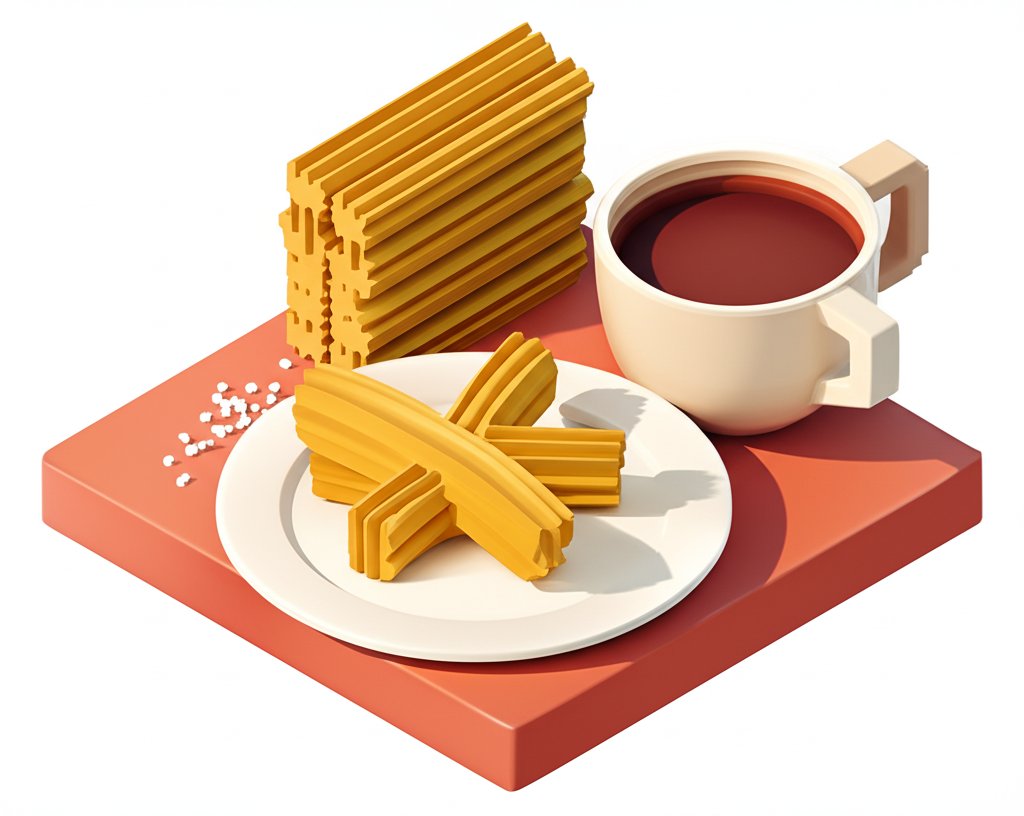
For many, the mere mention of churros evokes a sensory symphony: the crisp exterior, the soft, doughy interior, the sweet kiss of cinnamon sugar, and the luxurious embrace of rich chocolate. These iconic fried dough pastries have transcended their origins to become a global culinary sensation, beloved in bustling street markets, cozy cafes, and theme parks worldwide. But beneath their golden-fried perfection lies a captivating and often surprising narrative – a secret history of churros woven through centuries of cultural exchange, culinary innovation, and irresistible flavor. More than just a simple treat, churros are a testament to the enduring power of food to tell a story and unite people across continents.
Prepare to embark on a delicious journey as we peel back the layers of this beloved pastry. We’ll uncover fascinating churros facts, dive deep into their enigmatic past, present a definitive churro recipe for you to master in your own kitchen, and firmly establish their place among the most cherished spanish desserts. Get ready to discover why these humble fried dough sticks continue to captivate taste buds worldwide, from their ancient roots to their modern-day global dominance.
To truly understand the global phenomenon that churros have become, it’s essential to explore the rich and multifaceted churro recipe history, uncovering the captivating story behind this beloved treat.
The Enigmatic Trails of Churros History: From Ancient Origins to Global Delight
The exact inception of churros is a gastronomic mystery, debated by historians and food enthusiasts alike. While widely associated with Spain, their true beginnings might be far more complex, weaving a story that spans continents and centuries, hinting at multiple cultural touchpoints before arriving at the beloved form we know today.
The “Youtiao” Hypothesis: Asia’s Culinary Footprint
One compelling theory suggests that churros may have an unexpected lineage tracing back to ancient China. Portuguese merchants, renowned for their daring maritime explorations and trade routes, are believed to have encountered a savory breakfast staple called “youtiao” (油条), literally meaning “oil-fried sticks.” These unsweetened, elongated fried dough strips were a popular morning meal in China, often paired with congee or soy milk, dating back to at least the 12th century. It is plausible that these astute sailors brought the concept of fried dough back to the Iberian Peninsula in the 16th century, introducing it to European cuisine. The Portuguese then adapted the recipe, likely adding sugar – a revolutionary game-changer that transformed a savory breakfast into a sweet delight, laying the groundwork for the future of churros.
The Resilient Spanish Shepherd Origin: A Practical Pastry is Born
Another popular theory posits an entirely Spanish origin, suggesting that churros were invented by nomadic Spanish shepherds. Far from the luxury of bakeries and conventional ovens, these shepherds needed a portable, easy-to-make, and satisfying sustenance during their long, arduous days tending flocks in the mountains. Fried dough, made over an open fire, fit the bill perfectly. It required only basic, shelf-stable ingredients – flour, water, and salt – and could be prepared without complex baking equipment. The distinctive star shape, achieved by extruding the dough through a makeshift nozzle or simply through a hole in a canvas bag, was not just for aesthetics; it allowed the dough to cook more evenly and prevented it from exploding during the high heat of frying. The name “churro” itself is often attributed to the treat’s ridged form, said to resemble the horns of the native Churra sheep they so diligently guarded. This practical, hearty snack quickly gained popularity beyond the pastures, evolving into a beloved street food.
More Ancient Theories: Roman Fritters and Persian Zulabiyya
The story of fried dough itself predates both Chinese youtiao and Spanish shepherds. Ancient Egypt, dating back to 1184 to 1153 BC, has archaeological evidence of workers processing wheat, making dough, and frying it. From the 1st century AD, Roman cookbooks describe flour and water fritters, showcasing an early European tradition of fried dough. Connecting churros to an even wider global network, some historians suggest that Marco Polo’s travels along the Silk Road could have introduced various Asian and Persian cooking techniques to Europe, including the concept of fried dough. A notable example is the Persian honey fritter called zulabiyya (or zlabia in North Africa), which existed since at least the 10th century. Written manuscripts and cookbooks from Andalusia around the 13th century also reference fritters from Arab and North African cultures, reflecting the historical rule of Muslim North Africans in Southern Spain and the associated culinary exchange. These theories remind us that the allure of fried dough is truly universal and ancient.
Spain’s Sweet Transformation: Cinnamon, Sugar, and Chocolate’s Arrival
Regardless of their precise origin, churros underwent significant evolution within Spain itself. The initial addition of sugar, and later the aromatic spice of cinnamon, transformed them from a simple savory or plain fried dough into the sweet treat we recognize today. The 17th century saw another pivotal development: the introduction of chocolate to Europe from the Americas. It wasn’t long before ingenious Spaniards discovered the heavenly pairing of crispy, warm churros with thick, rich drinking chocolate – a tradition that endures as a cornerstone of spanish desserts culture and a national culinary treasure. This perfect marriage solidified the churro’s place in the Spanish gastronomic landscape.
Churros Cross the Atlantic: A New World Culinary Canvas
As Spanish explorers and colonists ventured into the New World, they inevitably carried their culinary traditions with them, and churros were no exception. Introduced to Latin America in the 16th century, churros were embraced and adapted, taking on unique regional characteristics. In Mexico, for instance, churros became a canvas for innovation, often filled with creamy dulce de leche (caramel), rich chocolate, or tangy fruit preserves, and generously coated with sugar and cinnamon. Argentina saw the emergence of thinner churros, almost exclusively served with dulce de leche. This transatlantic journey cemented churros as a global culinary phenomenon, with each culture adding its own delicious twist, creating a vibrant tapestry of fried dough variations.
Unearthing Amazing Churros Facts: Beyond the Golden Crunch

Beyond their captivating and complex history, churros are brimming with interesting details that highlight their cultural significance and universal appeal. Here are some compelling churros facts that will deepen your appreciation for this beloved fried dough.
A Breakfast Staple, Not Just a Spanish Dessert
While many outside of Spain perceive churros as an indulgent spanish dessert, in their homeland, they are predominantly a breakfast staple or a late-night snack. Spaniards often begin their day by dipping warm, freshly fried churros into a steaming cup of thick, bittersweet hot chocolate, or simply enjoying them with strong coffee (café con leche). This tradition showcases their role as a comforting and energizing morning meal, far removed from a typical after-dinner sweet. It’s a social ritual, a pick-me-up, and a comforting tradition deeply ingrained in daily life.
The Ingenious Star Shape: A Marvel of Frying Physics
The characteristic star shape of churros is not merely for aesthetics; it’s a brilliant feat of culinary engineering. The star-shaped nozzle of a churrera (churro maker) creates ridges that dramatically increase the surface area of the dough. This clever design ensures more even cooking, preventing the dough from bursting and splattering in the hot oil (due to steam buildup), and crucially, creates that irresistible contrast between a wonderfully crunchy, caramelized exterior and a soft, airy, slightly chewy interior. These ridges also serve a practical purpose, acting as perfect channels to hold and cling to companion dips like thick hot chocolate or café con leche.
Regional Varieties and Global Adaptations
Churros are not a monolithic entity; they come in diverse forms, even within Spain and certainly globally.
churros and can be quite substantial.churros shaped into knots or elegant loops, sometimes affectionately called “lazos” (bows) or “lacitos” (little bows).churros) reigns supreme. These are often thicker churros injected with delightful sweet fillings like dulce de leche, chocolate ganache, guava paste, or even cream cheese.Beyond Spain and Latin America, churros have been embraced globally, with each culture adding its unique spin:
churros, “farturas” are a popular street food, often larger and sometimes filled.Churros have found a niche in theme parks and street food scenes, sometimes with unique toppings or experimental fillings.The Disneyland Phenomenon: A Theme Park Icon
Disneyland theme parks are legendary for their churros, selling a staggering 2.8 million of these delightful treats annually across their various parks. The irresistible aroma of freshly fried, cinnamon-sugar-dusted churros is an iconic part of the Disneyland experience, making them a must-have snack for visitors worldwide. This demonstrates churros' incredible mass appeal and adaptability to different recreational contexts, far removed from their traditional Spanish settings.
The Enduring Charm of Churrerías: Hubs of Tradition
In Spain, churrerías (churro stands or cafes specializing in churros) are often open around the clock, or at least for very long hours. This ensures that whether you’re craving a traditional breakfast or a late-night snack after a social gathering, churros are always available to satisfy. Many churrerías have been family-run for generations, meticulously preserving traditional methods and recipes, ensuring the authentic taste continues for new generations. These establishments are more than just places to eat; they are social hubs and cultural touchstones.
The Science of the Perfect Dip: Spanish Hot Chocolate
The quintessential way to enjoy churros, especially in Spain, is “churros con chocolate.” The chocolate served for dipping is not merely hot cocoa; it’s typically a rich, thick, almost pudding-like concoction made with high-quality dark chocolate. It’s specifically designed to cling luxuriously to the ridged churros, providing an intensely decadent experience with every bite. This perfect pairing is a testament to the Spanish mastery of creating truly memorable spanish desserts and sweet rituals.
Mastering the Authentic Churro Recipe: Your Kitchen, Your Churrería
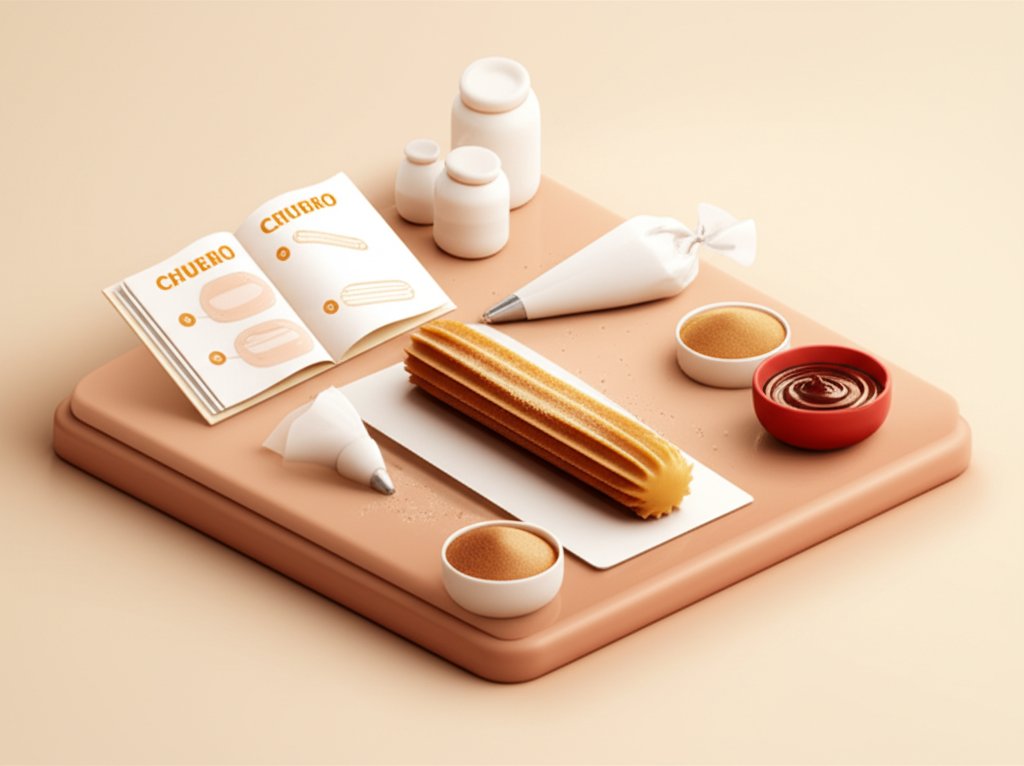
While the idea of frying dough at home might seem daunting, creating delicious, authentic churros is surprisingly straightforward. With this detailed churro recipe, you can bring the magic of a Spanish churrería into your own kitchen and impress your family and friends.
Essential Ingredients for Flawless Churros
For the Dough:
For the Coating:
For Dipping (optional, but highly recommended):
Key Equipment for Crispy Perfection
To ensure your churros turn out perfectly crispy on the outside and tender on the inside, having the right tools is crucial:
Step-by-Step Guide to Crafting Your Churros
Follow these steps carefully to achieve churro perfection:
- Prepare the Dough Base: In a medium saucepan, combine the water, 2 tablespoons sugar (if using), salt, and butter. Bring this mixture to a rolling boil over medium-high heat, stirring until the butter is completely melted and the sugar (if used) is dissolved.
- Add Flour and Form Dough: Immediately remove the saucepan from the heat. Add all the flour at once. Stir vigorously with a wooden spoon until the mixture comes together, forms a smooth ball, and pulls cleanly away from the sides of the pan. This is your choux pastry base. For a slightly drier, firmer traditional Spanish dough, you can return it to medium heat and stir for another 1-2 minutes to cook off excess moisture.
- Cool Slightly (if adding egg): If you opt to use an egg (for a richer, more stable dough), transfer the dough to a mixing bowl and let it cool for 5-10 minutes. This prevents the egg from scrambling. If not using an egg, proceed to step 5.
- Incorporate Egg (optional): If adding an egg, beat it into the slightly cooled dough until fully incorporated and the dough is smooth and glossy. This can be done efficiently with a stand mixer fitted with a paddle attachment, or by hand with vigorous stirring. The dough may look a bit separated and slippery at first, but keep mixing; it will come together.
- Prepare for Frying: Fit your sturdy piping bag with the large star nozzle. Transfer the warm dough into the piping bag. Ensure there are no air pockets by gently pressing the dough down.
Frying to Golden Perfection:
- Heat the Oil: Pour enough vegetable or canola oil into your deep-fryer or heavy-bottomed pot to reach a depth of about 2-3 inches. Heat the oil over medium-high heat until it reaches a consistent 350-375°F (175-190°C). Crucially, use a thermometer to ensure accuracy – too cool for soggy churros, too hot for burnt exteriors and raw interiors.
- Pipe the Churros: Carefully pipe strands of dough directly into the hot oil. You can pipe them as traditional long sticks (around 4-6 inches) or create large spirals/loops. Use kitchen shears or a knife to cleanly cut the dough from the piping bag. Do not overcrowd the pot; fry in small batches to maintain the oil temperature and ensure even cooking.
- Fry Until Golden: Fry the
churrosfor 2-4 minutes per side, or until they are deeply golden brown and wonderfully crispy all over. They should float and be easy to turn. - Drain Excess Oil: Using a slotted spoon or spider strainer, carefully remove the
churrosfrom the oil and place them on a plate lined with paper towels or on a wire rack to drain any excess oil.
The Finishing Touch: Sugar, Cinnamon, and Dipping Sauces:
- Prepare Coating: In a shallow dish, combine the ½ cup granulated sugar and ground cinnamon. Stir well to mix evenly.
- Coat Churros: While the
churrosare still warm (this helps the sugar adhere), gently roll them in the cinnamon-sugar mixture until they are evenly coated on all sides. - Serve Immediately:
Churrosare best enjoyed fresh and warm, ideally within minutes of frying.
Troubleshooting Common Churro Recipe Challenges
Even seasoned chefs encounter occasional challenges. Here’s how to tackle common churro recipe issues:
- Soggy Churros: This is almost always due to the oil not being hot enough. If the oil temperature drops below 350°F (175°C), the dough will absorb too much oil instead of frying crisply. Ensure your oil is at the correct temperature before adding dough, and avoid overcrowding the pot, which instantly reduces the oil temperature.
- Exploding Churros: This can happen if the dough has too much moisture or if the oil is too hot, causing the outside to cook too quickly and trap steam inside, leading to a rupture. Ensure the dough is properly cooked (if you returned it to the stove in step 2), and for egg-inclusive recipes, ensure the egg is fully incorporated. The star tip also significantly helps prevent explosions by allowing steam to escape through the ridges.
- Unevenly Cooked Churros: Again, consistent oil temperature is key. Also, ensure your
churrosare not too thick (aim for about ½-¾ inch diameter) and are turned regularly during frying to achieve an even golden color and cook.
Bonus Recipe: Rich Spanish Hot Chocolate Dip
No churro experience is complete without the quintessential thick Spanish hot chocolate.
Ingredients:
Instructions:
- In a medium saucepan, heat the whole milk over medium heat until it is simmering gently, but do not let it come to a rolling boil.
- Add the finely chopped dark chocolate and sugar to the simmering milk. Whisk continuously until the chocolate is fully melted and the mixture is smooth and glossy.
- Slowly whisk in the cornstarch slurry. This is your thickening agent.
- Continue to cook the mixture over medium-low heat, whisking occasionally, until the chocolate thickens to your desired consistency. It should be rich and thick enough to generously coat the back of a spoon (usually 5-10 minutes).
- Serve warm with your freshly made
churros.
Churros: A Crown Jewel Among Spanish Desserts
While modern global cuisine often places churros firmly in the spanish desserts category, their traditional role in Spain is more nuanced and deeply embedded in daily life, setting them apart from many other sweet treats.
More Than a Dessert: A Cultural Institution
Unlike many spanish desserts that are reserved for specific meals or special occasions, churros are a daily staple. Their prominence as a breakfast food, a mid-morning pick-me-up, or a late-night treat after an evening out, sets them apart. They offer instant warmth, comfort, and satisfaction, perfectly complementing the social fabric of Spanish life. The cultural impact of “churros con chocolate” is immense, making it far more than just a sweet treat; it’s a social ritual, a symbol of camaraderie, and a comforting tradition deeply ingrained in the Spanish way of life. It’s a moment shared, a conversation starter, and an iconic taste of Spain.
Festive Flair: Churros in Spanish Celebrations
Churros are also deeply intertwined with Spanish festivities and celebrations, amplifying their cultural significance. From local fairs and bustling street markets to major festivals like San Isidro in Madrid or Semana Santa (Holy Week) across the country, churrerías pop up everywhere, serving fresh churros to eager crowds. They are a symbol of shared enjoyment and communal gathering, embodying a spirit of informal celebration and accessible indulgence. This ubiquitous presence ensures their status as one of Spain’s most iconic and accessible culinary delights, a taste that instantly conjures images of Spanish vibrancy.
A Diverse Sweet Landscape: Other Beloved Spanish Desserts
While churros carve out their unique niche, Spain boasts an array of other exquisite spanish desserts that showcase the country’s rich culinary heritage. These include:
Compared to these, churros offer a different textural experience – crispy, warm, and often served with a liquid accompaniment rather than as a standalone cake or custard. This versatility and informal appeal contribute significantly to their widespread adoration, making them unique within the vibrant landscape of spanish desserts.
Conclusion
From their mysterious origins potentially stemming from ancient Chinese fried dough or the ingenuity of Spanish shepherds, to their undeniable status as a global sensation, the history of churros is as rich and layered as the very dough itself. These fascinating churros facts reveal a treat that is far more than just a simple fried pastry; it’s a cultural cornerstone, a cherished breakfast ritual, and an adaptable culinary marvel that has charmed palates across continents.
Whether you’re savoring them as a traditional spanish dessert dipped in intensely rich chocolate, experimenting with a homemade churro recipe in your kitchen, or simply admiring their enduring popularity in global theme parks, the humble churro continues to sweeten lives and forge connections. So the next time you bite into that delightfully crispy, sugary delight, take a moment to remember the incredible journey it undertook to reach your plate – a journey steeped in history, tradition, and pure, unadulterated joy. Why not embark on your own churro adventure and taste a piece of history today?
FAQ
Q1: What is the primary theory about when were churros invented?
A: The exact origin is widely debated. One prominent theory suggests churros may have evolved from ancient Chinese “youtiao” (fried dough sticks), with the concept brought to Europe by Portuguese sailors in the 16th century. Another popular theory credits Spanish shepherds in the Iberian mountains who needed an easily portable and satisfying fried dough snack that could be cooked over an open fire without an oven.
Q2: Are churros considered a spanish dessert or a breakfast food in Spain?
A: In Spain, churros are traditionally consumed as a breakfast item or a late-night snack, often dipped in thick hot chocolate. While they are sweet, their primary role is not typically an after-dinner spanish dessert like pastries or cakes; they are more of a comforting daily staple and social ritual.
Q3: What makes an authentic churro recipe different from other fried doughs?
A: An authentic churro recipe typically uses a choux pastry base (made from flour, water, salt, and sometimes butter, with or without an egg) that is extruded through a star-tipped nozzle. This creates the characteristic ridges that ensure an even cook, a wonderfully crispy exterior, and a soft interior. They are traditionally deep-fried and then coated in sugar, often mixed with cinnamon.
Q4: How did churros become popular in Latin America?
A: Churros were introduced to Latin America by Spanish colonizers in the 16th century. Over time, they were enthusiastically embraced and adapted to local tastes, with variations like churros rellenos (filled with dulce de leche, chocolate, or fruit preserves) becoming immensely popular, especially in countries like Mexico and Argentina.
Q5: What are some churros facts about their shape or popular variations?
A: The star shape of churros is functional, increasing surface area for even cooking and preventing explosions in hot oil










