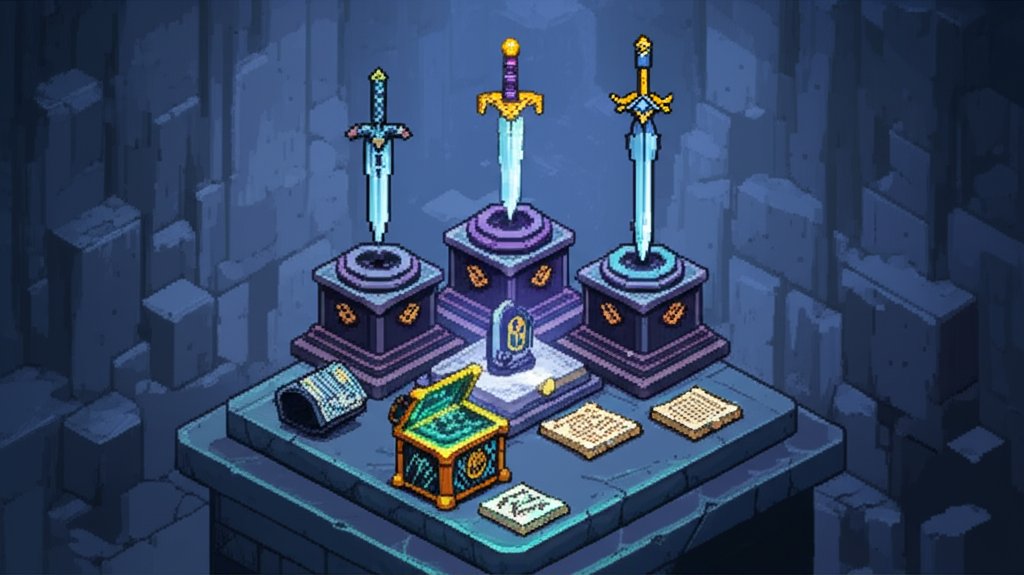
Step into the captivating narratives of literature, film, and games, where the smallest blade can cast the longest shadow. While grand swords often claim the spotlight, it’s the famous fictional daggers that frequently cut deepest, both literally and metaphorically. These legendary blades, often concealed, swiftly wielded, and steeped in mystery, serve as more than mere weapons; they are catalysts for destiny, symbols of betrayal, and vessels of potent magic.
In this comprehensive exploration, we plunge into the intricate world of daggers in literature and pop culture, uncovering their origins, unraveling their profound symbolism, and celebrating their enduring impact. Prepare to be enthralled as we examine why these literary daggers – from the hallowed halls of fantasy to the gritty streets of epic tales – have etched themselves into our collective imagination as true legendary blades.
To delve even deeper into the most memorable examples, don’t miss our full exploration of famous daggers, where we dissect their role in shaping iconic narratives.
The Enduring Allure of Fictional Daggers

Daggers, by their very nature, carry an intimacy that larger weapons lack. They are tools of stealth, precision, and often, personal connection. This inherent quality makes them exceptionally powerful narrative devices, capable of driving pivotal plot points and revealing deep character traits.
More Than Just Weapons: Symbolism and Storytelling
Authors and creators frequently reach for fictional daggers when they need to convey complex themes beyond simple combat. A dagger can signify a secret, a betrayal, or a desperate act. Its compact size allows for concealment, making it the preferred instrument of assassins and schemers, immediately injecting tension and moral ambiguity into a story. Unlike a sword, which often symbolizes open warfare or heroism, a dagger hints at closer, more personal conflicts, often involving trust, subterfuge, or a fateful decision made in haste. This is why daggers in literature resonate so deeply, transforming simple objects into potent symbols.
From Ancient Myths to Modern Fantasy: A Brief History of Their Narrative Role
The concept of potent, compact blades dates back to ancient folklore and mythology. While not always explicitly “daggers” in the modern sense, smaller, magical knives have long existed as tools for ritual, sacrifice, or to defeat specific evils. As literature evolved, so too did the sophistication of these legendary blades. In classical tales, a dagger might be a last resort or a ceremonial object. With the rise of modern fantasy and genre fiction, literary daggers gained intricate backstories, unique magical properties, and central roles in epic quests, becoming characters in their own right, as revered as any hero’s sword.
Legendary Blades: Iconic Fictional Daggers from Literature & Beyond
The world of fiction is rich with famous fictional daggers, each with a unique history and a significant role in its respective narrative. From Middle-earth to Westeros, these blades have become synonymous with their stories.
Sting (The Hobbit & The Lord of the Rings)
Perhaps one of the most beloved famous daggers in fantasy, Sting is Bilbo Baggins’ elven blade, later passed to Frodo. More than just a sharp edge, Sting glows blue when Orcs are near, acting as an early warning system and a symbol of hope in the dark. Crafted in ancient Gondolin, its humble appearance belies its legendary status. It’s a perfect example of a literary dagger that is both practical and deeply symbolic, representing courage, unlikely heroism, and the quiet vigilance against encroaching evil.
Catspaw Dagger (A Song of Ice and Fire / Game of Thrones)
This Valyrian steel blade with a dragonbone hilt is a linchpin in the sprawling narrative of Westeros. The Catspaw Dagger first appears in an assassination attempt on Bran Stark, igniting the War of the Five Kings. Later, it becomes Arya Stark’s weapon, culminating in her use of it to deliver the killing blow to the Night King. Its origin and journey through many hands, coupled with its precious material and historical significance, make it one of the most impactful and famous fictional daggers in contemporary fiction, a true legendary blade that shaped the fate of a continent.
The Blade of Woe (The Elder Scrolls Series)
For fans of the Elder Scrolls video games, the Blade of Woe is instantly recognizable. This daedric artifact, wielded by members of the Dark Brotherhood, is imbued with the horrifying ability to absorb the souls of its victims. It’s a prime example of a fictional dagger whose power directly reflects its dark purpose and the shadowy organization it serves. Its sinister reputation and the macabre rituals associated with it solidify its place among legendary blades in gaming.
Dagger of Time (Prince of Persia Series)
A central artifact in the Prince of Persia saga, the Dagger of Time allows its wielder to manipulate time itself – reversing mistakes, slowing enemies, and even pausing the flow of reality. This famous dagger transcends its physical form, becoming a potent magical device that dictates the very mechanics of gameplay and story progression. Its fantastical abilities make it one of the most iconic legendary blades in video game history.
Merlin’s Dagger (Arthurian Legend & Adaptations)
Though often overshadowed by Excalibur, various adaptations of Arthurian legend feature Merlin’s Dagger – a blade imbued with ancient magic and profound wisdom. It sometimes holds the power to unlock secrets, cast powerful enchantments, or symbolize Merlin’s own mastery over arcane forces. This literary dagger often represents a deeper, more subtle form of power than brute strength, tying into themes of knowledge and destiny.
The Witch-king’s Dagger (Lord of the Rings)
The Morgul-blade from J.R.R. Tolkien’s The Lord of the Rings is the fictional dagger used by the Witch-king of Angmar to inflict a terrible wound upon Frodo Baggins on Weathertop. More than just a poisoned blade, it is a Morgul-knife, designed to leave a splinter of evil in its victim, slowly turning them into a wraith. This makes it a uniquely terrifying legendary blade, embodying the corrupting power of Sauron and the relentless decay it inflicts.
Dagger of Thulsa Doom (Conan the Barbarian)
In the dark fantasy world of Conan, the Dagger of Thulsa Doom is a ceremonial and ritualistic blade, representing the serpentine cult’s insidious power. Its sinister presence underpins the villain’s nefarious deeds and the treachery he employs. This famous dagger is less about combat and more about the embodiment of ancient evil and corrupting influence, a potent symbol of darkness in heroic fantasy.
The Profound Symbolism of Daggers in Literature
Beyond their literal function, daggers in literature are loaded with symbolic weight, mirroring human emotions, moral quandaries, and narrative turning points.
Betrayal and Treachery
The dagger is perhaps most famously associated with betrayal. Its intimate nature – requiring close proximity between wielder and victim – makes it the perfect instrument for a clandestine or personal act of perfidy. Shakespeare’s Julius Caesar offers the quintessential example, where the phrase “Et tu, Brute?” immortalizes the dagger as the primary symbol of treachery among friends. The sudden, unexpected thrust of a dagger signifies a trust broken, a loyalty shattered.
Hidden Power and Secrecy
Unlike a visible sword, a dagger can be easily concealed, making it a symbol of hidden threat and clandestine operations. It represents the quiet strike, the agent operating from the shadows, or the secret weapon held in reserve. This aspect of secrecy imbues literary daggers with a sense of mystery and potential danger, reminding readers that the greatest threats often come from unexpected places.
Sacrifice and Destiny
In many tales, daggers are not wielded for destruction but for sacrifice, either ritualistic or personal. A character might use a dagger to cut a bond, mark a pact, or even end their own suffering for a greater cause. These famous daggers transform into instruments of fate, guiding characters toward their predetermined paths or forcing them to make irreversible choices that shape their destinies.
Madness and Obsession
A dagger can also become a focal point for a character’s internal turmoil, reflecting their descent into madness or their singular obsession. Edgar Allan Poe’s “The Tell-Tale Heart” brilliantly uses the narrator’s obsession with a blade as a manifestation of his psychological breakdown. In these narratives, the dagger is not merely a tool but a projection of the character’s warped reality, a terrifying extension of their inner demons.
Crafting the Blade: Types and Characteristics of Fictional Daggers
The world of fictional daggers draws heavily from real-world armaments but often embellishes them with fantastical elements, resulting in a diverse array of legendary blades.
Ceremonial and Ritual Daggers
These daggers are often ornate, crafted from precious materials, and may not be designed primarily for combat. Instead, they are used in religious rites, magical spells, or to signify status. The Dagger of Thulsa Doom is a prime example, its design reflecting its purpose in dark rituals rather than frontline battle. These literary daggers carry immense symbolic weight, often tied to ancient powers or traditions.
Combat and Assassin’s Daggers
Designed for swift, silent, and deadly application, these fictional daggers prioritize practicality and effectiveness. They might feature specialized grips for quick deployment, lightweight construction, or unique blade profiles for specific combat styles. The Blade of Woe fits this category, a weapon perfectly suited for its shadowy wielders. Many famous daggers used by rogue classes or stealthy characters in games and books fall under this type.
Mystical and Enchanted Daggers
The realm of fantasy often introduces daggers with supernatural properties. These can range from blades that glow in the presence of evil (like Sting) to those that manipulate fundamental forces (like the Dagger of Time). These legendary blades are often imbued with magic through ancient craftsmanship, divine blessing, or dark rituals, making them invaluable artifacts within their respective stories.
Unique Fictional Blade Designs
Authors and creators frequently invent entirely new types of daggers to suit their unique worlds. These can include daggers made from fantastical materials like Valyrian steel (Catspaw), blades with living properties, or those that transform. The inventiveness behind these famous daggers adds depth and distinctiveness to the fictional universes they inhabit.
Beyond the Page: The Cultural Impact of Famous Fictional Daggers
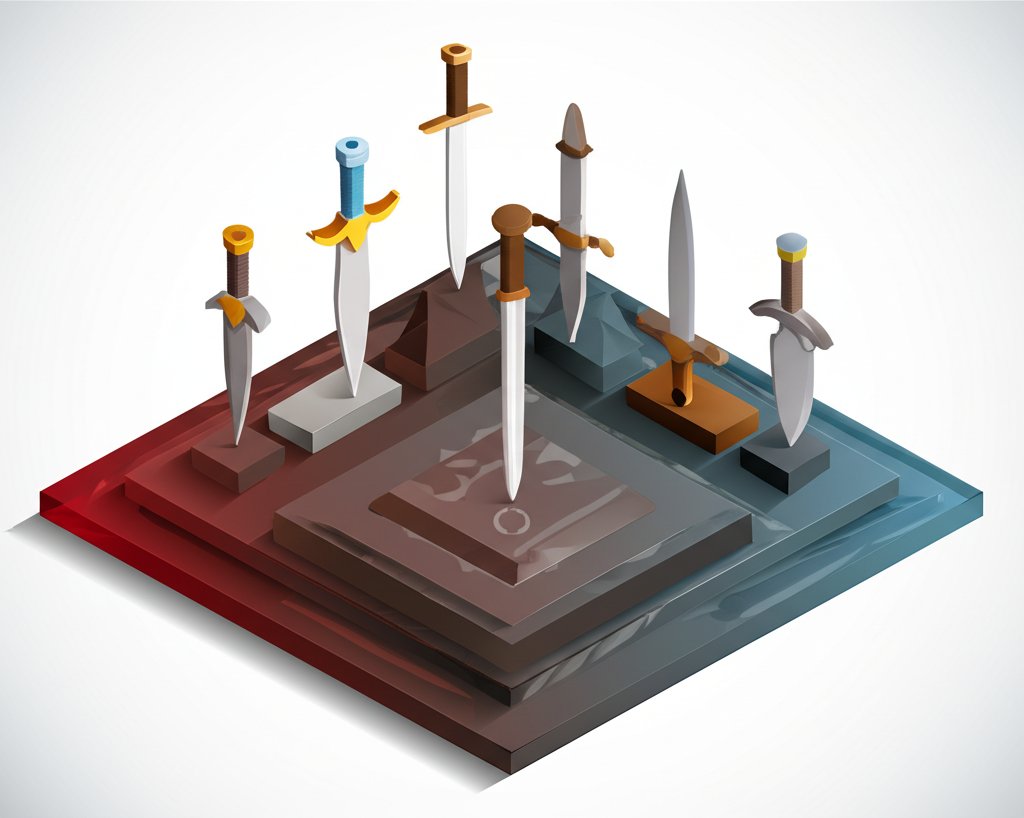
The influence of famous fictional daggers extends far beyond the pages of books or the screens of movies and games. They become cultural touchstones, inspiring fans and influencing the broader landscape of popular culture.
From Books to Big Screen: Visualizing Legendary Blades
When literary daggers make the leap from text to visual media, their iconic status is amplified. The distinctive glow of Sting, the intricate Valyrian steel patterns of the Catspaw Dagger, or the mystical aura of the Dagger of Time all become instantly recognizable. Film and television adaptations bring these legendary blades to life, solidifying their imagery in the minds of millions and further cementing their place as cultural icons.
Gaming and Role-Playing: Wielding the Fictional Blade
In the world of video games and tabletop RPGs, fictional daggers take on an interactive dimension. Players can wield these powerful items, making them feel real and impactful. The stats, abilities, and lore attached to famous daggers in games often deepen their mystique, allowing players to experience the legend firsthand. This interactive element creates a profoundly personal connection to these legendary blades, fostering a sense of ownership and adventure.
Merchandising and Fan Culture
The popularity of famous fictional daggers is evident in the thriving market for replicas, collectibles, and fan-made art. Enthusiasts proudly display detailed recreations of Sting or the Catspaw Dagger, incorporating them into cosplay or simply as cherished display pieces. This level of engagement highlights the deep emotional connection fans have with these legendary blades, proving their status as enduring symbols in popular culture.
Conclusion
From the subtle glow of Sting to the time-bending power of the Dagger of Time, famous fictional daggers hold a special place in our collective imagination. These legendary blades are far more than just keen edges; they are potent symbols of betrayal, power, destiny, and the hidden depths of human and fantastical experience. Their compact size belies their immense narrative weight, making them indispensable elements of the stories they inhabit.
As we continue to delve into new worlds of adventure and intrigue, the allure of daggers in literature and across all forms of media will undoubtedly persist. So, whether you’re revisiting a classic tale or exploring a new epic, pause to appreciate these literary daggers – for often, the smallest blade can cast the longest and most unforgettable shadow.
FAQ
Q: What distinguishes a fictional dagger from a fictional sword?
A: Generally, daggers are shorter, lighter, and designed for close-quarters combat, stealth, or specific ceremonial purposes, often with a double-edged blade. Swords are longer, heavier, and typically used for open combat. In fiction, daggers often carry connotations of intimacy, precision, and concealed power, whereas swords symbolize overt heroism or martial prowess.
Q: What are some of the most famous fictional daggers?
A: Some of the most renowned famous fictional daggers include Sting (The Lord of the Rings), the Catspaw Dagger (A Song of Ice and Fire), the Blade of Woe (The Elder Scrolls), the Dagger of Time (Prince of Persia), and Merlin’s Dagger (Arthurian Legends).
Q: Why do authors often choose daggers for key plot points?
A: Daggers are chosen for key plot points due to their symbolic versatility. They can represent betrayal (e.g., Julius Caesar), hidden threats, desperation, magical power, or ceremonial significance. Their smaller size allows for surprise attacks or intimate, fateful decisions, making them powerful narrative catalysts.
Q: How do daggers in fantasy literature differ from those in historical fiction?
A: In historical fiction, literary daggers typically adhere to real-world designs and martial uses, emphasizing historical accuracy. In fantasy literature, while drawing inspiration from real daggers, they often possess magical enchantments, unique materials (like Valyrian steel), or extraordinary abilities beyond physical combat, making them more fantastical legendary blades.
Q: Can you name a famous dagger from a video game besides the Dagger of Time?
A: Yes, in addition to the Dagger of Time from Prince of Persia, the Blade of Woe from The Elder Scrolls series is a highly recognizable and famous fictional dagger in video games, known for its soul-stealing enchantment.
Q: What makes a fictional dagger “legendary”?
A: A fictional dagger becomes legendary when it possesses a deep backstory, plays a crucial role in shaping the narrative or characters’ destinies, exhibits unique or magical properties, and captures the imagination of readers and audiences, becoming an enduring symbol within its fictional universe and beyond.
Q: Are there any famous real-world daggers that inspired fictional ones?
A: While this article focuses on fictional daggers, many legendary blades in literature draw inspiration from historical dagger types, like dirks, rondels, or qama daggers, endowing them with fictional significance and magical properties. The real-world symbolism of daggers (pride, courage, wealth, sacrifice) often finds its way into fictional portrayals.










