
The tapestry of Ancient India government is a rich and complex weave, far more sophisticated and diverse than often portrayed. Far from a monolithic entity, Ancient India governance evolved over millennia, giving rise to myriad political systems, administrative innovations, and philosophical underpinnings that continue to fascinate historians and political scientists alike. From the nascent tribal councils of the Vedic age to the grand, centralized empires of the Mauryans and the decentralized yet prosperous Gupta era, understanding these structures is key to appreciating one of the world’s most enduring civilizations.
This article delves deep into the intricate mechanisms that governed ancient Indian societies. We will uncover the foundational principles, explore the operational components of statecraft, and examine the distinct administrative models of its most influential empires, the Mauryas and the Guptas. Prepare to journey through time and unveil the multi-faceted political systems Ancient India developed, demonstrating a profound understanding of statecraft, law, and social welfare that reverberates even today. Our mission is to provide an unparalleled understanding of how ancient Indian states functioned, aiming to be the definitive resource for anyone seeking to comprehend this pivotal aspect of history.
While ancient Indian governance focused on different aspects of statecraft, exploring the early forms of executive leadership such as those found in the evolution of cabinet departments can provide a comparative context for understanding the development of administrative roles.
The Foundations of Ancient India Government: Early Systems and Principles
The earliest forms of Ancient India government were characterized by a fluid, evolving structure, adapting to societal changes and geographical expansion. These foundational systems laid the groundwork for the more complex polities that would emerge later.
From Tribal Polities to Monarchical Dominance
During the early Vedic Period (c. 1500–1000 BCE), political organization was largely tribal. Small, kinship-based groups known as Janas were led by a Rajan (chief or king) whose authority was often based on military prowess and charisma rather than hereditary right. Governance was communal, with assemblies like the Sabha (council of elders) and Samiti (general assembly) playing significant roles in decision-making and even electing or deposing the Rajan.
As agricultural societies flourished and populations grew, these tribal structures gradually transitioned into more settled kingdoms (Janapadas) and eventually larger territorial states (Mahajanapadas) by the 6th century BCE. This era saw the consolidation of monarchical power, where the king’s position became increasingly hereditary and sacred. Nonetheless, the ideal of a benevolent ruler who protected his subjects and upheld dharma remained central to the concept of Ancient India governance.
The Concept of Dharma and Rajadharma in Governance
At the heart of political systems Ancient India was the pervasive concept of Dharma. Far more than just religion, Dharma encompassed righteousness, cosmic order, moral law, and duty. For rulers, this translated into Rajadharma – the sacred duties and responsibilities of a king. A king was expected to govern justly, protect the innocent, punish the wicked, ensure the welfare of his subjects (known as Praja Palana), and maintain social order.
This philosophical underpinning meant that even in an absolute monarchy, the king was not seen as above the law, but rather as its chief enforcer and protector. Failure to uphold Rajadharma could, in theory, lead to loss of legitimacy or even rebellion, demonstrating a unique balance between monarchical power and moral accountability. This spiritual and ethical dimension profoundly distinguished Ancient India government from many contemporary political systems.
The Saptanga Theory of State: Seven Pillars of Ancient Indian Polity
Perhaps the most articulated theory of statecraft in Ancient India governance comes from Kautilya’s Arthashastra (c. 4th-3rd century BCE), which outlines the Saptanga (Seven Limbs) theory of the state. This comprehensive model described the state not just as a king, but as an organic whole comprising seven interconnected elements, each crucial for its proper functioning:
- Swamin (The Sovereign/King): The head of the state, embodying supreme authority. His qualities, wisdom, and leadership were paramount.
- Amatya (The Minister/Bureaucracy): The council of ministers and administrative officials responsible for assisting the king in governance, policy execution, and management of state affairs.
- Janapada (The Territory and Population): The land and its people, forming the physical and human basis of the state. Its fertility, resources, and the loyalty of its populace were vital.
- Durga (The Fortified Capital): Defensive fortifications essential for security, protection during invasions, and as a center of administration.
- Kosa (The Treasury): The financial resources of the state, crucial for maintaining the army, funding public works, and ensuring administrative stability. A strong treasury was seen as the backbone of power.
- Danda (The Army/Force): The military, responsible for defense, maintaining internal order, and projecting state power. A well-disciplined and effective army was indispensable.
- Mitra (The Ally/Friend): Diplomatically significant allies, whose support could be crucial in times of war or peace. Foreign policy and alliances were intricately woven into statecraft.
This holistic view underscores the sophisticated understanding of state components within Ancient India government, emphasizing interdependence and strategic planning.
Early Republican and Oligarchic Forms
While monarchy became predominant, Ancient India governance was not exclusively monarchical. The period of the Mahajanapadas (c. 6th-4th century BCE) also saw the rise of republican or oligarchic states known as Ganasanghas (or Gana-Rajyas). These polities, particularly prevalent in the Himalayan foothills and eastern India (e.g., the Vajjis, Mallas, Shakyas), were governed by councils of elder warriors or heads of clans, rather than a single king.
Decisions were made through assemblies, and offices were often held by rotation among noble families. These republics showcased an alternative model of political systems Ancient India offered, demonstrating a commitment to collective decision-making and a degree of popular participation, albeit limited to specific social strata. They represent a fascinating counterpoint to the growing monarchical trend.
Core Components of Ancient Indian Governance
Irrespective of whether the state was a kingdom or a republic, certain administrative and functional components were universally recognized as essential for effective Ancient India government.
The Sovereign Ruler: Powers and Responsibilities
In most monarchical settings, the King (Rajan or Samrat) was the supreme authority. His powers included:
- Executive Head: Implementing laws, overseeing administration, and directing state policies.
- Chief Justice: Serving as the highest court of appeal and ensuring the administration of justice.
- Commander-in-Chief: Leading the army in times of war and responsible for defense.
- Legislative Authority: With the advice of his council, issuing decrees and laws.
- Religious Patron: Often seen as a protector of Dharma, supporting religious institutions.
Despite this extensive power, the concept of Rajadharma and the influence of religious and legal texts (like the Dharmashastras) provided a moral and ethical framework that ideally guided royal conduct. The expectation was that the king acted for the welfare of his subjects, distinguishing a righteous ruler from a tyrant.
The Council of Ministers (Mantri Parishad) and Bureaucracy
To manage the vast and complex affairs of the state, the king was invariably assisted by a Mantri Parishad (Council of Ministers). This council comprised various Mantris (ministers) holding portfolios such as the Purohita (chief priest/advisor), Senapati (commander of the army), Mahamantri (chief minister), Yuvaraja (crown prince in some cases), and others responsible for revenue, justice, and external affairs.
Beneath the council, a robust bureaucracy managed daily administration. This administrative machinery was highly specialized, with officials overseeing everything from tax collection (Samaharta) and treasury (Sannidhata) to city administration (Nagaraka) and espionage. The efficiency of this bureaucracy was a hallmark of successful Ancient India governance, particularly during the imperial periods.
Legislative, Executive, and Judicial Functions
While not formally separated in the modern sense, distinct legislative, executive, and judicial functions were observable within Ancient India government:
- Legislative: The king, advised by his Mantri Parishad and learned scholars (Pandits), was responsible for framing and modifying laws. These laws were often based on existing customs (Vyavahara), sacred texts (Shastras), and royal decrees (Raja-shasana).
- Executive: The council of ministers and the extensive bureaucratic apparatus were responsible for the implementation and enforcement of these laws, managing day-to-day administration, and collecting revenue.
- Judiciary: Justice was administered through a hierarchical system of courts, with the king as the supreme judicial authority. Village assemblies and local courts (Panchayats) handled minor disputes, while higher courts dealt with more serious crimes. Judges (Dharmadhikarin) were guided by Dharma, legal codes, and customary law. The emphasis was on meticulous investigation, witness testimony, and appropriate punishment (Danda) to maintain social order.
This three-pronged approach, even if integrated under the monarch’s ultimate authority, demonstrates a mature understanding of the requirements for effective Ancient India government.
Revenue Administration and Economic Control
A strong economic base was crucial for any state in Ancient India. The government’s revenue administrative system was sophisticated, primarily based on:
- Land Revenue: The most significant source of income, typically a share (often 1/6th) of the produce, collected from farmers.
- Taxes and Duties: Levies on trade, goods, craftsmen, and various professions.
- Mines and Forests: State ownership and exploitation of natural resources.
- Tributes: From subordinate rulers or conquered territories.
The government also played a significant role in economic regulation, promoting trade, maintaining roads, operating state-owned workshops, and sometimes even controlling prices. The Arthashastra, for instance, provides detailed guidelines on economic policy, demonstrating how integral economic management was to Ancient India governance.
Mauryan Empire Governance: A Centralized Blueprint
The Mauryan Empire (c. 322–185 BCE) represented a pinnacle of centralized Ancient India government. For the first time, a vast portion of the Indian subcontinent was united under a single, powerful administration, establishing a meticulous and highly effective system of Mauryan Empire governance.
Chandragupta Maurya and the Rise of a Unified Empire
Founded by Chandragupta Maurya with the strategic guidance of his advisor Kautilya (also known as Chanakya), the Mauryan Empire emerged from the political fragmentation following Alexander the Great’s retreat. Its rise marked a radical shift towards a highly centralized, bureaucratic state, contrasting sharply with the smaller kingdoms and republics that preceded it. The consolidation of such a vast territory required an unprecedented level of administrative precision.
Kautilya’s Arthashastra: The Manual of Mauryan Statecraft
The principles of Mauryan Empire governance are best understood through Kautilya’s Arthashastra, a treatise on statecraft, economic policy, and military strategy. This monumental work detailed:
- The King’s Absolute Authority: While advised by ministers, the king was the ultimate decision-maker, his welfare intertwined with that of his subjects.
- Elaborate Bureaucracy: The text describes a highly departmentalized administration with numerous superintendents (Adhyakshas) overseeing every aspect of public life, from agriculture and mines to weights & measures and prostitution.
- Taxation System: A detailed system for collecting various taxes, ensuring a robust treasury (Kosa) for state activities and defense.
- Law and Justice: A comprehensive legal code and a system of courts (Dharmasthiya for civil, Kantakashodhana for criminal) enforced strict justice.
- Espionage Network: A sophisticated network of spies (Gudhapurusha) kept the king informed of both internal and external threats, as well as public opinion.
The Arthashastra serves as a testament to the advanced political thinking underpinning Mauryan Empire governance, emphasizing efficiency, control, and strategic foresight.
Administrative Divisions and Provincial Rule
To manage its vast territory, the Mauryan Empire was divided into four large provinces, each administered by a Kumara (royal prince) or a high-ranking official like a Mahamatra. These provinces were further subdivided into districts, which were managed by officials such as Sthanikas and Gopas.
- Provinces: Ujjain (Western), Taxila (Northern), Tosali (Eastern), and Suvarnagiri (Southern). The capital, Pataliputra, was directly administered by the central government.
- District Administration: Officials were responsible for revenue collection, maintaining law and order, and overseeing public works.
- Village Administration: The smallest unit, the village, had a headman (Gramika) and assemblies, often retaining some local autonomy under central supervision.
This hierarchical structure ensured efficient administration and effective communication across the vast empire, a crucial aspect of Mauryan Empire governance.
Military Structure and Espionage Network
The Mauryans maintained a formidable standing army, one of the largest of its time, consisting of infantry, cavalry, chariots, and elephants. Military administration was highly organized, with specific departments managing different branches and logistics. This strong military was essential for maintaining order, suppressing rebellions, and defending against external threats.
Complementing the military was an elaborate espionage system. Kautilya’s Arthashastra details various types of spies—wandering ascetics, householders, students, and poisoners—who reported on officials, citizens, and even members of the royal family. This system was vital for preempting sedition and ensuring the stability of Mauryan Empire governance.
Ashoka’s Dhamma: Ethical Governance and Social Welfare
Emperor Ashoka the Great (c. 268-232 BCE), grandson of Chandragupta, introduced a unique dimension to Mauryan Empire governance after his conversion to Buddhism. His policy of Dhamma (Dharma in Prakrit) was a socio-ethical code rather than a religious doctrine, aiming for universal peace and moral conduct.
Ashoka propagated Dhamma through rock and pillar edicts, urging subjects to practice non-violence, respect elders, tolerance towards all religions, truthfulness, and compassion. He appointed Dhamma-Mahamatras (officials of Dhamma) to spread these principles and oversee the welfare of his subjects. This emphasis on ethical governance and social welfare, alongside the existing administrative machinery, highlights a significant aspect of the evolution of Ancient India government.
Gupta Empire Governance: Decentralization and a Golden Age
Following the decline of the Mauryas and a period of fragmentation, the Gupta Empire (c. 320–550 CE) re-established a significant unified state in India. Gupta Empire governance marked a shift, characterized by a more decentralized approach compared to its Mauryan predecessor, fostering an era often dubbed the “Golden Age of India.”
The Flourishing of a Golden Age: Overview
The Gupta period is renowned for its advancements in art, architecture, science, mathematics, literature, and philosophy. This cultural efflorescence was supported by a stable and prosperous government that, while providing central direction, allowed for considerable local autonomy. The prosperity was rooted in efficient revenue collection and flourishing trade routes, enabling significant state patronage of the arts and sciences.
Decentralized Administration and Feudatories
Unlike the Mauryan model, Gupta Empire governance was characterized by a less rigid and more decentralized structure. While the Gupta kings (Maharajadhiraja) held supreme power, they often exercised it through a system of feudatories, local kings, and autonomous bodies.
- Vassal States: Many regions were governed by local rulers who acknowledged Gupta suzerainty, paid tribute, and provided military support, but largely managed their internal affairs.
- Provinces (Bhuktis): The empire was divided into provinces ruled by Uparikas (provincial governors), often members of the royal family. These governors enjoyed greater independence than their Mauryan counterparts.
- Districts (Vishayas): Provinces were further divided into districts, administered by Vishayapatis, who often worked in conjunction with local councils.
This decentralized system fostered loyalty and stability by integrating local power structures rather than completely overriding them.
Village Autonomy and Local Self-Governance
A distinctive feature of Gupta Empire governance was the significant autonomy granted to villages. Local administration was largely in the hands of village assemblies (Gram Sabhas) and village elders (Gramikas), who managed local affairs, resolved disputes, and collected minor taxes.
City administration also saw the involvement of prominent citizens and guild leaders. This emphasis on local self-governance allowed for diverse local customs and traditions to thrive, creating a resilient administrative fabric that could endure even periods of central weakness.
Revenue Systems and Economic Prosperity
The economic prosperity of the Gupta era was largely due to an effective revenue system and promotion of trade. Land revenue remained the primary source of income, typically a sixth of the produce, but it was often collected by local authorities who then remitted a share to the central government.
The state also benefited from taxes on trade, mining, and state-owned lands. The flourishing long-distance trade, both overland and maritime, brought immense wealth into the empire, which the Gupta Empire governance wisely utilized to fund public works, maintain the military, and patronize cultural developments.
Religious Pluralism and Cultural Patronage
The Gupta rulers, predominantly Vaishnavite Hindus, were known for their religious tolerance. They extended patronage not only to Hinduism but also to Buddhism and Jainism, allowing these faiths to flourish side-by-side. This policy fostered a harmonious society and attracted scholars and artists of all backgrounds to the Gupta courts.
The government actively supported learning and the arts, establishing renowned centers of education like Nalanda University. This cultural inclusivity and state patronage underscore the enlightened nature of Gupta Empire governance, contributing significantly to its “Golden Age” epithet.
Evolution and Diversity of Political Systems Across Ancient India
The journey through Ancient India government reveals a continuous evolution and remarkable diversity, extending beyond the Mauryan and Gupta paradigms. The political landscape was a dynamic mosaic, shaped by geography, cultural beliefs, and the ambitions of various rulers. This broad scope of political systems Ancient India developed offers profound insights into state formation and societal organization.
Regional Variations and Dynastic Shifts
While empires like the Mauryas and Guptas dominated large swathes of the subcontinent, numerous regional kingdoms and dynasties flourished throughout Ancient India. Each of these developed its own nuances in governance, often borrowing from and adapting the practices of larger empires while retaining unique local characteristics. Examples include:
- Pre-Mauryan Mahajanapadas: Diverse forms ranging from monarchies (like Magadha) to republics (like the Vajjis).
- Post-Gupta Kingdoms: A period of renewed regionalism where various dynasties (e.g., Harshavardhana, Chalukyas, Pallavas, Cholas) developed sophisticated regional administrations, often with strong emphasis on local self-governance in the south.
- Feudal Tendencies: Later periods saw an increase in feudal structures, where powerful landlords and local chiefs held significant administrative and military power, diluting central authority.
This constant interplay of centralizing and decentralizing forces is a defining characteristic of Ancient India governance.
The Role of Law (Dharma) and Justice Systems
Across all periods and political systems, the concept of Dharma remained a cornerstone of law and justice. Legal codes, such as the Dharmashastras (e.g., Manusmriti, Yajnavalkya Smriti), provided comprehensive guidelines for social conduct, criminal justice, civil disputes, and royal duties.
- Hierarchical Courts: Judicial administration generally followed a hierarchical structure, from village Panchayats to royal courts.
- Impartial Justice: The ideal of impartial justice, regardless of social status, was often espoused, though implementation varied.
- Punishment (Danda): Punishments were meted out based on the nature of the crime and the social standing of the offender and victim, ranging from fines to mutilation and capital punishment. The purpose was both retributive and deterrent, focused on maintaining Dharma and social order.
The intricate legal system was a critical function of Ancient India government, embodying the moral and ethical principles of the society.
Interplay with Economic, Social, and Military Systems
Ancient India government was never isolated but deeply intertwined with other societal systems:
- Economic System: Government played an active role in regulating trade, collecting taxes, managing resources (mines, forests), and funding infrastructure projects. Economic policies directly impacted state power and prosperity.
- Social System (Varna): The Varna (caste) system, while primarily social, had significant implications for governance. The Brahmins often held advisory roles, Kshatriyas formed the ruling class, and Vaishyas were crucial for the economy.
- Military System: A strong military was indispensable for state security, territorial expansion, and maintaining internal order. The size and organization of the army reflected the strength and ambition of the government.
- Religious Beliefs: Religious institutions (temples, monasteries) often received state patronage and played a role in education and social welfare, influencing government policies and public morality.
Understanding these interdependencies is crucial to fully grasp the holistic nature of Ancient India governance.
Enduring Legacies on Modern Governance
The rich legacy of political systems Ancient India developed continues to influence political thought and governance even today. Concepts like public welfare as the duty of the state, the importance of a strong rule of law, the value of administrative efficiency, and the balance between central authority and local autonomy are all themes that echo from ancient Indian statecraft. The analytical rigor found in texts like the Arthashastra remains a testament to the sophisticated political thinking of the era.
Conclusion
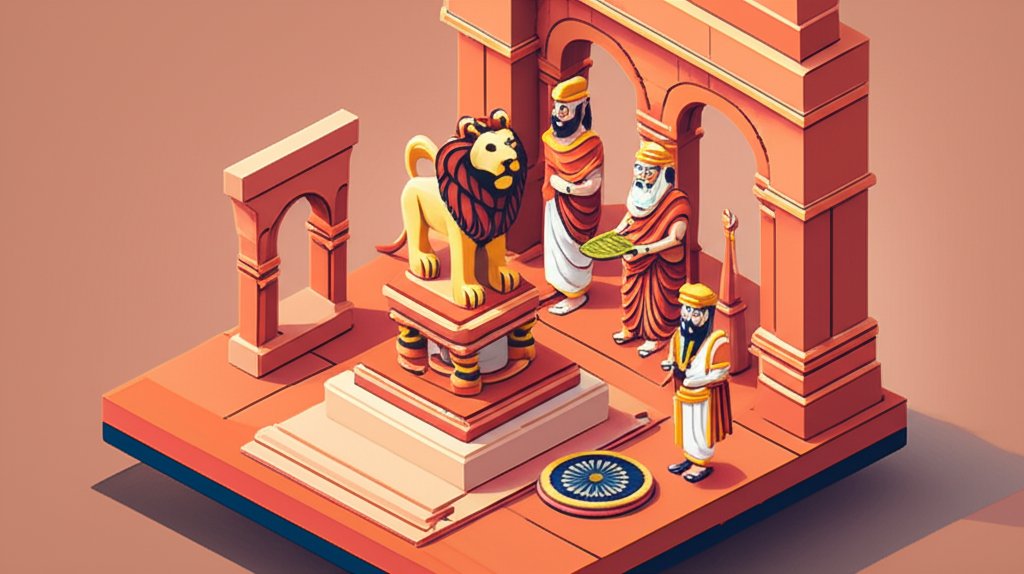
The evolution of Ancient India government is a compelling narrative of innovation, adaptation, and philosophical depth. From the nascent tribal structures of the Vedic Age to the grand imperial designs of the Mauryans and the decentralized prosperity of the Guptas, each era contributed unique elements to the intricate tapestry of Ancient India governance. We’ve seen how the profound concept of Dharma provided a moral compass, how the Saptanga theory articulated a holistic view of the state, and how sophisticated administrative machinery ensured order and welfare across vast empires.
The legacy of these political systems Ancient India forged is not merely historical; it offers invaluable insights into the enduring challenges of statecraft: balancing power with responsibility, central control with local autonomy, and economic prosperity with social justice. Exploring these ancient models enriches our understanding of political science and reminds us of the profound contributions of Indian civilization to global governance thought. May this comprehensive journey inspire further exploration into the timeless wisdom embedded in Ancient India government.
FAQ Section
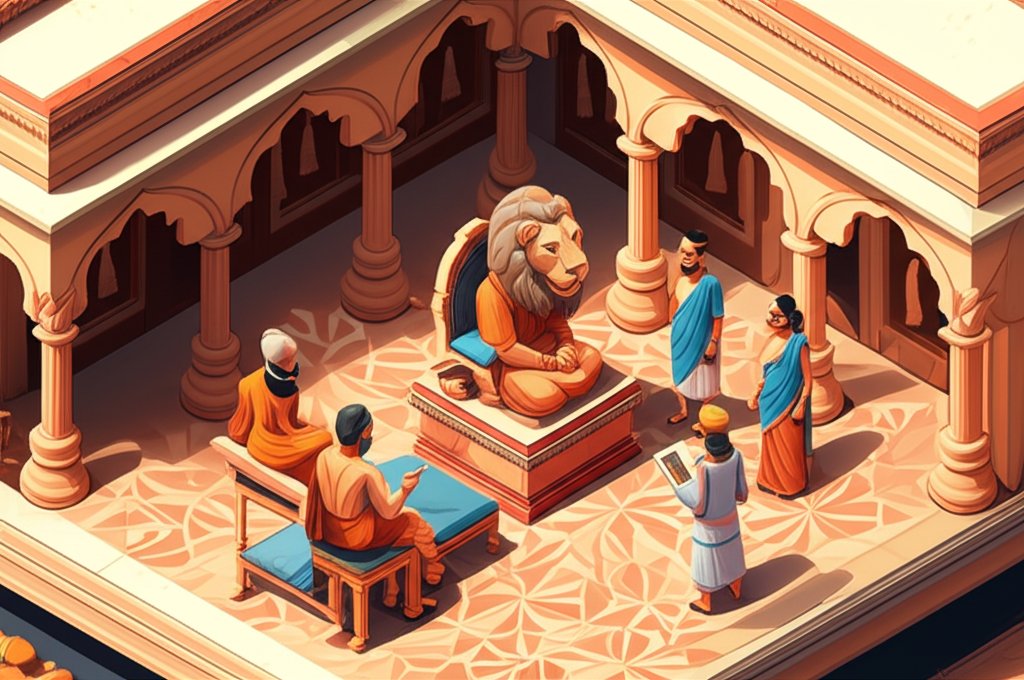
Q1: What were the earliest forms of government in Ancient India?
A1: The earliest forms of Ancient India government were tribal polities or Janas during the Vedic Period, led by a Rajan (chief). Governance was often communal, involving assemblies like the Sabha and Samiti in decision-making.
Q2: What is the Saptanga Theory and why is it important for understanding Ancient India governance?
A2: The Saptanga Theory, detailed in Kautilya’s Arthashastra, describes the state as having seven interconnected limbs: Swamin (King), Amatya (Ministers), Janapada (Territory and Population), Durga (Fort), Kosa (Treasury), Danda (Army), and Mitra (Ally). It’s crucial because it presents a holistic and sophisticated view of statecraft in Ancient India government, emphasizing the interdependence of these elements for a stable and prosperous state.
Q3: How did Mauryan Empire Governance differ from earlier political systems in Ancient India?
A3: Mauryan Empire governance was characterized by unprecedented centralization, a vast empirical reach, and a highly organized bureaucracy guided by principles laid out in Kautilya’s Arthashastra. It differed from earlier, smaller kingdoms and republics by its sheer scale, elaborate administrative divisions, and a strong, standing army and espionage system.
Q4: What role did Kautilya’s Arthashastra play in Mauryan Empire Governance?
A4: Kautilya’s Arthashastra served as a comprehensive manual of statecraft for Mauryan Empire governance. It provided detailed guidelines on the king’s duties, administrative organization, economic policy, taxation, law and justice, military strategy, and the use of espionage, effectively laying the blueprint for the empire’s successful administration.
Q5: What were the key characteristics of Gupta Empire Governance?
A5: Gupta Empire governance was more decentralized compared to the Mauryan model. It featured a system of feudatories, greater autonomy for provincial governors, and significant local self-governance at the village level. It was also known for its religious tolerance, cultural patronage, and economic prosperity, contributing to India’s “Golden Age.”
Q6: Were there any republican or oligarchic forms of political systems in Ancient India?
A6: Yes, alongside monarchies, Ancient India governance also included republican or oligarchic states known as Ganasanghas (or Gana-Rajyas). These were prevalent during the Mahajanapada period (c. 6th-4th century BCE) and were governed by councils of clan heads or elders who made decisions through assemblies, such as the Vajjis and Mallas.
Q7: How did the concept of Dharma influence the Ancient India Government?
A7: Dharma was a foundational principle across all Ancient India government systems. For rulers, it translated into Rajadharma—the sacred duty to govern justly, protect subjects, maintain social order, and uphold righteousness. Kings were expected to abide by Dharma, and their legitimacy was often tied to their adherence to these moral and ethical principles.










