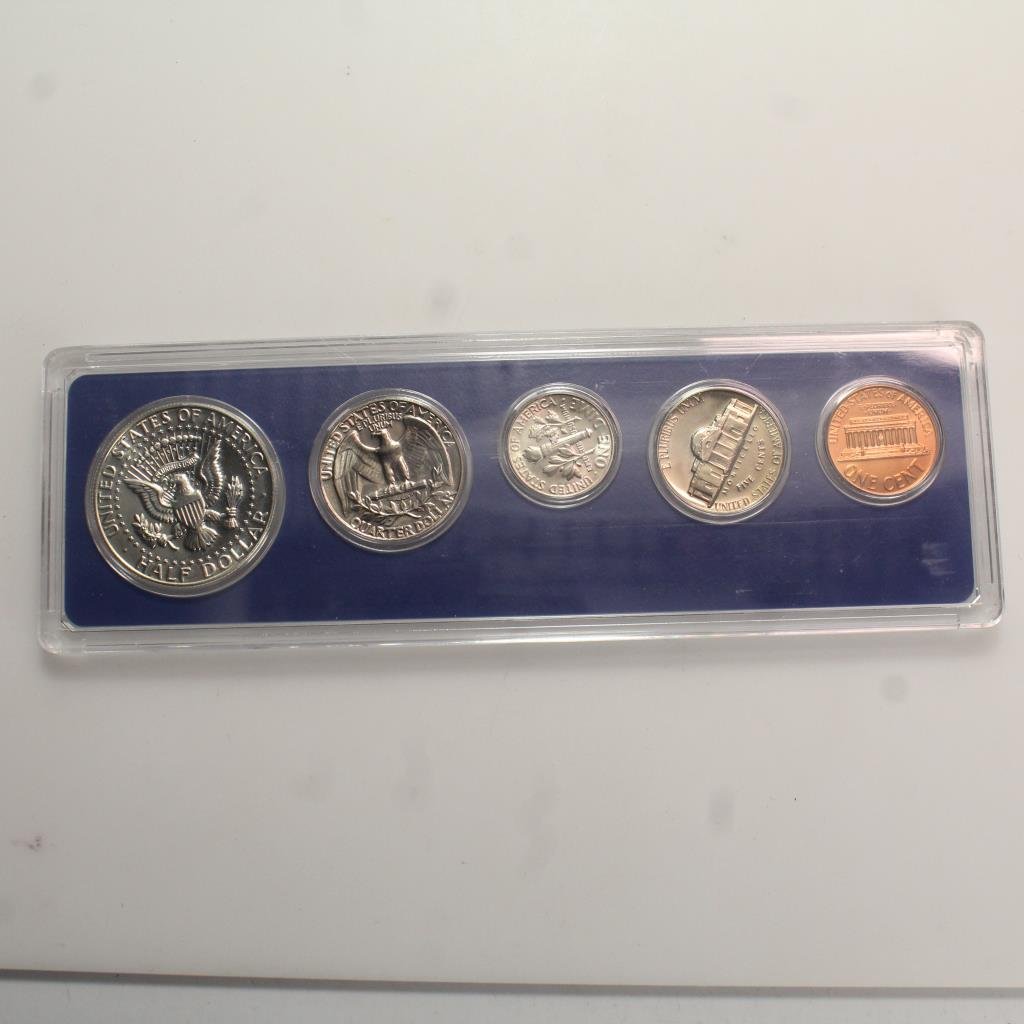
The year 1966 in the United States felt like a nation being pulled in two directions at once. While the government was making historic appointments and the Supreme Court was expanding civil liberties, the country was fracturing under the immense pressure of a rapidly escalating war in Vietnam and a Civil Rights Movement that was itself undergoing a profound and painful transformation. This wasn’t just another year; it was an inflection point where the post-war consensus shattered, and the fault lines that would define the rest of the decade were drawn in sharp relief.
At a Glance: The Defining Tensions of 1966
This article breaks down the pivotal events that shaped the year. Here’s what you’ll understand by the end:
- The Civil Rights Movement’s Radical Shift: Discover why the slogan “Black Power” emerged and how it challenged the nonviolent strategy of leaders like Martin Luther King Jr.
- Landmark Legal Victories: See how Supreme Court rulings like Miranda v. Arizona and Harper v. Virginia fundamentally reshaped American justice and voting rights.
- The Point of No Return in Vietnam: Grasp the scale of President Johnson’s military escalation, including the bombing of major North Vietnamese cities, and the political trap it created.
- The Rise of Organized Dissent: Learn how the anti-war movement gained momentum and how new organizations, from the Black Panthers to the National Organization for Women, were born from the year’s turmoil.
The Civil Rights Movement Reaches a Crossroads
By 1966, the landmark legislative victories of the Civil Rights Act of 1964 and the Voting Rights Act of 1965 were on the books. Yet for many African Americans, the reality on the ground—police brutality, economic inequality, and housing discrimination—remained unchanged. This gap between promise and reality ignited a fierce debate over the movement’s future direction.
From “Freedom Now” to “Black Power”
The simmering tensions erupted in June during the “March Against Fear.” Initiated by James Meredith, the first African American to integrate the University of Mississippi, the solo march from Memphis, Tennessee, to Jackson, Mississippi, was meant to encourage Black voter registration. On the second day, Meredith was shot and wounded by a white sniper.
In response, leaders from major civil rights organizations, including Martin Luther King Jr. of the Southern Christian Leadership Conference (SCLC) and Stokely Carmichael of the Student Nonviolent Coordinating Committee (SNCC), rushed to Mississippi to continue the march. Along the way, Carmichael, frustrated with the slow pace of change and constant violence, first began chanting “Black Power.”
The slogan electrified many younger activists but alarmed the nonviolent establishment and terrified many white Americans.
- What “Black Power” Meant: It was a call for Black self-determination. Proponents argued for building independent political and economic power, celebrating Black culture and heritage, and defending communities against police violence—by force, if necessary. It was a clear departure from the integrationist, nonviolent approach that had dominated the movement.
- Organizational Split: The ideological divide became formal. The Congress of Racial Equality (CORE) officially endorsed the Black Power doctrine in 1966, following SNCC’s lead. This created a public split with the more moderate SCLC and NAACP, fragmenting the unified front of the early 1960s.
The Black Panther Party Is Born in Oakland
The spirit of Black Power found its most potent expression in October 1966. In Oakland, California, two community college students, Huey P. Newton and Bobby Seale, founded the Black Panther Party for Self-Defense. Their initial focus was a direct response to rampant police brutality in their community.
Armed with law books and shotguns (which were legal to carry openly in California at the time), the Panthers began “patrolling the police.” They would follow police cars and observe arrests, advising citizens of their rights. Their 10-Point Program, however, went far beyond self-defense, demanding full employment, decent housing, and an end to economic exploitation—a revolutionary agenda that quickly put them in the crosshairs of the FBI.
Battles for Justice in the Streets and the Courts
While new ideologies emerged, the fight for justice continued on multiple fronts. In Chicago, Dr. King launched the Chicago Freedom Movement to challenge the city’s entrenched housing segregation. During one march through a white neighborhood, he was struck in the head by a rock. He later remarked, “I have never seen, even in Mississippi and Alabama, mobs as hostile and as hate-filled as I’ve seen in Chicago.” The experience underscored that racial animosity was a national, not just a Southern, problem.
Simultaneously, the Supreme Court under Chief Justice Earl Warren delivered decisions with monumental impact:
| Supreme Court Case | Date Decided | The Practical Impact |
|---|---|---|
| Harper v. Virginia | March 24, 1966 | Declared poll taxes unconstitutional in all U.S. elections. This removed a significant financial barrier that had been used for decades to disenfranchise poor Black and white voters, particularly in the South. |
| Miranda v. Arizona | June 13, 1966 | Established that criminal suspects must be informed of their constitutional rights before being questioned by police. This created the famous “Miranda rights,” including the right to remain silent and the right to an attorney. |
| Bond v. Floyd | Dec. 5, 1966 | Ruled that the Georgia House of Representatives violated Julian Bond’s First Amendment rights by refusing to seat him because of his opposition to the Vietnam War. This was a major victory for free speech and the anti-war movement. |
| These legal victories were tangible gains, yet the murders of activists like Sammy Younge Jr. and Vernon Dahmer served as brutal reminders of the violent resistance to change. The year was a complex mix of progress and tragedy, radicalization and reaction, all of which played out against the backdrop of a widening war. This complex dynamic is essential to understanding the full picture of What happened in 1966. |
The Vietnam Quagmire Deepens
In January 1966, there were 190,000 U.S. troops in Vietnam. By December, that number had swelled to 385,000, with tens of thousands more on the way. President Lyndon B. Johnson, committed to preventing a Communist takeover of South Vietnam, doubled down on a policy of military escalation.
From Counterinsurgency to Conventional Warfare
The strategy in 1966 shifted dramatically. The focus moved beyond supporting the South Vietnamese army to having U.S. combat troops take the lead in large-scale “search and destroy” missions. The air war also intensified massively.
In a pivotal move on June 29, U.S. aircraft began bombing targets in and around Hanoi (the capital of North Vietnam) and Haiphong (its main port) for the first time. This was a major escalation, risking a direct confrontation with the Soviet Union and China, who were supplying North Vietnam through Haiphong. President Johnson made his administration’s position clear, stating that U.S. forces would remain until “Communist aggression” was defeated.
This deepening commitment came at a high cost. American casualties mounted, and the nightly news brought the brutal reality of the war into American living rooms for the first time. The constant stream of images—burning villages, wounded soldiers, dead civilians—began to erode public support for the war.
The Anti-War Movement Finds Its Voice
As the troop transports headed to Vietnam, a growing chorus of opposition rose up at home. The anti-war movement, previously confined mostly to college campuses and pacifist groups, began to gain mainstream traction.
- Public Protests: Major demonstrations took place in cities across the country, with protestors questioning the moral and strategic justifications for the war.
- Mainstream Opposition: Respected public figures began to speak out. Dr. King delivered his first speech dedicated to criticizing the war, arguing that it was draining resources from anti-poverty programs at home and disproportionately sending Black and poor soldiers to die for freedoms they themselves did not enjoy.
- Government Backlash: The Johnson administration did not take kindly to the dissent. The House Un-American Activities Committee (HUAC) launched investigations into Americans who were suspected of aiding the Viet Cong, blurring the line between dissent and treason. The case of Julian Bond, denied his seat in the Georgia legislature for his anti-war stance, became a national symbol of this conflict between patriotism and free speech.
The escalation in Vietnam and the rise of the anti-war movement created a profound national divide. For the first time since the Civil War, the 1966 United States was a nation profoundly at odds with itself over a war, a conflict that had no clear front lines and no obvious path to victory.
A Year of Tension: Three Decisive Moments
To truly understand the friction of 1966, it helps to examine three specific events where these forces collided, revealing the deep anxieties and transformations shaping the nation.
- The Meredith March (June): A Movement’s Public Breakup. When Stokely Carmichael shouted “Black Power,” it wasn’t in a vacuum. It was the culmination of years of frustration by SNCC field workers who had been beaten, jailed, and seen friends murdered while patiently practicing nonviolence. The march became a rolling debate, with King’s followers singing “We Shall Overcome” while Carmichael’s contingent chanted “Black Power.” The media seized on the more provocative slogan, and the public split in the movement became permanent.
- Chicago Freedom Movement (July-August): The Northern Test. Dr. King brought his nonviolent strategy north to confront “de facto” segregation. He expected moral outrage to follow the violent resistance he encountered. While the marches did expose the North’s own deep-seated racism, the outcome was a weak and largely unenforced agreement with Mayor Richard J. Daley. It demonstrated that economic and housing discrimination were more complex and less easily swayed by moral appeals than Southern segregation laws.
- The First Bombing of Hanoi (June): Crossing the Rubicon. President Johnson’s decision to bomb the industrial and logistical heart of North Vietnam was a calculated risk. It was intended to break the North’s will to fight but instead hardened their resolve and drew their Soviet and Chinese allies closer. For the anti-war movement, it was proof that the government was not interested in a negotiated peace, fueling a new sense of urgency and anger among dissenters.
Quick Answers to Common Questions About 1966
Was “Black Power” a rejection of the Civil Rights Movement?
Not entirely. It’s better understood as a radical evolution. Proponents of Black Power saw it as a necessary next step after the legal victories of 1964-65 failed to deliver true equality. They argued that integration was meaningless without economic and political power. While it rejected the tactic of nonviolence and the goal of assimilation, it grew directly from the soil of the Civil Rights Movement’s experiences.
Why did the U.S. escalate so heavily in Vietnam in 1966?
The escalation was driven by the Cold War doctrine of “containment” and the “domino theory”—the fear that if South Vietnam fell to communism, other Southeast Asian countries would follow. President Johnson was also under immense domestic political pressure not to be seen as “soft” on communism or to “lose” Vietnam. Military leaders assured him that a massive application of force could bring a swift victory.
Did the Miranda rights really change policing immediately?
The Miranda v. Arizona decision set a new, clear national standard for police procedure. However, its implementation was far from immediate or uniform. Many police departments strongly resisted the ruling, arguing it would prevent them from getting confessions and solving crimes. It took years of subsequent court cases and departmental training for the “Miranda warning” to become the standard practice it is today.
How did figures like Robert C. Weaver and Edward Brooke fit into this turbulent year?
Their appointments were historic and significant. Robert C. Weaver becoming the first African American Cabinet member (as Secretary of HUD) and Edward Brooke becoming the first African American popularly elected to the Senate were powerful symbols of progress. However, their integration into the highest levels of power occurred at the very moment that many activists on the ground were questioning the value of integration itself, highlighting the year’s central paradox.
The Foundation for a Tumultuous Future
The events of 1966 did not resolve the nation’s core conflicts; they amplified them. The year ended with more troops in Vietnam, a more fractured Civil Rights Movement, and a more divided American public than when it began. The rise of Black Power, the founding of the Black Panther Party and the National Organization for Women, and the hardening of anti-war sentiment all established the key players and ideologies that would dominate the rest of the decade.
The debates that raged in the 1966 United States—over the limits of protest, the meaning of patriotism, the role of government, and the definition of freedom—were not put to rest. They were just getting started, setting a turbulent and uncertain stage for the years to come.










