While the escalating Vietnam War and the intensifying Civil Rights Movement often dominate the narrative, the full spectrum of 1966 big events reveals a world crackling with change on every front. From political coups that redrew the global map to technological leaps that reached for the moon, 1966 was a crucible year where the foundations of our modern world were forged in conflict, creativity, and crisis. It was a time when new social movements found their voice, and old political orders were decisively upended.
At a Glance: Key Transformations of 1966
- Global Political Upheaval: Military coups and leadership changes swept across Africa, Asia, and South America, signaling a volatile post-colonial era and the hardening of Cold War alliances.
- The Birth of Modern Identity Movements: Landmark organizations like the National Organization for Women (NOW) and the Black Panther Party were founded, while terms like “Black Power” entered the lexicon, reshaping the fight for equality.
- The Space Race Reached New Heights: Both the U.S. and the Soviet Union achieved historic firsts, including the first soft landing on the Moon and the first orbital docking, pushing human ingenuity to its limits.
- Landmark Rulings Redefined Personal Rights: Supreme Court decisions fundamentally altered the relationship between citizens and law enforcement, while social programs like Medicare began to reshape American society.
- Cultural Touchstones Emerged: Iconic TV shows, groundbreaking music, and new artistic movements captured the era’s anxieties and aspirations, creating cultural artifacts that still resonate today.
A World in Flux: Coups, Conflicts, and New Leaders
Beyond the jungles of Vietnam, political instability rocked nations across the globe. 1966 was a year of forceful takeovers, as military leaders seized power and new political dynasties began. These events didn’t just change governments; they reset the geopolitical chessboard for decades to come.
In Africa, a wave of coups toppled established leaders. Colonel Jean-Bédel Bokassa took control of the Central African Republic on New Year’s Day. In Nigeria, a military coup in January led to the overthrow of the civilian government. Just a month later, Ghana’s first president, Kwame Nkrumah, was ousted while on a state visit to China. These rapid-fire changes reflected the immense challenges of nation-building in the wake of colonialism.
Asia experienced equally dramatic shifts. In Indonesia, General Suharto effectively took power from President Sukarno through the “Supersemar” decree in March, ushering in his 31-year “New Order” regime. In India, following the sudden death of Prime Minister Lal Bahadur Shastri, Indira Gandhi was elected leader of the Congress Party, becoming the nation’s first female prime minister and a towering figure in 20th-century politics.
Perhaps the most consequential political event began in China, where Mao Zedong launched the Great Proletarian Cultural Revolution. What started as a campaign to purge capitalist and traditional elements from society soon spiraled into a decade of violent social and political upheaval that profoundly scarred the nation.
The Dawn of Modern Rights and Identity Movements
In the United States, the push for equality expanded and fractured, creating new, powerful voices that demanded more than just legislative change. While the broader fight for racial equality continued to intensify, these specific events marked a new phase. Explore 1966’s pivotal moments for a deeper look at how these movements fit into the larger landscape.
Three key developments in 1966 defined this new era:
- “Black Power” Enters the Lexicon: In June, during a march in Mississippi, Student Nonviolent Coordinating Committee (SNCC) leader Stokely Carmichael rallied a crowd with the electrifying phrase “Black Power.” This call for self-determination, racial pride, and political and economic empowerment signaled a shift away from the integrationist, nonviolent approach of leaders like Martin Luther King Jr.
- The Black Panther Party is Founded: Building on this new energy, Huey P. Newton and Bobby Seale founded the Black Panther Party for Self-Defense in Oakland, California, in October. Their platform combined Black nationalism with armed citizen patrols meant to monitor police brutality, making them a potent and controversial force in American politics.
- The National Organization for Women (NOW) is Formed: In June, a group of activists, including Betty Friedan, founded NOW to challenge sex discrimination in all areas of society. This marked the beginning of the “second wave” of American feminism, which moved beyond suffrage to tackle issues like workplace inequality, reproductive rights, and gender stereotypes.
These movements were complemented by landmark legal victories. In Miranda v. Arizona, the Supreme Court ruled that criminal suspects must be informed of their constitutional rights, including the right to remain silent and the right to an attorney. That same year, the court declared the poll tax unconstitutional in federal elections, removing a significant barrier to voting for African Americans and poor whites.
Reaching for the Stars: The Space Race Hits a New Velocity
The Cold War wasn’t just fought with soldiers and spies; it was also a fierce competition for technological and ideological supremacy played out in the cosmos. In 1966, the Space Race accelerated dramatically, with both superpowers achieving incredible milestones.
The Soviet Union started the year with a stunning success. In February, its Luna 9 probe became the first spacecraft to achieve a soft landing on the Moon, transmitting the first-ever images from the lunar surface. A month later, Venera 3 became the first man-made object to impact another planet when it crash-landed on Venus.
The United States responded with its ambitious Gemini program, which focused on mastering the complex maneuvers needed for an eventual lunar mission.
| US & Soviet Space Firsts in 1966 |
|---|
| Soviet Union |
| Feb 3: Luna 9 makes the first soft landing on the Moon. |
| Mar 1: Venera 3 becomes the first spacecraft to impact Venus. |
| Mar 31: Luna 10 becomes the first satellite to orbit the Moon. |
| United States |
| Mar 16: Gemini 8, crewed by Neil Armstrong and David Scott, performs the first-ever orbital docking. |
| Aug 14: Lunar Orbiter 1 becomes the first U.S. spacecraft to orbit the Moon. |
| Aug 23: Lunar Orbiter 1 takes the first photograph of Earth from lunar orbit. |
| These missions weren’t just about planting flags. They were critical steps in developing the technology for navigation, life support, and orbital mechanics that would ultimately make the Apollo Moon landing possible just a few years later. |
Culture Shock and Counterculture: A Generation’s Voice
Amidst the political turmoil and technological awe, popular culture provided both a mirror and an escape. The entertainment of 1966 captured the zeitgeist, from campy superhero fun to socially conscious folk-rock and science fiction that imagined a more optimistic future.
- On Television: Two iconic shows premiered that would shape television for generations. The “kapow!”-filled Batman series, starring Adam West, debuted on ABC, becoming an instant pop culture phenomenon. On September 8, NBC aired the first episode of Star Trek, a science fiction series that used its futuristic setting to explore complex contemporary issues of racism, war, and humanity.
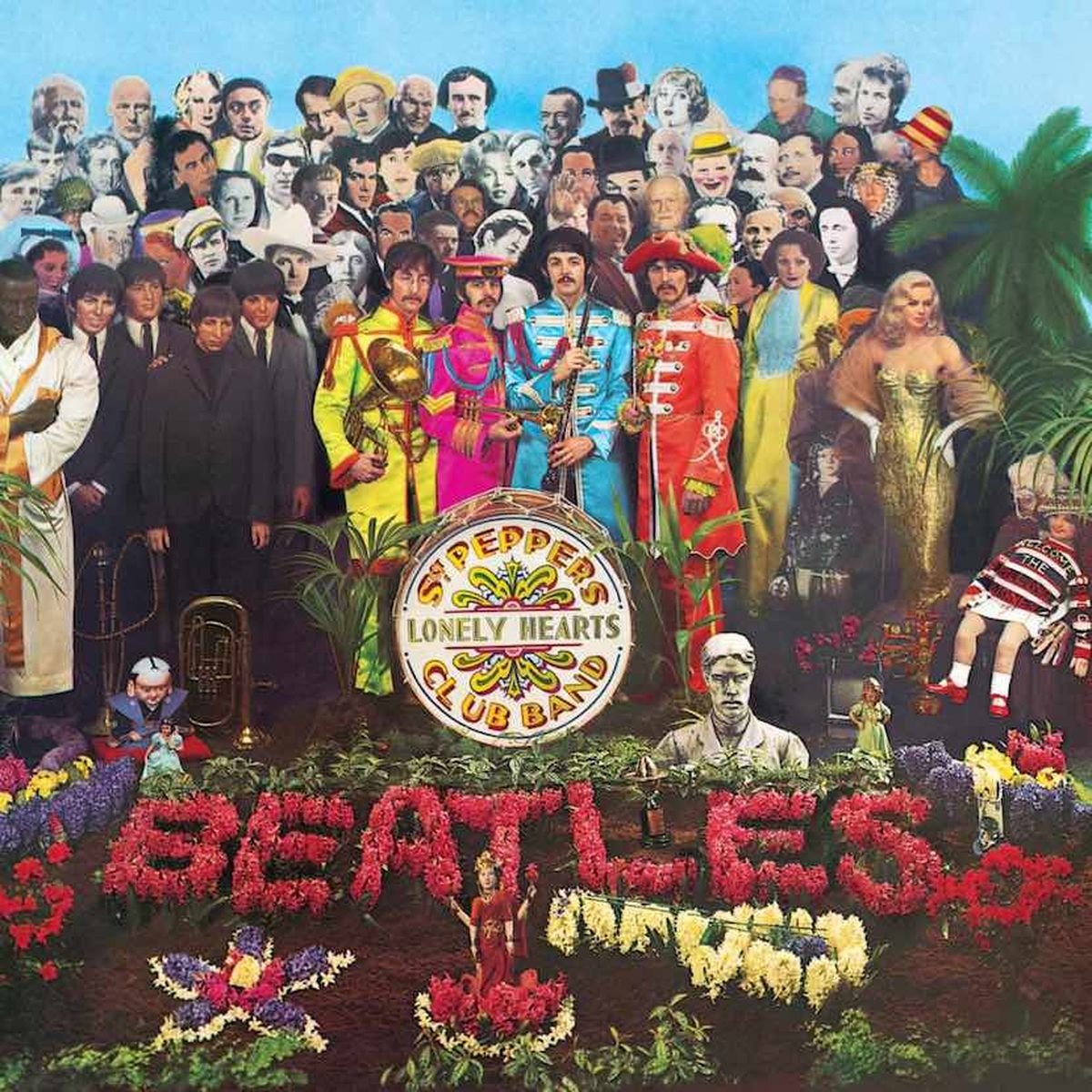
- In Music: Simon & Garfunkel’s “The Sound of Silence” hit #1 on the Billboard charts in January, its introspective lyrics capturing a sense of modern alienation. The Beatles, arguably the biggest band in the world, performed their final ticketed concert at Candlestick Park in San Francisco, retreating to the studio to create their most revolutionary work.
- On the Stage and Screen: The musical Sweet Charity premiered on Broadway, while The Sound of Music took home the Academy Award for Best Picture, offering a dose of wholesome escapism against a backdrop of global unrest.
But not all was lighthearted. The year also saw the founding of the Church of Satan by Anton LaVey in San Francisco, a provocative act of countercultural rebellion. In England, the Moors Murders trial of Ian Brady and Myra Hindley captivated and horrified the public, exposing a dark undercurrent of modern society.
Quick Answers to Common Questions
Q: What was the single most impactful event of 1966?
While history resists ranking events, a few contenders stand out for their long-term impact. The launch of China’s Cultural Revolution reshaped the world’s most populous nation for a generation. The founding of NOW and the Black Panther Party created institutional cornerstones for movements that are still active today. And the Supreme Court’s Miranda decision fundamentally changed the practice of law enforcement in the U.S.
Q: How did the Vietnam War influence other 1966 big events?
The war acted as a constant, looming backdrop. It fueled anti-war protests across the U.S. and the world, diverting immense government resources and political attention. It also heightened the ideological stakes of the Cold War, making political shifts in countries like Indonesia and Ghana seem even more critical to American policymakers.
Q: Was 1966 a year of progress or decline?
It was profoundly both. The year saw incredible progress in civil rights, women’s rights, and space exploration. Landmark social programs like Medicare were implemented. At the same time, it was a year of extreme violence, including the Charles Whitman shooting in Texas, the Aberfan disaster in Wales, and devastating political purges in China and Indonesia. This duality is what makes 1966 such a pivotal and complex year.
Q: Beyond the U.S., which countries saw the most significant changes?
China, with the start of the Cultural Revolution, and Indonesia, with Suharto’s consolidation of power, underwent seismic political shifts. India’s election of Indira Gandhi marked a new era for the world’s largest democracy. In Africa, the coups in Ghana and Nigeria were part of a continent-wide struggle to define post-colonial governance.
A Year That Set the Stage
The events of 1966 were more than just headlines; they were foundational moments. The social movements born this year would spend the next several decades fighting for their platforms. The political changes in Asia and Africa would define international relations for the rest of the Cold War. The technological firsts in space made the impossible seem within reach.
More than a collection of disparate events, 1966 represents a global tipping point—a year when the simmering tensions of the post-war world boiled over, creating new conflicts, new ideas, and new possibilities that continue to shape our world today.










