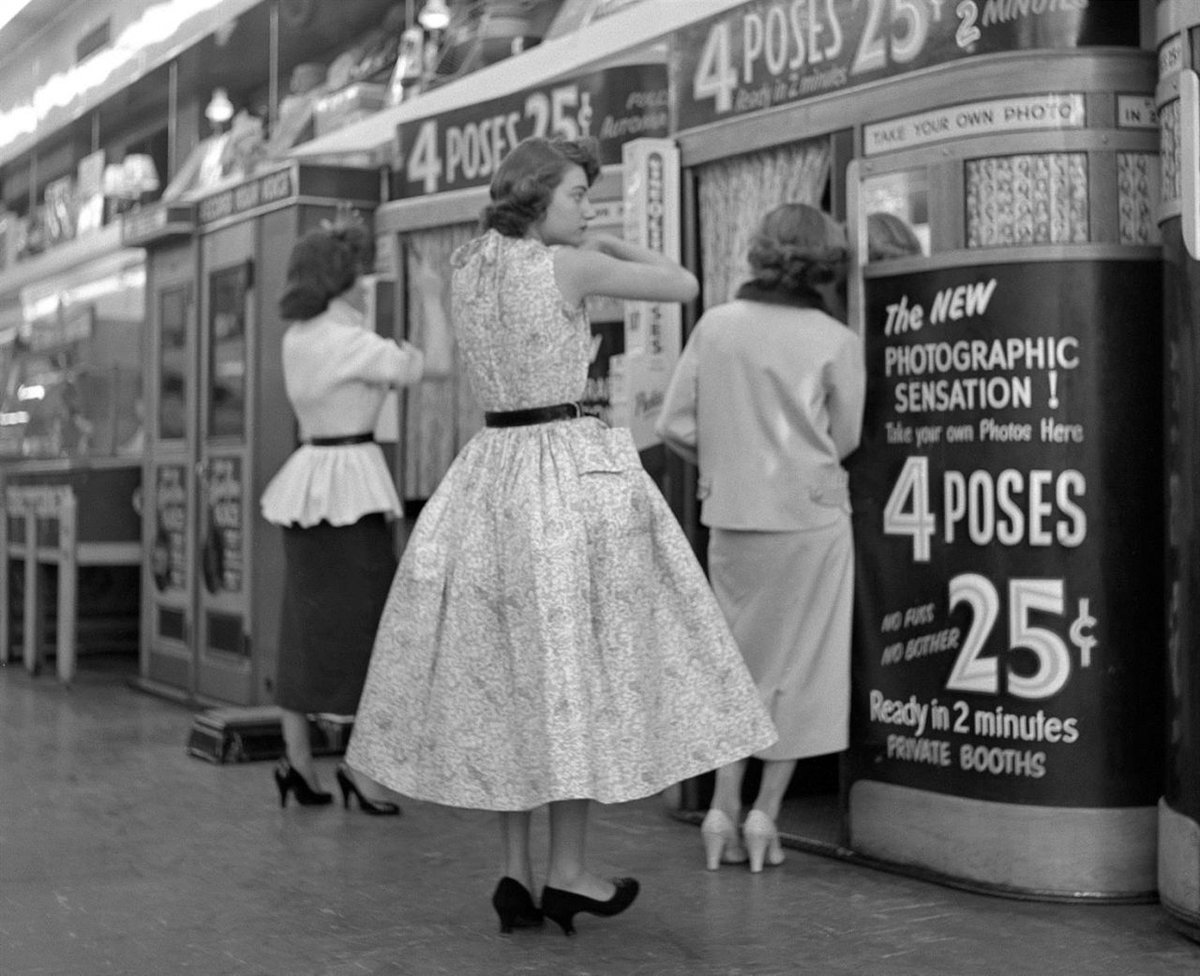
The prevailing image of the 1950s is one of idyllic suburban lawns, gleaming chrome-finned cars, and happy families gathered around a new television set. While this picture holds a kernel of truth, the most significant 1950s events in america were forged in a crucible of deep-seated anxiety, explosive social change, and technological upheaval. This was a decade of profound contradictions—a time of unprecedented prosperity shadowed by the constant threat of nuclear annihilation, and a period of stifling conformity that gave birth to a powerful youth rebellion.
Beneath the placid surface of Eisenhower’s America, the Cold War chilled domestic politics, the Civil Rights Movement ignited, and a cultural revolution began that would reshape the nation forever. Understanding these pivotal moments isn’t just a history lesson; it’s a guide to the foundations of modern American life, from our highway systems to our political divides.
At a Glance: Key Takeaways from the Decade
- The Cold War’s Domestic Grip: The ideological battle with the Soviet Union wasn’t just a foreign policy issue; it fueled the Red Scare, drove the Space Race, and even justified the creation of the Interstate Highway System.
- The Dawn of the Civil Rights Era: Foundational legal victories and acts of courageous defiance, from Brown v. Board of Education to the Montgomery Bus Boycott, laid the nonviolent groundwork for the sweeping changes of the 1960s.
- The Rise of Consumer Culture: A booming postwar economy, the G.I. Bill, and the baby boom created a new suburban landscape and a consumer-driven identity centered on television, cars, and fast food.
- A New Youth Identity: The birth of rock ‘n’ roll and the emergence of the “teenager” as a distinct demographic created a cultural wedge between generations, challenging the era’s conservative norms.
- Technological Leaps: From the polio vaccine and the discovery of DNA’s structure to the launch of Sputnik and the creation of the first integrated circuit, 1950s science radically altered the future of health, warfare, and communication.
The Cold War at Home: Paranoia and Progress
The simmering conflict with the Soviet Union cast a long shadow over every aspect of American life in the 1950s. This “war” was fought not only with spies and proxy conflicts like the Korean War (1950-1953) but also in classrooms, congressional hearings, and the minds of ordinary citizens. While these global tensions were just one piece of the puzzle, they were central among the Discover 1950s Events Shaping America.
McCarthyism and the Second Red Scare
No figure embodies the era’s paranoia more than Senator Joseph McCarthy. Beginning in 1950, he launched a zealous anti-communist crusade, claiming to have lists of communists who had infiltrated the U.S. government. His unsubstantiated accusations ruined careers and fostered an atmosphere of fear and suspicion known as McCarthyism.
- The Mechanism: The House Un-American Activities Committee (HUAC) and McCarthy’s own Senate subcommittee held televised hearings, demanding that artists, intellectuals, and government workers name suspected communists.
- The Impact: Thousands lost their jobs, were blacklisted (especially in Hollywood), or faced public ostracism. The McCarran Internal Security Act (1950) further institutionalized this fear, requiring communist organizations to register with the government.
- The Downfall: McCarthy’s influence waned after the 1954 Army-McCarthy hearings, where his bullying tactics were exposed to a national television audience. The Senate formally censured him, effectively ending his reign of influence.
The Space Race and the Education Boom
The Cold War’s competition extended beyond ideology to science and technology. The Soviet Union’s successful launch of the Sputnik 1 satellite in October 1957 sent a shockwave through the United States. This small, beeping sphere orbiting the Earth was seen as a massive technological and propaganda victory for communism.
The American response was swift and transformative:
- Creation of NASA (1958): The National Aeronautics and Space Administration was established to centralize and accelerate America’s space efforts.
- National Defense Education Act (1958): This landmark legislation poured billions of dollars into American schools, prioritizing science, math, and foreign language education to create a generation of engineers and scientists who could out-innovate the Soviets.
This reaction demonstrates how Cold War anxiety directly fueled massive federal investment in education and scientific research, laying the groundwork for the tech-driven economy of the late 20th century.
The Interstate Highway Act: A Matter of Defense
One of the most enduring legacies of the decade is the Federal-Aid Highway Act of 1956. Championed by President Eisenhower, it authorized the construction of 41,000 miles of interstate highways.
While its economic benefits are obvious today, Eisenhower’s primary justification was national defense. He had been impressed by Germany’s Autobahn during WWII and argued that a similar system was vital for evacuating cities in the event of a nuclear attack and for rapidly deploying military troops and equipment across the country. This project fundamentally reshaped American cities, fueled suburban sprawl, and cemented the nation’s dependence on the automobile.
The Seeds of Change: The Civil Rights Movement Awakens
The postwar prosperity was not shared equally. For African Americans, the 1950s were defined by the rigid segregation of Jim Crow laws. Yet, this decade saw the first cracks appear in that system, as a series of legal battles and courageous acts of defiance ignited the modern Civil Rights Movement.
Brown v. Board of Education (1954)
This landmark Supreme Court decision was arguably the most significant legal victory of the 20th century. The court, led by Chief Justice Earl Warren, unanimously declared that “separate educational facilities are inherently unequal,” overturning the “separate but equal” doctrine established in 1896.
However, the ruling’s implementation was fraught with resistance. The court’s follow-up decision called for desegregation to proceed “with all deliberate speed,” a vague phrase that many Southern states used as an excuse to delay and obstruct integration for years. In 1956, over 100 Southern congressmen signed the “Southern Manifesto,” pledging to resist the ruling.
From Individual Tragedies to Collective Action
While the legal battle raged, individual events galvanized the movement and captured national attention.
| Event | Year | Significance |
|---|---|---|
| Murder of Emmett Till | 1955 | The brutal murder of a 14-year-old Black boy in Mississippi for allegedly whistling at a white woman, and his mother’s decision to have an open-casket funeral, exposed the horrific violence of Jim Crow to the world. |
| Rosa Parks & the Bus Boycott | 1955 | Rosa Parks’ refusal to give up her bus seat in Montgomery, Alabama, sparked a year-long bus boycott organized by a young Martin Luther King Jr. It demonstrated the power of nonviolent mass action and economic pressure. |
| The Little Rock Nine | 1957 | When the governor of Arkansas used the National Guard to block nine Black students from entering the newly desegregated Central High School, President Eisenhower sent in federal troops to escort them, affirming federal authority over states’ rights in matters of integration. |
| These moments moved the struggle for civil rights from the courtroom to the streets, setting the stage for the sit-ins, marches, and legislative battles of the 1960s. |
The Economic Boom and the Suburban Dream
Fueled by the G.I. Bill, manufacturing dominance, and pent-up consumer demand from the war years, the American economy surged. The nation’s GDP more than doubled, from $200 billion in 1945 to over $500 billion by 1960. This prosperity reshaped the American landscape and created a new ideal: the suburban family.
The G.I. Bill and the Rise of Levittown
The Servicemen’s Readjustment Act of 1944, or G.I. Bill, provided veterans with low-cost mortgages and tuition assistance. This enabled millions to buy homes and attend college, creating a more educated workforce and a burgeoning middle class.
Real estate developer William Levitt capitalized on this demand by applying mass-production techniques to home building. His first “Levittown,” built on Long Island, New York, offered affordable, standardized homes that became the template for suburbs nationwide. However, these benefits were not extended to all. Racially restrictive covenants and discriminatory lending practices largely excluded Black veterans from securing these subsidized mortgages, dramatically widening the racial wealth gap for generations to come.
The Birth of Modern Consumerism
The suburban lifestyle was built around consumption. A car (or two) was a necessity, and the home was meant to be filled with the latest appliances. Three key developments from this era defined this new consumer landscape:
- Television: In 1950, only 9% of American homes had a TV. By 1960, that number was nearly 90%. Television became the central piece of furniture in the American living room, a powerful new medium for advertising, and the primary source of news and entertainment for millions.
- Fast Food: In 1955, Ray Kroc opened his first franchised McDonald’s in Des Plaines, Illinois. Its model of standardization, speed, and low cost was perfectly suited for the new car-centric, on-the-go suburban culture.
- The Destination Vacation: Walt Disney opened Disneyland in Anaheim, California, in 1955. It was a clean, safe, and highly branded environment that transformed the amusement park into a family-friendly destination, setting the standard for the modern theme park industry.
A Cultural Revolution: Rock, Rebellion, and the Teenager
While adults navigated Cold War anxieties and embraced suburban conformity, their children were tuning into a different frequency. The 1950s saw the emergence of the “teenager” as a powerful cultural and economic force, with their own music, style, and identity.
Rock ‘n’ Roll Shakes the Nation
Rock ‘n’ roll was a musical fusion, blending the sounds of African American rhythm and blues with country and western. Cleveland DJ Alan Freed popularized the term in 1951.
- Early Pioneers: In 1952, Big Mama Thornton recorded “Hound Dog,” a raw R&B track that would later be sanitized and made a global hit by Elvis Presley. The 1955 hit “Rock Around the Clock” by Bill Haley & His Comets is often considered the song that pushed rock into the mainstream.
- The King: Elvis Presley’s 1956 appearance on The Ed Sullivan Show was a cultural earthquake. His charismatic performance and “scandalous” swiveling hips were seen as a direct threat to conservative values, even as he became the biggest star in the world.
- The Sound of Integration: Rock ‘n’ roll was one of the first truly integrated forms of popular culture. White teens eagerly consumed music by Black artists like Chuck Berry, Little Richard, and Fats Domino, helping to break down cultural barriers even as society remained legally segregated.
The end of the decade was marked by tragedy. The 1959 plane crash that killed Buddy Holly, Ritchie Valens, and The Big Bopper was immortalized as “The Day the Music Died,” a symbolic end to rock’s first, explosive chapter.
Quick Answers to Common Questions
Was the 1950s really a simple, idyllic “golden age”?
Not for everyone. While many white middle-class families experienced unprecedented prosperity, this image ignores the pervasive anxiety of the Cold War, the systemic racism faced by African Americans, and the rigid social expectations that limited opportunities for women. The decade’s tensions laid the groundwork for the social upheavals that followed.
Did the economic boom benefit all Americans?
No. The G.I. Bill’s housing benefits were largely denied to Black veterans due to discriminatory practices by banks and real estate agents. This prevented them from building generational wealth through homeownership in the same way white families did, entrenching economic inequality. Rural communities and inner cities also faced significant poverty that was often overlooked in the celebration of suburban growth.
How did the Korean War differ from World War II?
The Korean War (1950-1953) was a “limited war,” not a total war for unconditional surrender. Fought under a UN mandate to contain the spread of communism, it ended in a stalemate and armistice, not a clear victory. It was also the first major U.S. conflict of the Cold War and introduced the American public to the frustrations of a protracted war with ambiguous goals. President Truman’s firing of the popular General Douglas MacArthur in 1951 for publicly challenging this limited-war strategy was a major political event.
What was the most important scientific discovery of the 1950s?
While the polio vaccine developed by Jonas Salk in 1955 had the most immediate and life-saving impact, the 1953 discovery of the double-helix structure of DNA by James Watson and Francis Crick (relying on crucial work by Rosalind Franklin) was arguably more profound. This breakthrough unlocked the secrets of heredity and laid the foundation for virtually all modern biology and genetic science.
The 1950s was not a decade of quiet conformity but one of dynamic and often contradictory change. The push for a stable, prosperous, and uniform society ran headfirst into the pull of rebellion, the demand for justice, and the anxieties of a new atomic age. The events of this pivotal decade didn’t just build highways and suburbs; they drew the political, social, and cultural battle lines that continue to define the American experience today. The debates over national security, racial equality, and cultural values that began in the 1950s are the same debates we are having now, proving that the echoes of this postwar world are still with us.










