
Step onto the grand stage of human endeavor, where the destiny of nations and the very fabric of civilization have been forged in the crucible of conflict. Across millennia, a select few individuals have risen from the ranks to become legendary military commanders, their names echoing through the ages as paragons of strategic genius and tactical mastery. These aren’t just figures etched in stone; they are the architects of victory, the shapers of empires, whose profound understanding of human nature, logistics, and the art of war has forever altered the history of warfare.
This article embarks on an unparalleled journey, delving deeper than ever before into the lives and campaigns of the most famous generals to grace the battlefield. We will meticulously unpack the specific war tactics they pioneered, analyze their triumphs and the subtle nuances of their leadership, and understand the enduring legacies that continue to inform modern strategy. Prepare to traverse the vast expanse of military history, from the ancient world’s rudimentary clashes to the complex battlefields of today, to uncover the secrets of those who mastered the ultimate game of high stakes. Our mission is to provide the definitive resource on these titans of command, offering insights that will empower and enlighten.
The Indelible Mark of Legendary Military Commanders

The impact of military commanders extends far beyond the immediate outcomes of battles. These extraordinary individuals were often nation-builders, political architects, and cultural icons, whose influence permeated every facet of their societies. Their capacity to inspire unwavering loyalty, enforce rigorous discipline, and conceive ingenious plans transformed chaotic skirmishes into decisive victories, directly leading to the rise and fall of countless empires. To truly grasp the significance of these famous generals is not merely to appreciate historical figures; it is to understand the very essence of adaptive leadership, strategic foresight, and unparalleled human ingenuity under the most immense pressures imaginable.
Their stories form the bedrock of military history itself, offering invaluable, timeless lessons in resource management, psychological manipulation, and the intricate art of command. They serve as compelling proof that while technological advancements and available resources are undeniably vital, the human element – particularly the mind of a truly brilliant commander – frequently tips the scales of destiny. Our exploration aims to illuminate the threads that connect these ancient masters to contemporary strategists, showcasing how enduring principles are reinterpreted through the lens of changing technology and geopolitics.
Understanding the leadership qualities of these figures can offer valuable lessons, even informing the strategies employed in modern special operations, as seen in analyses of successful military commanders.
Beyond the Battlefield: Defining Greatness in Command
What truly distinguishes a “legendary military commander” from a mere competent leader? It is a confluence of factors, not simply a string of victories. Greatness is defined by:
- Strategic Vision: The ability to see beyond the immediate battle, understanding the long-term political, economic, and social implications of military action.
- Tactical Innovation: Daring to break conventional molds, inventing or refining war tactics that confound and overcome enemies.
- Leadership Acumen: Inspiring troops to perform beyond their perceived limits, maintaining morale amidst adversity, and fostering discipline.
- Adaptability: The capacity to respond swiftly and effectively to unforeseen circumstances, changing plans mid-campaign, or exploiting fleeting opportunities.
- Logistical Prowess: The often-overlooked ability to move, supply, and sustain large armies across vast distances and challenging terrains.
- Psychological Warfare: Understanding and manipulating the morale of both friend and foe.
- Lasting Impact: Leaving a legacy that shapes future military doctrine, political systems, or cultural narratives.
The Core Principles of Strategic Genius
Across different eras and cultures, the most successful military commanders consistently applied certain core principles. These are the fundamental truths that underpin effective war tactics:
- Objective Clarity: Knowing precisely what needs to be achieved and focusing all efforts towards that goal.
- Unity of Command: Ensuring a single, clear authority directs the entire operation.
- Economy of Force: Allocating minimum essential combat power to secondary efforts and concentrating maximum power at the decisive point.
- Maneuver: Positioning forces to gain an advantage over the enemy, whether physically or psychologically.
- Offensive Action: Seizing, retaining, and exploiting the initiative.
- Surprise: Striking the enemy at a time, place, or in a manner for which they are unprepared.
- Security: Protecting forces from surprise attack, deception, or sabotage.
- Simplicity: Preparing clear, uncomplicated plans and orders to ensure thorough understanding and execution.
- Mass: Concentrating the effects of combat power at the decisive place and time.
These principles, articulated and refined over centuries, form the very bedrock of military history and strategic thought.
A Panoramic View: The Evolving History of Warfare
The history of warfare is a dynamic and relentless tapestry, continuously woven with threads of innovation, adaptation, and destruction. From the rudimentary tribal clashes of prehistory to the highly organized, technologically sophisticated conflicts of the present day, each successive era has introduced new challenges and, in turn, necessitated revolutionary war tactics. Understanding this evolution is crucial to appreciating the genius of the legendary military commanders who shaped it.
From Ancient Phalanxes to Roman Legions
In ancient times, the foundations of organized warfare were laid. Early civilizations focused on massed infantry formations, the valor of individual warriors, and direct, often brutal, confrontation. The Greek phalanx, a dense block of spearmen, exemplified coordinated strength, while the Persian cavalry offered unmatched mobility. It was the Roman legion, however, that revolutionized ancient war tactics with its flexible maniples and cohorts, superior engineering, and ruthless professionalism. As empires expanded, so did the scale of conflict, pushing military commanders to master complex logistics, secure vast supply lines, and perfect the art of siege warfare. Figures like Caesar transformed legionary formations into adaptable instruments of conquest, dominating the history of warfare for centuries.
Medieval Sieges and the Advent of Gunpowder
The medieval period introduced armored knights, the dominance of castles and fortified positions, and a complex feudal system that profoundly influenced troop recruitment and deployment. Battles were often determined by the effectiveness of heavy cavalry charges or the ability to slowly starve out a besieged stronghold. This era saw the development of more sophisticated siege engines and the strategic importance of combined arms, even if rudimentary. The invention of gunpowder, first in China and later spreading to Europe, fundamentally reshaped battlefields. It gradually rendered cavalry charges and castle defenses obsolete, ushering in an era where artillery, firearms, and the strategic use of cannon fire became dominant. This technological shift forced famous generals to rethink formations, speed, and the very nature of engagement, marking a significant turning point in the history of warfare.
The Age of Enlightenment and Napoleonic Doctrines
The Enlightenment brought about more professional, standing armies, standardized training, and grander strategic maneuvers. This culminated in the Napoleonic Wars, a period that stands as a watershed moment in military history. Napoleon Bonaparte, arguably the greatest of all military commanders, transformed European warfare. He pioneered concepts like mass conscription, the corps d’armée (self-sufficient divisions capable of independent action), and rapid, decisive campaigns. His war tactics emphasized speed, concentration of force, and the effective use of massed artillery, demonstrating the power of overwhelming force at a decisive point. His campaigns became a blueprint for generations of strategists, profoundly influencing the military history of the world.
Total War: Modern Warfare and Technological Leaps
The 20th century witnessed an unprecedented escalation in the scale and technology of conflict, giving rise to “Total War.” World Wars I and II introduced tanks, aircraft, submarines, and eventually atomic weapons. Trench warfare, Blitzkrieg, and combined arms operations became critical war tactics. The mechanization of armies, the development of air power, and the integration of intelligence and communication technologies demanded a new breed of military commanders who could manage vast, complex operations across multiple fronts. Figures like Zhukov and Patton mastered these new dimensions, their campaigns becoming legendary examples of modern command in the history of warfare.
Contemporary Challenges and Asymmetric War Tactics
The modern age continues this rapid evolution, moving beyond conventional state-on-state conflict into the realms of cyber warfare, drone technology, information operations, and asymmetric conflicts against non-state actors. The battlefield is no longer confined to physical spaces but extends into the digital and cognitive domains. While technology continues to advance at an exponential rate, the ingenuity and adaptability of military commanders remain paramount. The underlying principles of strategy, leadership, and human psychology, first articulated by famous generals from ancient times, continue to be adapted and applied in this ever-changing landscape of global conflict.
Master War Tactics: Innovations That Redefined Battle
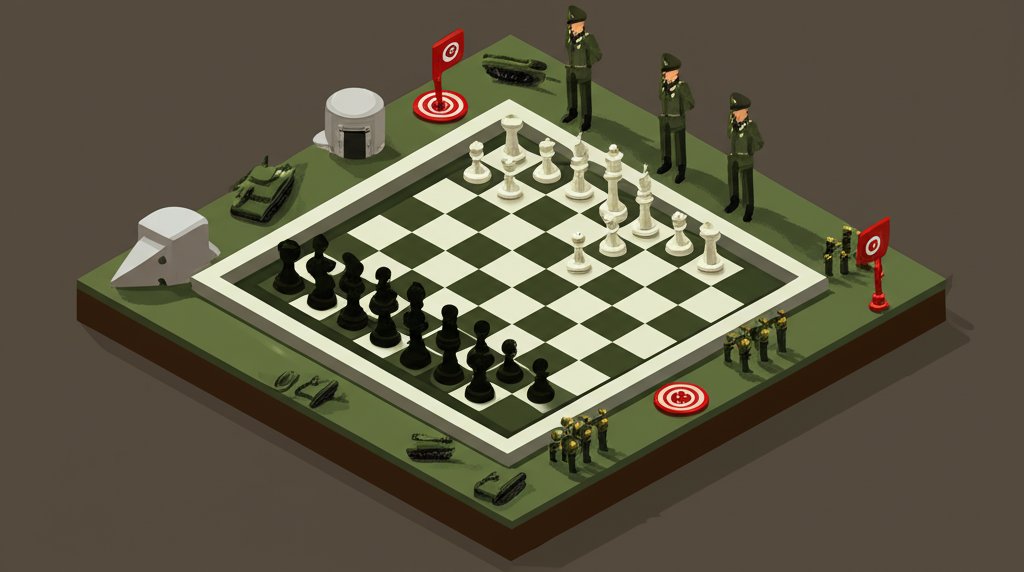
The greatest military commanders were never content with conventional approaches; they were innovators who dared to rethink the rules of engagement, creating war tactics that gave them decisive, often unexpected, advantages. These tactical innovations repeatedly redefined the art of war, making these famous generals legendary.
Deception, Feints, and Psychological Operations
Sun Tzu famously wrote, “All warfare is based on deception.” This foundational principle has been a hallmark of strategic genius throughout military history. Commanders employ feigned retreats to lure enemies into traps, create diversions to mask their true intentions, or use false intelligence to sow confusion. Psychological warfare, which aims to undermine enemy morale through intimidation, propaganda, or calculated displays of force – such as Genghis Khan’s use of terror – can be as devastating as any physical attack. The ability to manipulate the enemy’s perception and decision-making process is a sophisticated war tactic that leverages human psychology.
Maneuver Warfare: Speed, Surprise, and Envelopment
Instead of head-on clashes, maneuver warfare emphasizes speed, surprise, and fluidity to bypass enemy strong points and strike at their weaknesses or rear. Hannibal Barca’s double envelopment at Cannae, where he allowed his center to seemingly collapse, drawing the superior Roman legions deep into his lines before having his cavalry and flanking infantry close in, remains one of history’s most brilliant examples. Genghis Khan’s lightning cavalry raids and encirclement tactics also epitomized this approach, focusing on dislocating the enemy rather than simply destroying them in a direct confrontation. These war tactics prioritize initiative and flexibility to dictate the terms of engagement.
Logistical Mastery and Supply Chain Brilliance
Often unsung but critically important, logistical masterpieces are the backbone of any successful campaign. Moving, feeding, equipping, and healing thousands or even hundreds of thousands of troops across vast distances or hostile terrain is a monumental task. Napoleon Bonaparte’s ability to live off the land (when possible) and organize rapid movements for his Grande Armée allowed him to achieve strategic surprise and concentrate forces unmatched by his contemporaries. The success of modern operations, from D-Day to desert campaigns, hinges on meticulous planning and execution of supply lines. This is a war tactic that requires immense foresight and organizational genius, a true hallmark of great military commanders.
Combined Arms Synergy: Orchestrating Diverse Forces
The effective coordination of different branches of the military – infantry, cavalry, artillery, engineers, air force, naval elements – to achieve synergistic effects is a complex but powerful war tactic. From Alexander the Great’s use of the Macedonian phalanx in conjunction with his highly disciplined companion cavalry, to the German Blitzkrieg’s integration of tanks, infantry, and air support, the ability to make diverse units work as a cohesive, overwhelming force is a sign of a truly masterful commander. This strategic integration multiplies fighting power, allowing famous generals to overcome numerical disadvantages or exploit enemy weaknesses with devastating efficiency.
Adaptability and Decisive Action Mid-Battle
No battle plan survives first contact with the enemy, and the ability to change plans mid-battle in response to unforeseen circumstances is a critical war tactic. Great military commanders possess an uncanny knack for reading the unfolding situation, identifying pivotal moments, and issuing decisive orders that can turn potential defeat into victory. Scipio Africanus, at Zama, skillfully adapted his legions to counter Hannibal’s elephants and cavalry, ultimately turning the tide. This requires not only tactical brilliance but also immense courage, clear communication, and the absolute trust of one’s subordinates, traits that define many famous generals throughout military history.
Profiles in Command: Iconic Famous Generals and Their Legacies
Let’s delve deeper into the lives and campaigns of some of the most influential military commanders of all time, exploring the war tactics that cemented their places in military history.
Ancient Innovators
Sun Tzu: The Art of Winning Without Fighting
Though his historical existence is debated, the name Sun Tzu (c. 5th century BCE) remains synonymous with strategic brilliance. His seminal work, The Art of War, is arguably the most influential treatise on war tactics ever penned. Sun Tzu emphasized the paramount importance of intelligence, deception, avoiding protracted conflict, and understanding both oneself and the enemy. “To win one hundred victories in one hundred battles is not the acme of skill. To subdue the enemy without fighting is the acme of skill.” This philosophy highlights a focus on psychological warfare, strategic positioning, and understanding the enemy’s will over brute force, offering timeless lessons for military commanders across millennia. His insights continue to be studied by business leaders and military strategists alike, proving their enduring relevance in the history of warfare.
Alexander the Great: Unstoppable Conquest
Alexander III of Macedon (356–323 BCE) built an empire stretching from Greece to India in just over a decade, remaining undefeated in battle. His genius lay in his aggressive leadership, his innovative use of the Macedonian phalanx in conjunction with highly disciplined companion cavalry, and his ability to inspire unwavering loyalty. Campaigns like the Battle of Gaugamela (331 BCE) against Darius III of Persia showcased his mastery of complex maneuvers, using feints and decisive charges to dismantle far larger armies. Alexander didn’t just conquer; he absorbed and assimilated cultures, leaving a Hellenistic legacy that profoundly shaped subsequent civilizations. His rapid campaigns and tactical brilliance remain a cornerstone of military history studies, making him one of the most recognizable famous generals.
Hannibal Barca: The Tactician’s Daring
Hannibal Barca (247–183/181 BCE), the Carthaginian general, is revered for his audacious crossing of the Alps with war elephants and his remarkable victories against Rome during the Second Punic War. His tactical masterpiece, the Battle of Cannae (216 BCE), stands as one of history’s most brilliant examples of a double envelopment. There, Hannibal allowed his weaker center to seemingly collapse, drawing the superior Roman legions deep into a deadly U-shaped trap, only to have his cavalry and flanking infantry close in, annihilating the enemy. His cunning, psychological warfare, and ability to adapt to enemy strengths illustrate a profound understanding of war tactics that continues to influence modern military thinking.
Julius Caesar: Engineering and Empire
Gaius Julius Caesar (100–44 BCE) was a Roman general and statesman whose campaigns fundamentally transformed the Roman Republic into an empire. His conquest of Gaul, chronicled in his Commentarii de Bello Gallico, showcased his exceptional leadership, engineering prowess (e.g., the siege of Alesia), and his innovative use of disciplined Roman legions. Caesar excelled at rapid marches, constructing fortified camps with astonishing speed, and adapting legionary formations to various terrains and enemy types. His war tactics often involved bold offensive actions, meticulous planning, and an uncanny ability to rally his troops, earning him a place among the most famous generals in military history. The siege of Alesia, involving circumvallation and contravallation lines built simultaneously to trap and defend against two armies, is a testament to his engineering and strategic mind.
Scipio Africanus: Learning from the Enemy
Publius Cornelius Scipio Africanus (236–183 BCE) was the Roman general who ultimately defeated Hannibal Barca. Scipio’s genius lay in his ability to learn from Hannibal’s own war tactics and adapt them, not through imitation but through innovation. Instead of directly confronting Hannibal in Italy, Scipio took the war to Carthaginian territory in North Africa. His tactical brilliance shone at the Battle of Zama (202 BCE), where he devised a counter-strategy against Hannibal’s war elephants by arranging his legions in columns, creating lanes for the elephants to pass through harmlessly. He then skillfully outmaneuvered the Carthaginian cavalry, securing a decisive Roman victory and ending the Second Punic War. Scipio’s strategic patience and tactical ingenuity make him a truly legendary military commander.
Medieval and Early Modern Architects
Genghis Khan: Mobility and Terror
Temüjin, better known as Genghis Khan (c. 1162–1227), was the founder and first Great Khan of the Mongol Empire, which became the largest contiguous empire in the history of warfare. His success was built on unifying disparate nomadic tribes and unleashing a superbly disciplined, highly mobile cavalry force. Genghis Khan mastered psychological warfare, using terror tactics, feigned retreats, and sophisticated intelligence networks to demoralize and disorganize opponents. His war tactics included rapid deployment, devastating coordinated attacks, and often employing massive envelopment and encirclement. He revolutionized the concept of blitzkrieg centuries before it was named, leaving an indelible mark on military history.
Khalid ibn al-Walid: The Sword of Allah
Khalid ibn al-Walid (c. 585–642 CE) was one of the most successful military commanders in the early Islamic era, remaining undefeated in over a hundred battles against the Byzantine and Sassanid Empires. Known as “The Sword of Allah,” Khalid’s brilliance lay in his rapid cavalry movements, innovative maneuvering, and his ability to turn desperate situations into decisive victories. His tactics often involved feigned retreats followed by sudden, devastating counter-attacks, making excellent use of his highly mobile light cavalry. The Battle of Yarmouk (636 CE) against the Byzantines is a prime example of his tactical genius, where he used a series of calculated maneuvers to overcome a numerically superior enemy, significantly shaping the history of warfare in the Middle East.
Saladin: Chivalry and Strategic Patience
Salah ad-Din Yusuf ibn Ayyub (1137/1138–1193), known as Saladin, was the first sultan of Egypt and Syria and the founder of the Ayyubid dynasty. He led the Muslim military campaign against the Crusader states in the Levant. Saladin was a master of both defensive and offensive campaigns, known for his patience, resilience, and strategic use of mobile cavalry to harass and wear down enemy forces. His greatest triumph, the Battle of Hattin (1187), saw him strategically cut off the Crusader army from water sources, trapping and decisively defeating them, which led to the recapture of Jerusalem. Saladin’s tactical genius was matched by his reputation for chivalry and magnanimity, making him one of the most respected military commanders in the history of warfare.
Charlemagne: The Father of Europe
Charlemagne (c. 747–814), King of the Franks and founder of the Carolingian Empire, was a powerful and influential military commander who significantly shaped medieval Europe. His numerous military campaigns unified much of Western Europe, laying the foundations for what would become France and Germany. Charlemagne’s war tactics involved well-organized armies, often featuring heavy cavalry, and a focus on swift, decisive campaigns against his Saxon, Lombard, and Avar adversaries. He was adept at coordinating large forces and establishing frontier defenses. His ability to maintain a professional force and integrate conquered territories through administration and religious conversion made him a truly legendary figure, earning him the title “Father of Europe” in military history.
Enlightenment and Revolutionary Leaders
Frederick the Great: Oblique Order Master
Frederick II of Prussia (1712–1786), known as Frederick the Great, inherited a small kingdom but transformed Prussia into a major European power through his military reforms and brilliant leadership. He professionalized the Prussian army, emphasizing strict discipline, rigorous training, and rapid maneuverability. His signature war tactic was the “oblique order” (Schlachtordnung), where he would refuse one flank and concentrate his forces on the other, outflanking and crushing the enemy. Victories at Rossbach and Leuthen during the Seven Years’ War showcased his daring and innovative approach, influencing subsequent European military commanders and earning him a prominent place in military history. His personal involvement and leadership on the battlefield were legendary.
Napoleon Bonaparte: The Grand Architect of Modern Warfare
Napoleon Bonaparte (1769–1821) revolutionized warfare tactics in the early 19th century, transforming European military history. As Emperor of the French, he created the Grande Armée, pioneering concepts like corps d’armée (dividing his army into self-sufficient units capable of independent action but coordinated for mass) and aggressive, rapid campaigns (Blitzkrieg prototypes). His tactical brilliance centered on concentrating overwhelming force at a decisive point, known as the manoeuvre sur les derrières (maneuver on the rear), often achieved through lightning-fast marches and the effective use of massed artillery. Battles like Austerlitz (1805) and Jena (1806) became textbook examples of his strategic genius, cementing his status as one of the most famous generals and influential military commanders ever. His comprehensive approach to war, encompassing politics, logistics, and morale, set a new standard.
Duke of Wellington: The Iron Duke’s Defensive Brilliance
Arthur Wellesley, 1st Duke of Wellington (1769–1852), was a British general who gained fame during the Napoleonic Wars, ultimately defeating Napoleon at Waterloo. While Napoleon excelled in offense, Wellington mastered defensive war tactics. He skillfully utilized terrain to protect his troops, concealing them on reverse slopes to shield them from artillery and feigning weakness to draw the enemy into devastating volleys. His reliance on disciplined infantry squares to repel cavalry charges became iconic. Wellington’s consistent ability to hold ground against superior numbers and then launch decisive counter-attacks demonstrated a meticulous understanding of defensive warfare and troop management. He stands as a testament to the fact that brilliant command is not always about aggressive maneuvers but also about resolute, intelligent defense, a crucial chapter in military history.
20th-Century Titans
Helmuth von Moltke the Elder: The Role of General Staff
Helmuth von Moltke the Elder (1800–1891) was a Prussian Field Marshal who effectively commanded the Prussian and later German armies during the German Wars of Unification (1864, 1866, 1870–71). Moltke revolutionized military organization by perfecting the concept of the General Staff, a highly trained body of officers responsible for planning, executing, and coordinating operations. His emphasis on detailed planning, rapid mobilization via railways, and decentralized command (issuing broad directives and trusting subordinates to execute) fundamentally reshaped war tactics. He believed in adapting to circumstances rather than rigid adherence to plans, a principle that continues to influence modern military thinking. Moltke’s contributions to professionalizing military command make him a pivotal figure in military history.
Dwight D. Eisenhower: The Supreme Commander of Coalition Warfare
Dwight D. Eisenhower (1890–1969) was an American five-star general who served as the Supreme Commander of the Allied Expeditionary Force in Europe during World War II. While perhaps not a frontline tactical genius like some other famous generals, Eisenhower’s unparalleled skill lay in coalition management, diplomacy, and grand strategy. He successfully coordinated the diverse forces of multiple Allied nations, navigating complex political dynamics and personal rivalries to achieve unity of effort. His leadership was critical in planning and executing the D-Day landings (Operation Overlord) – the largest seaborne invasion in history of warfare – and the subsequent campaigns that led to Germany’s defeat. Eisenhower’s command demonstrated that in modern global conflicts, the ability to manage vast alliances and complex logistics is as crucial as tactical brilliance.
Erwin Rommel: The Desert Fox’s Audacious Moves
Erwin Rommel (1891–1944) was a German Field Marshal during World War II, famed for his leadership of the Afrika Korps in North Africa. Nicknamed the “Desert Fox,” Rommel was a master of maneuver warfare in desert terrain, often achieving surprising victories against numerically superior Allied forces. His war tactics relied on speed, deception, and aggressive use of tanks and combined arms to bypass enemy defenses and strike at their rear. His audacious drives, effective use of reconnaissance, and ability to adapt quickly to changing battlefield conditions made him a formidable and respected adversary, even among his enemies. His campaigns remain a captivating chapter in modern military history, showcasing exceptional tactical flair.
George S. Patton: Aggression and Speed
General George S. Patton Jr. (1885–1945) was one of the most colorful and effective military commanders of World War II. Known for his aggressive leadership and emphasis on speed, daring, and rapid armored thrusts, Patton epitomized the American spirit of offensive warfare. He commanded the U.S. Third Army, leading lightning-fast advances across France after D-Day, breaking through enemy lines with unprecedented rapidity, and famously relieving the besieged forces at Bastogne during the Battle of the Bulge. His insistence on pushing the attack, even when supplies were scarce, showcased a unique blend of tactical brilliance, psychological drive, and a deep understanding of mechanized warfare, solidifying his legacy as one of America’s most famous generals.
Georgy Zhukov: Soviet Deep Battle Mastery
Georgy Konstantinovich Zhukov (1896–1974) was a Soviet general and Marshal of the Soviet Union, widely considered one of the most decisive military commanders of World War II. He played crucial roles in virtually every major Soviet victory, from defending Moscow and Stalingrad to leading the final assault on Berlin. Zhukov was a master of large-scale operational planning, executing massive encirclement operations (like Operation Uranus at Stalingrad) and coordinating vast forces. His war tactics were characterized by deep battle theory, emphasizing multiple echelons of attack to overwhelm enemy defenses and exploit breakthroughs. His relentless determination, ability to manage unprecedented scale, and willingness to make brutal decisions cemented his status as a titan in 20th-century military history.
Vo Nguyen Giap: The People’s War Strategist
Vo Nguyen Giap (1911–2013) was a Vietnamese general who commanded the Vietnam People’s Army and was one of the principal architects of the defeat of French colonial forces at Dien Bien Phu (1954) and later the United States in the Vietnam War. Giap perfected “people’s war” and guerrilla war tactics, emphasizing political mobilization, protracted conflict, and the integration of regular forces with irregular fighters. His strategic patience, ability to exploit enemy weaknesses (particularly logistical overstretch), and mastery of combined military and political struggle demonstrated a different path to victory against technologically superior forces. Giap’s leadership offers profound lessons in asymmetric warfare and revolutionary strategy, forever altering the narrative of modern military history.
Heinz Guderian: Blitzkrieg Pioneer
Heinz Guderian (1888–1979) was a German general during World War II, largely credited with developing the concept of Blitz










