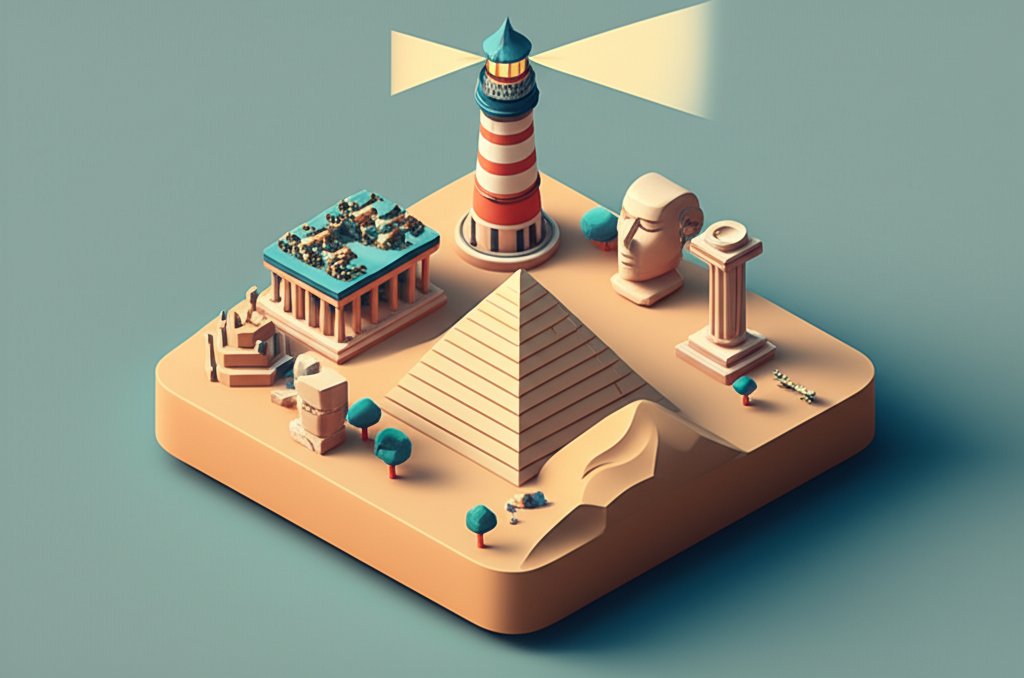
Embark on an extraordinary voyage through the mists of time, where human ingenuity and ancient civilizations sculpted marvels that continue to defy the ages. This wasn’t merely a journey of building; it was a testament to ambition, faith, and artistic brilliance. From colossal pyramids that touch the sky to verdant gardens rumored to float, the 10 ancient wonders of the world offer a captivating glimpse into the foundational achievements of humanity.
In this comprehensive guide, we will unravel the secrets behind these legendary structures. We’ll explore their ingenious construction, profound cultural significance, and the enduring legacies they left behind. Prepare to be amazed as we delve into the stories of these architectural masterpieces, some still standing in breathtaking glory, and others living on through the whispers of history and archaeological triumphs.
To further contextualize these marvels within the broader scope of civilization, consider exploring an in-depth ancient history timeline that highlights key events and developments.
The Seven Original Ancient Wonders (and their Fate)
The traditional list of the Seven Wonders of the Ancient World was compiled by ancient Greek historians and travelers, serving essentially as an early travel guide. These monumental constructions, predominantly located around the Mediterranean rim, represented the pinnacle of their respective eras. Of these seven, only one stands largely intact today, while the others have succumbed to the relentless march of time, natural disasters, or human destructive acts, leaving behind tantalizing ruins or merely historical accounts.
The Great Pyramid of Giza: Humanity’s Enduring Legacy
Standing majestically on the Giza plateau in Egypt, the Great Pyramid is the oldest and only surviving of the original ancient wonders of the world. Built for Pharaoh Khufu around 2580-2560 BC, this colossal structure was the tallest man-made creation for over 3,800 years. Its construction involved moving millions of precisely cut stone blocks, some weighing many tons, into place with astonishing accuracy.
Secrets Unveiled: Modern theories suggest sophisticated ramps and levers were used, rather than alien technology. Its precise astronomical alignment and internal chambers continue to fascinate researchers. The pyramid wasn’t just a tomb; it was a symbol of a pharaoh’s divine power and the unwavering faith of a civilization. Its very existence is a testament to the organizational power and engineering prowess of the ancient Egyptians.
The Hanging Gardens of Babylon: A Verdant Mystery
Legends speak of a series of terraced gardens, cascading with exotic flora, built in the ancient city of Babylon (modern-day Iraq) by King Nebuchadnezzar II around 600 BC. Lore suggests he built them to appease his homesick wife, Amytis, who longed for the lush landscapes of her homeland.
Secrets Unveiled: Descriptions from ancient writers detail an engineering marvel, employing complex irrigation systems to lift water from the Euphrates River to nourish plants on multiple levels. Despite vivid ancient accounts, archaeologists have found no definitive physical evidence of the gardens’ existence, leading some to believe they were a poetic myth or perhaps located elsewhere, such as Nineveh. Regardless, their story symbolizes ancient luxury and horticultural ambition.
The Statue of Zeus at Olympia: A God Among Men
Crafted by the renowned Greek sculptor Phidias around 435 BC, this immense chryselephantine (ivory and gold) statue of Zeus once dominated the Temple of Zeus at Olympia, Greece. Seated on an elaborate throne, the 40-foot tall deity was depicted with an olive wreath, a scepter, and a figure of Nike (goddess of victory).
Secrets Unveiled: The statue was not only a religious icon but also a symbol of Greek artistic and cultural identity, inspiring awe in all who witnessed it, especially those attending the Olympic Games held at Olympia. Made of a wooden frame sheathed in ivory plates and gold panels, it was a breathtaking display of wealth and artistry. It was likely destroyed by fire in the 5th century AD, though its exact fate remains debated.
The Temple of Artemis at Ephesus: A Goddess’s Grand Sanctuary
Located in Ephesus (modern-day Turkey), this magnificent temple dedicated to the Greek goddess Artemis (also worshipped as a local deity) was rebuilt multiple times after destruction. The most famous iteration, around 550 BC, was commissioned by King Croesus of Lydia and later rebuilt even more grandly after an act of arson in 356 BC.
Secrets Unveiled: Constructed almost entirely of marble, it was famed for its colossal size, intricate sculptures, and numerous Ionic columns. It served as a major pilgrimage site and a bustling marketplace, a hub of both spiritual and commercial activity in the ancient world. It was eventually destroyed by a Goth invasion in 262 AD, leaving only foundations and scattered fragments today.
The Mausoleum at Halicarnassus: A Monument to Love and Loss
Erected in Halicarnassus (modern-day Bodrum, Turkey) between 353 and 350 BC, this elaborate tomb was built by Artemisia II for her deceased husband and brother, Mausolus, a satrap in the Persian Empire. The structure was so grand that it gave us the word “mausoleum.”
Secrets Unveiled: Designed by Greek architects Satyros and Pythius, with sculptural decoration by the most celebrated sculptors of the age (Scopas, Bryaxis, Leochares, and Timotheus), it was a testament to love, power, and artistic collaboration. It featured three main levels: a stepped podium, 36 Ionic columns, and a pyramidal roof topped by a colossal statue of a quadriga (four-horse chariot). Earthquakes eventually brought it down, but its surviving fragments, now in the British Museum, reveal its former glory.
The Colossus of Rhodes: The Sun God’s Bronze Sentinel
Around 280 BC, the citizens of Rhodes, a Greek island, erected an enormous bronze statue of their patron god, Helios, at the entrance to their harbor. Built to commemorate their victory over an invading army, the Colossus stood approximately 107 feet (33 meters) tall.
Secrets Unveiled: While often depicted straddling the harbor entrance, historians believe it stood on a pedestal with legs together. Its construction involved an iron frame clad in bronze plates, a remarkable feat of metallurgy and engineering for its time. However, it stood for only 56 years before an earthquake toppled it in 226 BC. Its broken pieces lay for centuries, becoming a tourist attraction themselves, until they were eventually melted down for scrap.
The Lighthouse of Alexandria: Guiding Light of the Ancient World
Built on the island of Pharos in Alexandria, Egypt, during the Ptolemaic Kingdom (circa 280-247 BC), this lighthouse was one of the tallest man-made structures of the ancient world, estimated to be between 330 and 440 feet (100-137 meters) tall. Its purpose was to guide ships safely into the bustling harbor.
Secrets Unveiled: It featured a massive fire at its summit that could be seen for miles, possibly enhanced by a complex system of mirrors. For centuries, it served as a vital navigational aid and a powerful symbol of Alexandria’s prominence as a center of trade and knowledge. Like many ancient marvels, it was brought down by a series of earthquakes between the 10th and 14th centuries, with its ruins eventually sinking into the sea.
Beyond the Traditional Seven: Other Marvels of Antiquity
While the canonical seven wonders enthrall us, the ancient world produced countless other breathtaking constructions that deserve recognition as true ancient wonders of the world. These structures showcase diverse cultures, engineering techniques, and artistic visions, expanding our understanding of human achievement.
The Great Wall of China: A Dragon’s Spine Across the Land
More a series of walls and fortifications than a single continuous structure, the Great Wall of China is one of the most ambitious construction projects ever undertaken. Its origins date back to the 7th century BC, with significant sections built during the Qin Dynasty (220–206 BC) and famously reinforced during the Ming Dynasty (1368–1644 AD).
Secrets Unveiled: Spanning thousands of miles across diverse terrain, its purpose was to protect Chinese states and empires from nomadic incursions. Built from earth, stone, brick, and wood, sections of the wall demonstrate incredible logistical and engineering efforts. It is a symbol of Chinese resilience, ingenuity, and a testament to the immense scale of human labor over millennia. Visitors today can walk along sections of this incredible ancient marvel, feeling the weight of history beneath their feet.
Petra: The Rose-Red City, Half as Old as Time
Nestled in the desert canyons of modern-day Jordan, Petra is an ancient city carved directly into vibrant sandstone cliffs. Established around the 4th century BC by the Nabataeans, it became a thriving trade hub and their capital.
Secrets Unveiled: Petra’s most iconic structure, Al-Khazneh (The Treasury), is a stunning facade carved meticulously into the rock face. But beyond this, the city boasts an intricate network of temples, tombs, living quarters, and a sophisticated water conduit system that allowed a large population to flourish in an arid environment. Rediscovered by the Western world in 1812, Petra remains a powerful example of ancient rock-cut architecture and urban planning, inviting visitors to wander its magnificent, ancient streets.
The Colosseum: Rome’s Amphitheatre of Spectacle
Located in the heart of Rome, Italy, the Colosseum is perhaps the most iconic symbol of the Roman Empire’s grandeur and engineering prowess. Construction began under Emperor Vespasian in 70-72 AD and was completed by his successor Titus in 80 AD.
Secrets Unveiled: This massive amphitheater, capable of holding 50,000 to 80,000 spectators, was primarily used for gladiatorial contests, animal hunts, public executions, and even mock naval battles. Its complex design included an intricate system of underground tunnels (the hypogeum) for animals and gladiators, and sophisticated retractable awnings for shade. The Colosseum stands today as an awe-inspiring testament to Roman architecture, engineering, and the spectacles that captivated ancient society.
The Enduring Legacy of Ancient Wonders
The 10 ancient wonders of the world, whether still standing proudly or existing only in the annals of history, collectively represent humanity’s earliest attempts to leave an indelible mark on the planet. They were more than just buildings; they were expressions of power, religious devotion, love, and community spirit. Each wonder tells a unique story about the civilization that created it, revealing insights into their values, technologies, and artistic capabilities.
Their construction often required unprecedented levels of organization, labor, and innovative engineering techniques that were far ahead of their time. From the sheer precision of the Great Pyramid to the ingenious hydraulics rumored for the Hanging Gardens, these projects pushed the boundaries of what was thought possible.
Why These Wonders Still Captivate Us
Even after millennia, the ancient wonders of the world continue to capture our imaginations. Their allure lies in several factors:
- Timeless Mystery: The “how” and “why” of their creation often remain shrouded in tantalizing mystery, sparking continuous debate and research.
- Human Endeavor: They are powerful reminders of what humans can achieve through collective effort, determination, and visionary leadership.
- Cultural Connection: They connect us directly to distant civilizations, allowing us to touch, see, or imagine the world as our ancestors did.
- Architectural Inspiration: These ancient designs and engineering principles continue to inspire architects, engineers, and artists today.
- Symbolic Power: They stand as symbols of human ambition, resilience, and the enduring quest for greatness.
Exploring the Secrets: What We Learn from the Ancient World
To explore the secrets of these 10 ancient wonders of the world is to delve into the very foundations of human history. We learn about:
- Advanced Engineering: The meticulous cuts of the Giza stones, the water management of Petra, the structural integrity of the Colosseum – all demonstrate advanced understanding of physics and mechanics.
- Societal Organization: The scale of these projects implies highly organized societies, capable of mobilizing vast workforces, managing resources, and planning over generations.
- Cultural Values: From tombs reflecting beliefs in the afterlife to temples honoring deities, these wonders embody the core values and spiritual beliefs of the civilizations that built them.
- Global Connections: The very concept of a “world wonder” from antiquity suggests an awareness and appreciation of architectural achievements across different cultures, even in a less interconnected world.
Frequently Asked Questions About Ancient Wonders
Q1: Which ancient wonder is the only one still standing today?
A1: The Great Pyramid of Giza, located in Egypt, is the only remaining wonder from the original list of the Seven Wonders of the Ancient World that has largely survived to the present day.
Q2: Why were the Hanging Gardens of Babylon so famous if their existence is debated?
A2: The Hanging Gardens of Babylon were renowned in ancient writings for their incredible beauty and sophisticated engineering, which involved terraced gardens and advanced irrigation. Even if their physical existence remains unconfirmed by archaeology, the vivid descriptions by ancient historians solidified their place as a legendary marvel of antiquity, representing a height of luxury and horticultural innovation.
Q3: What materials were used in the construction of the Statue of Zeus at Olympia and the Colossus of Rhodes?
A3: The Statue of Zeus at Olympia was a chryselephantine sculpture, meaning it was made from ivory and gold panels attached to a wooden substructure. The Colossus of Rhodes was constructed primarily from bronze plates over an iron framework, often filled with stone for stability.
Q4: How long did it take to build the Great Wall of China?
A4: The Great Wall of China was not built in one continuous effort but rather over many centuries by various dynasties. Construction began as early as the 7th century BC, with major expansions and fortifications continuing until the Ming Dynasty (1368–1644 AD). It represents a cumulative effort spanning over 2,000 years.
Q5: What was the main purpose of the Colosseum in ancient Rome?
A5: The Colosseum served as a massive amphitheater for public spectacles in ancient Rome. Its primary purpose was to host gladiatorial contests, wild animal hunts (venationes), mock naval battles (naumachiae), public executions, and dramatic performances, providing entertainment for tens of thousands of Roman citizens.
Q6: What does Petra mean, and why is it called the “rose-red city”?
A6: The name “Petra” is derived from the Greek word for “rock.” It is often called the “rose-red city, half as old as time” due to the distinctive color of the sandstone cliffs into which most of its structures are carved. The natural hues of the rock range from soft pinks to deep reds, giving the entire city a breathtaking, colorful appearance.
Conclusion
The 10 ancient wonders of the world stand as powerful reminders of human ambition, artistic genius, and unwavering spirit. From the awe-inspiring engineering of the Great Pyramid and the Great Wall to the lost grandeur of the Statue of Zeus and the Lighthouse of Alexandria, these marvels continue to inspire wonder and curiosity across generations.
Exploring their secrets is more than a historical exercise; it’s a journey into the heart of human achievement. They challenge us to reflect on our past, appreciate the foundations laid by ancient civilizations, and consider the enduring legacy we wish to leave for the future. Though time may erode stone and memory, the stories and lessons of these ancient wonders will forever echo through the corridors of history.










