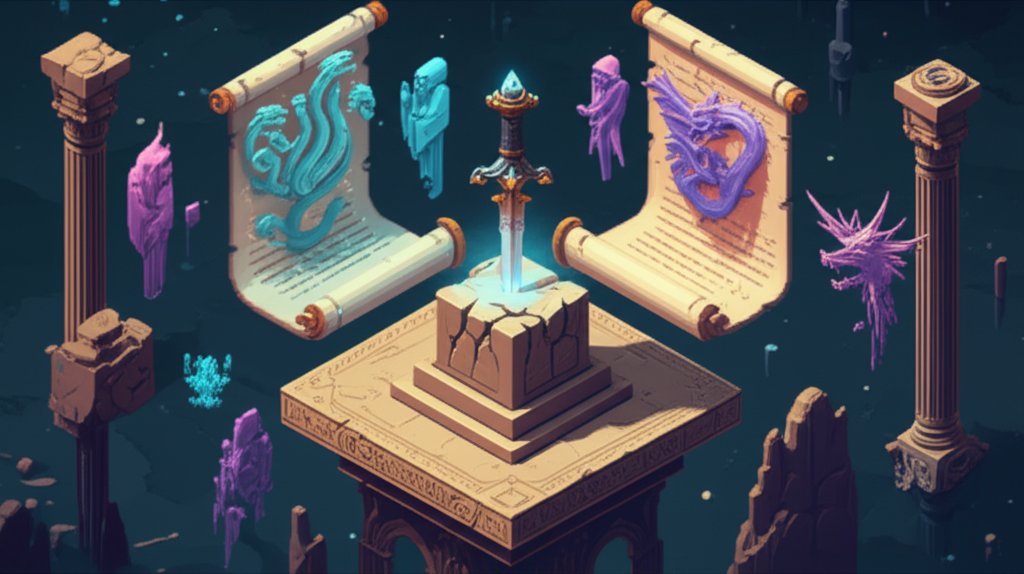
Step into the shadowed realm where steel meets spirit, where history intertwines with the fantastic, and where humble blades become conduits of immense power and profound meaning. We embark on a thrilling expedition into the enigmatic world of legendary daggers, exploring their pivotal role within ancient myths and uncovering the untold secrets they hold within the rich tapestry of human folklore and mythology. These aren’t mere tools of combat; they are artifacts imbued with divine essence, wielded by heroes and gods, and etched forever into our collective imagination. Join us as we slice through the layers of time to reveal the true significance of these fabled blades.
The Enduring Power of Legendary Daggers in History and Folklore
From the earliest cave paintings to the sprawling epics of antiquity, the dagger has consistently appeared as a potent symbol. More than just a weapon, it represents precision, sacrifice, and the capacity for swift, decisive action. When infused with the extraordinary, these become legendary daggers—objects that transcend their physical form to embody profound cultural narratives.
To delve deeper into specific examples and histories, explore our curated list of the most famous daggers, each with their own captivating story.
Defining Legendary Daggers: More Than Just a Blade
A legendary dagger is characterized not only by its supposed supernatural powers or exceptional craftsmanship but also by the stories woven around it. These are blades that have shaped destinies, toppled tyrants, or sealed solemn vows. They exist in a liminal space between the tangible and the fantastical, often serving as plot devices that drive narratives forward or as powerful symbols reflecting core cultural values. Their legends are passed down through generations, becoming cornerstones of ancient myths and folklore.
The Role of Daggers in Human Imagination and Belief Systems
Across diverse civilizations, daggers have held immense symbolic weight. Their intimate nature—being small enough to conceal, yet deadly enough to inflict fatal wounds—makes them objects of both fear and reverence. In ancient legends, they are often associated with rites of passage, secret assassinations, divine judgment, or even the creation of worlds. They tap into deep-seated human emotions: the desire for power, protection, and the understanding of life and death. This psychological resonance ensures their continued prominence in mythology and popular culture.
Daggers Across Ancient Myths: A Pantheon of Power
Every culture boasts its own pantheon of mythical weapons, and among these, legendary daggers shine with a unique brilliance. These blades often mirror the values and fears of the societies that conceived them, possessing abilities that range from granting invincibility to revealing hidden truths.
Blades of Persian Epic: The Shamshir-e Zomorrodnegar
In the grand ancient myths of Persia, the Shamshir-e Zomorrodnegar stands preeminent. This “Emerald-Studded Sword” (though often depicted as a dagger in various adaptations and interpretations) is a magical weapon said to have belonged to the demonic Zahhak and later wielded by the hero Rostam. Its most remarkable power was its ability to bring death to anyone, but also to possess a counter-curse: anyone wounded by it would only be healed by applying a paste made from its own scabbard. This dual nature speaks to the profound consequences of power and the intricate balance between harm and healing within ancient legends. It symbolizes the hero’s burden and the fine line between victory and vulnerability.
Norse Skofnung: Illusion and Deception
From the chilling sagas of Norse mythology emerges the Skofnung, often described as a sword but in some tellings, a potent dagger. Forged by skilled dwarves, it was the weapon of the legendary Hrolf Kraki. The Skofnung’s unique attributes include the inability to be drawn in the presence of women, or to be used in battle unless the “sun cross” (an omen of misfortune) was seen. More esoterically, it could make its wielder invisible or project powerful illusions onto foes. This potent blade symbolizes the cunning and strategic intellect valued in Norse folklore, reminding us that strength isn’t always brute force, but often deception and wit.
The Thunderbolt/Vajra: Divine Authority and Justice
The Vajra, or Thunderbolt, in Hindu and Buddhist mythology, is perhaps one of the most iconic legendary daggers, though it often appears as a bludgeon or scepter. This indestructible celestial weapon is wielded by Indra, the king of the gods, and in Buddhism, by Vajrapani. Crafted from the bones of a selfless sage, the Vajra embodies cosmic power—the forceful energy of thunder and lightning itself. It is the definitive symbol of divine authority, unwavering justice, and the ultimate triumph over evil and ignorance. Its very form, often resembling a double-headed dagger, speaks to its ability to cut through illusion and enforce righteousness.
Mesopotamian Sharur: Creation and Chaos
Delving into the cradle of civilization, Mesopotamian ancient myths introduce us to Sharur, a sentient divine dagger wielded by the god Marduk. More than just a blade, Sharur was a “weapon that could speak,” communicating with Marduk, offering battle strategies, and commanding devastating winds and storms. This intelligent weapon embodies the raw, untamed forces of nature, capable of both creation and destruction. It underscores humanity’s early struggle to comprehend and harness the powerful elements of the universe, reflecting the delicate balance between order and chaos deeply ingrained in their folklore.
Other Notable Mythological Daggers: Beyond the Mainstay
The world of mythology is rich with countless other potent blades:
- Kila (Phurba): A three-sided ritual dagger from Tibetan Buddhism, the kila or phurba is not a weapon of war but a tool for spiritual purification. It is used to pin down and transform negative energies or obstacles, symbolizing the piercing of ignorance and the triumph of wisdom. This legendary dagger’s power lies in its spiritual, rather than physical, efficacy.
- Athame: A ceremonial dagger used in Wiccan and other Neopagan traditions. While typically not cutting physically, its purpose is to direct psychic energy, draw magical circles, and symbolize the element of air or fire. Its significance is entirely mystical, highlighting the dagger’s role in magical practices found in modern folklore and magical systems.
- Dagger of the Undead (various cultures): Many ancient legends mention specific daggers capable of harming or controlling supernatural beings like vampires, zombies, or ghouls. These blades are often imbued with silver, holy water, or specific sigils, representing humanity’s ancient fear of the unknown and its eternal quest for defense against malevolent forces.
Symbolism, Craftsmanship, and Mystical Properties
Beyond their individual tales, legendary daggers share common threads in their symbolic weight, the nature of their creation, and the mystical properties attributed to them. These elements contribute to their enduring allure within ancient myths and folklore.
Decoding Dagger Symbolism: Purity, Sacrifice, and Judgment
The symbolism inherent in legendary daggers is multifaceted. Often, they represent absolute purity or the ultimate sacrifice, such as a blade used in a sacred ritual or to end a hero’s suffering. They are instruments of judgment, meting out divine punishment or enforcing cosmic law. Their sharp edges denote decisiveness and the cutting away of falsehoods. In many ancient legends, a dagger can symbolize truth, as it is used to expose secrets or penetrate illusions, reflecting a primal human desire for clarity and understanding.
The Art of the Mythic Blade: Materials and Enchantments
The creation of a legendary dagger in mythology is rarely mundane. They are often forged from exotic materials—starlight, dragon’s teeth, divine metals, or the bones of giants. The crafting process itself is often magical, involving ancient incantations, celestial alignments, or the tears of gods. These origins imbue them with extraordinary enchantments:
These mystical properties elevate them beyond mere weaponry, solidifying their status within ancient myths as artifacts of immense power.
The Ritualistic and Spiritual Significance
Many legendary daggers are not purely for battle but play crucial roles in ritual. From ancient sacrificial rites to ceremonial blessings, daggers represent the severing of ties, the initiation into new states, or the consecration of sacred spaces. They are used to mark transitions, symbolize covenants, and channel spiritual energy. This ritualistic aspect underscores their deep integration into the spiritual practices and belief systems found within folklore across the globe, revealing a connection between the physical act of cutting and the symbolic act of transformation or creation.
From Myth to Reality: Historical Daggers and Their Cultural Echoes
While the most potent legendary daggers reside in the realm of ancient myths, their real-world counterparts have held significant cultural, political, and military importance throughout human history. These historical blades often served as inspiration for the more fantastical versions.
Ancient Egyptian and Southeast Asian Daggers: Sacred and Practical
- Khopesh (Egyptian): This sickle-shaped sword-dagger of ancient Egypt was both a formidable weapon of war and a symbol of pharaonic authority. Often depicted in the hands of gods and pharaohs, it blurred the lines between practical combat and divine power, reflecting the Egyptian worldview steeped in mythology and sacred kingship.
- Kris Dagger (Southeast Asia): Originating from Indonesia, Malaysia, and the Philippines, the kris is perhaps the most iconic example of a dagger steeped in folklore and spiritual significance. Known for its distinctive wavy blade, each kris is considered to have its own spirit or khodam. They were believed to possess protective powers, bring good fortune, or even reflect the status of their owner. Passed down through generations, these are truly legendary daggers from a cultural perspective, imbued with a deeply personal and often mystical history.
Daggers in Medieval Europe and Beyond: Status and Warfare
Across medieval and Renaissance Europe, daggers were essential sidearms for knights, mercenaries, and common folk alike. They were tools of last resort in battle, used for close-quarters fighting or delivering a coup de grâce. Beyond their functional role, ornate daggers became symbols of social status, worn as fashion accessories, and often gifted as tokens of loyalty or love. The misericorde, literally “mercy-giver,” was a thin-bladed dagger specifically designed to penetrate armor, embodying a brutal aspect of medieval ancient legends and warfare.
The Dagger as a Symbol of Status and Power
Throughout history, rulers and high-ranking individuals have commissioned elaborately decorated daggers. These were not just weapons but works of art, adorned with jewels, precious metals, and intricate carvings that denoted the owner’s wealth, status, and power. Such daggers became tangible representations of authority, passed down through noble families, creating their own ancient legends and personal mythologies. The symbolism of a ruler wielding a finely crafted dagger underscored their capacity for decisive action, protection, and judgment within their domain.
The Psychological and Cultural Impact of Fabled Blades
Legendary daggers are more than static objects in old stories; they are dynamic forces that continue to influence our understanding of heroism, morality, and the human condition. They persist through ancient legends and folklore, evolving with each retelling.
Shaping Collective Imagination: From Epics to Modern Fantasy
The tales of these powerful blades—from the cutting precision of an assassin’s hidden blade to the ceremonial dagger of a high priestess—have profoundly shaped our collective imagination. They are archetypes that reappear in countless forms, from the enchanted blades in J.R.R. Tolkien’s Middle-earth (like Sting) to the mystical artifacts in modern video games and films. Each new rendition adds another layer to their mythology, ensuring that the allure of legendary daggers remains eternally fresh and captivating. They are a testament to humanity’s enduring fascination with power, destiny, and the extraordinary.
Lessons from the Blades of Lore: Courage, Cunning, and Choice
Beneath the magic and mystery, legendary daggers often impart vital moral lessons. The Shamshir-e Zomorrodnegar’s dual nature teaches us about responsibility that comes with great power. The Skofnung highlights the importance of intellect and strategy over brute force. The Vajra reminds us of the eternal struggle for justice. These ancient myths use the dagger as a metaphor for the choices we make, the courage we must find, and the cunning we sometimes need to navigate a complex world. They are moral compasses, guiding us through the complexities of human experience through the lens of folklore.
Daggers in Modern Storytelling and Adaptations
Today, the spirit of legendary daggers lives on, not just in academic studies of mythology but in vibrant popular culture. From the subtle magical blades in fantasy novels to the iconic props in blockbuster films and video games, these weapons continue to captivate audiences. They serve as powerful symbols of character arcs, plot drivers, and visual representations of intricate narratives. Modern interpretations often blend elements of traditional ancient legends with new, innovative twists, ensuring that the legacy of these fabled blades continues to inspire and entertain new generations.
Conclusion
Our journey through the world of legendary daggers reveals them to be far more than just sharp implements. They are ancient echoes of human aspiration and fear, intricately woven into the fabric of ancient myths, rich folklore, and profound mythology. From the divine justice of the Vajra to the spiritual purity of the Kila, and the strategic cunning of the Skofnung, each blade tells a story—a secret whispered across millennia. These ancient legends continue to resonate because they speak to universal truths about power, destiny, and the enduring human spirit. By unlocking their untold secrets, we gain deeper insights not just into the past, but into the very core of our shared imagination. The legend of these daggers, it seems, will never truly be sheathed.
FAQ Section
What defines a legendary dagger in mythology?
A legendary dagger in mythology is typically a mythical weapon imbued with supernatural powers, unique origins, or a significant role in ancient myths or ancient legends. It is often associated with gods, heroes, or pivotal events, transcending its physical form to hold deep symbolic and cultural meaning.
Can you provide examples of famous legendary daggers from different cultures?
Certainly! Iconic examples include the Shamshir-e Zomorrodnegar from Persian mythology, the Skofnung from Norse folklore, and the Vajra (Thunderbolt) from Hindu and Buddhist traditions. Each of these legendary daggers possesses distinct abilities and cultural significance.
What kind of powers do legendary daggers typically possess in ancient myths?
The powers of legendary daggers are diverse. They can include granting invincibility, projecting illusions, commanding elemental forces (like the Mesopotamian Sharur), compelling truth, spiritual purification (like the Tibetan Kila), or even influencing fate itself, all integral to various ancient myths.
How do legendary daggers differ from historical daggers?
While historical daggers were real weapons used for combat, ceremony, or status (like the Egyptian Khopesh or Southeast Asian Kris), legendary daggers exist primarily within ancient myths and folklore. Mythological daggers are often attributed with impossible, magical properties, whereas historical daggers, though sometimes symbolically revered, conform to the laws of the physical world.
Why are legendary daggers so important in storytelling and mythology?
Legendary daggers are crucial in storytelling and mythology because they serve as powerful symbols and plot devices. They represent core cultural values, moral dilemmas, or the triumph of good over evil. Their mystique captivates audiences, reinforcing themes of heroism, sacrifice, and the eternal clash between order and chaos, deeply embedding them in ancient legends and collective consciousness.










