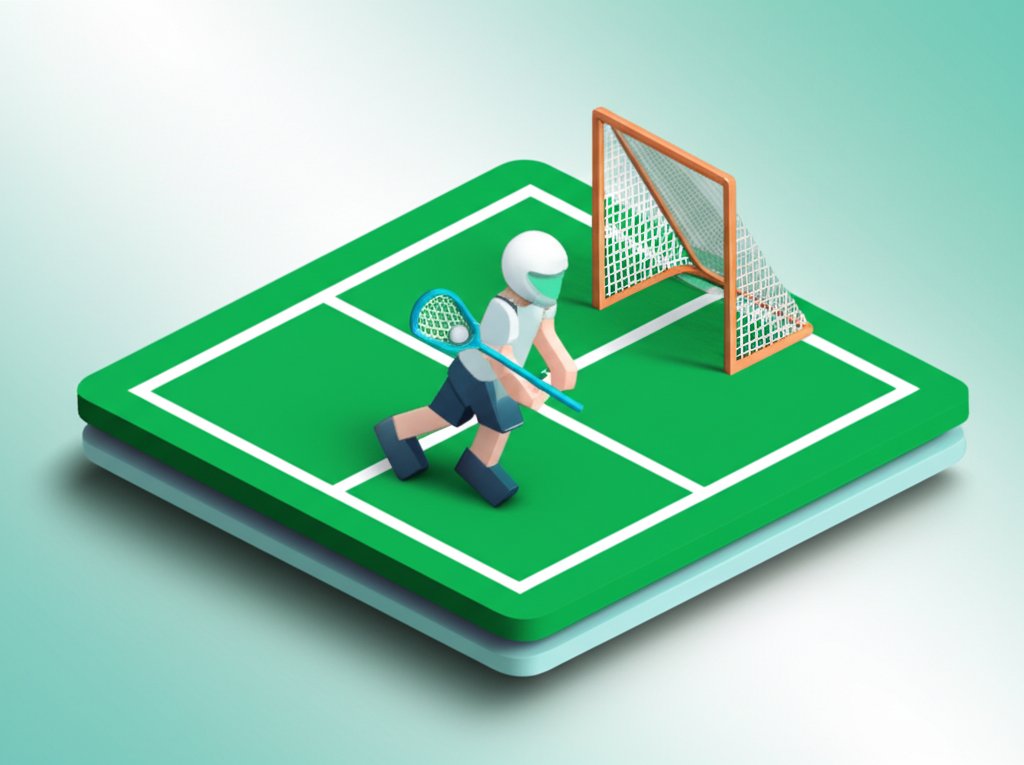
Step onto the field where ancient tradition meets modern athletic prowess! Lacrosse is more than just a game; it’s a thrilling blend of speed, skill, and strategy that has captivated players and fans for centuries. Whether you’re a curious newcomer, an aspiring athlete, or a seasoned enthusiast seeking to deepen your understanding, this ultimate lacrosse guide will unveil everything you need to know. From its spiritual roots in Indigenous cultures to the intricate lacrosse rules governing today’s professional leagues, prepare to dive into the essential facts about lacrosse that make it one of the most dynamic and rapidly growing lacrosse sports in the world. Get ready to unlock the secrets of “The Fastest Game on Two Feet” and appreciate lacrosse like never before!
The Ancient Roots and Evolution of Lacrosse
To truly understand lacrosse, we must journey back in time, long before modern stadiums and organized leagues. Its story is deeply interwoven with the history of North America.
From Ancient Ritual to Modern Lacrosse Sport
Lacrosse is unequivocally the oldest organized sport in North America, with a heritage stretching back over a thousand years. Its origins lie with Indigenous peoples, particularly the Iroquois (Haudenosaunee) and other Eastern Woodlands tribes, who called it “The Creator’s Game” or “The Medicine Game.” For these communities, lacrosse was far more than a recreational activity; it was a sacred ritual played for spiritual reasons, to honor the Creator, heal the sick, train warriors, and even resolve inter-tribal conflicts peacefully.
These early forms of lacrosse involved hundreds, sometimes thousands, of players, with games lasting for days across vast fields spanning miles. The sticks used were made of wood, often intricately carved, and the “ball” could be made of deerskin, wood, or clay. The intensity and physicality of these games were legendary, symbolizing strength, endurance, and the collective spirit of the community. Understanding these profound origins is one of the most compelling facts about lacrosse.
The Birth of Modern Lacrosse: Standardization and Growth
European settlers first encountered lacrosse in the 17th century. French Jesuit missionary Jean de Brébeuf observed the game played by Huron tribes in 1636, giving it the name “lacrosse,” which translates to “the stick” or “the cross,” referring to the stick’s resemblance to a bishop’s crosier.
The 19th century marked a pivotal shift from ceremonial ritual to organized lacrosse sport. Dr. William George Beers, a Canadian dentist, is widely credited with modernizing the game. In 1856, he founded the Montreal Lacrosse Club and, by 1867, had codified a set of standardized lacrosse rules, shortening game times, reducing player numbers, and redesigning the stick. This transformation laid the groundwork for the structured game we recognize today. The establishment of the National Lacrosse Association in 1867 further solidified its place in North American athletic culture.
Olympic Dreams and Collegiate Expansion
As a testament to its burgeoning popularity, lacrosse featured as a demonstration sport in the 1904 St. Louis and 1908 London Olympic Games. While it hasn’t been a permanent Olympic fixture since, the sport continues to campaign for reinstatement, and “Lacrosse Sixes” (a faster, compact version) has been recently introduced as a format more suitable for multi-sport events.

Throughout the early to mid-20th century, lacrosse began to spread rapidly, particularly within colleges and universities across the United States. This collegiate growth provided a vital platform for players to develop their skills and for the sport to gain broader recognition, cementing its reputation as a premier athletic endeavor.
Understanding the Game: Core Lacrosse Facts & Gameplay
Delving deeper into the game’s rich history and evolution can provide even more context, so be sure to explore additional facts about lacrosse and its cultural significance.
At its heart, lacrosse is a dynamic team sport that demands a unique blend of athleticism, hand-eye coordination, and strategic thinking. But what exactly is lacrosse and how is it played?
What is Lacrosse? The Fastest Game on Two Feet
Lacrosse is often described as “the fastest game on two feet” and a captivating hybrid of basketball’s fast breaks, soccer’s continuous flow, and hockey’s physical intensity. Played on a field with two teams, the objective is simple: use a long-handled stick, called a crosse or lacrosse stick, to catch, carry, and pass a small rubber ball, ultimately shooting it into the opponent’s goal.
The game’s continuous motion and high-scoring potential make it incredibly exciting for both players and spectators. Players need exceptional stamina, agility, and quick decision-making skills to excel in this captivating lacrosse sport.
Key Facts About Lacrosse Mechanics
To play lacrosse, several fundamental techniques are crucial:
- Cradling: This is the act of rocking the stick back and forth to maintain possession of the ball in the pocket of the crosse. It uses centrifugal force to keep the ball securely nestled, even while running at full speed.
- Scooping: Retrieving ground balls is a critical skill. Players use the head of their stick to “scoop” up the ball while on the run, requiring precision and a low center of gravity.
- Passing and Catching: Accurate passing is essential for offense. Players use a throwing motion to propel the ball from their stick to a teammate’s, while catching requires soft hands and precise timing to absorb the ball into the pocket.
- Shooting: The ultimate goal is to shoot the ball into the opponent’s net. Shots can be incredibly powerful, sometimes exceeding 100 mph, and require a combination of stick work, body rotation, and aim.
- Checking: In many forms of lacrosse, players can use their stick (stick checking) or body (body checking, primarily in men’s) to dislodge the ball from an opponent’s stick or impede their progress. Understanding the legal limits of checking is a crucial aspect of lacrosse rules.
Player Positions and Their Roles
Like other team sports, lacrosse features specialized player positions, each with distinct responsibilities:
- Attackmen (A): Primarily offensive players who operate around the opponent’s goal, focused on scoring and assisting. They often have shorter sticks for quicker maneuvers.
- Midfielders (M) / Middies: The most versatile players, covering the entire field on both offense and defense. They are responsible for transitions, clearing the ball, and initiating offensive sets.
- Defensemen (D): Defensive specialists who protect their own goal, using longer sticks (known as “long poles”) for increased reach and leverage in stick checks.
- Goalie (G): The last line of defense, responsible for protecting the net from shots, communicating with defense, and initiating clears. Goalies wear extensive protective gear.
- Face-off Specialists (FO): Often specific midfielders who excel at winning possession from the face-off at the start of quarters and after goals.
The Many Faces of Lacrosse: Types, Rules & Equipment
One of the most interesting facts about lacrosse is its diverse range of playing styles. While the core concept remains, significant differences in lacrosse rules, field dimensions, and equipment define each variation.
Field Lacrosse (Men’s & Women’s) – Distinct Rules and Dynamics
Field lacrosse is the most widely recognized form, played outdoors on a large field, typically grass or artificial turf.
Men’s Field Lacrosse
- Players: 10 players per side (3 attack, 3 midfield, 3 defense, 1 goalie).
- Field: A rectangular field, approximately 110 yards long and 60 yards wide, similar to a soccer field.
- Contact: A full-contact sport. Legal body checking (hitting an opponent with the shoulder or hip between the shoulders and waist) is allowed when the opponent has possession of the ball or is within five yards of a loose ball. Aggressive stick checking is also permitted to dislodge the ball.
- Equipment: Required protective gear includes a helmet with a face mask, shoulder pads, elbow pads, gloves, and a mouthguard. Goalies wear additional padding and a larger helmet.
- Rules Highlights:
- Offside: Requires at least 3 players on offense and 4 players on defense (including the goalie) to remain on their respective sides of the midfield line.
- Shot Clock: Professional and high-level collegiate games often feature a shot clock (e.g., 80 seconds) to speed up play and prevent stalling.
- Penalties: Fouls are categorized as technical (e.g., offside, pushing, holding) resulting in a 30-second penalty, or personal (e.g., slashing, tripping, illegal body check, unsportsmanlike conduct) resulting in 1-3 minute non-releasable penalties.
Women’s Field Lacrosse
- Players: 12 players per side (typically 3 attack, 5 midfield, 3 defense, 1 goalie).
- Field: Similar dimensions to men’s field lacrosse, but with slightly different markings, including a larger “restraining line.”
- Contact: Historically a limited-contact sport, women’s lacrosse emphasizes finesse and strategy. Body checking is strictly prohibited. Legal stick checking is allowed on the stick itself, but only when the player possesses the ball. Aggressive stick checking (especially to the head or body) is illegal.
- Equipment: Players primarily require eye protection (goggles) and a mouthguard. Goalies wear helmets, chest protectors, and shin guards.
- Rules Highlights:
- Free Movement: Unlike men’s lacrosse, there are no offside rules, allowing players to roam freely across the field.
- Shooting Space: Defensive players cannot obstruct the shooting lane (the path from the ball carrier to the goal) if the ball carrier is in a scoring position.
- Three-Second Rule: Defenders cannot remain in the 8-meter arc (a fan-shaped area in front of the goal) for more than three seconds without actively guarding an opponent.
- Major/Minor Fouls: Fouls are classified differently, often resulting in free-position shots for offensive players.
Box Lacrosse: The Indoor Power Play
Originating in Canada, box lacrosse is an intense, high-energy version of the sport played indoors, typically in converted ice hockey rinks with the ice removed.
- Players: 6 players per side (5 runners and 1 goalie).
- Field: Played on a smaller, walled surface (the “box”), similar to an ice hockey rink, with a goal occupying much of the traditional hockey net space. The walls and boards are in play.
- Contact: A highly physical, full-contact sport with significant body checking allowed against players with possession or within three meters of a loose ball.
- Equipment: Similar to men’s field lacrosse, players wear helmets, extensive shoulder and rib pads, elbow pads, and heavier gloves. Special box lacrosse sticks with wider heads are often used.
- Rules Highlights:
- Shot Clock: A 30-second shot clock is strictly enforced, creating a fast-paced, high-scoring game.
- Two-Man Game: Often involves intricate pick-and-roll plays and quick passing in tight spaces.
- Minor/Major Penalties: Similar to ice hockey, penalties result in power plays for the non-offending team.
Lacrosse Sixes & Intercrosse: Modern Variations
Newer variations continue to emerge, adapting lacrosse for different audiences and environments.
- Lacrosse Sixes: A fast-paced, compact version of field lacrosse played with 6 players per team on a smaller field. It features a 30-second shot clock and simplified lacrosse rules, designed for quicker games and greater accessibility. It’s the format being promoted for potential Olympic inclusion.
- Intercrosse: A non-contact, mixed-gender version of the game, primarily recreational. It uses plastic sticks and a softer, often foam, ball, making it an excellent introduction to the sport for beginners and for casual play. The focus is on skill development and participation rather than physicality.
Essential Lacrosse Equipment: Sticks, Gear, and Safety
Proper equipment is paramount for playing lacrosse safely and effectively.
- The Stick (Crosse): Consists of a shaft (handle) and a head (with a net pocket). Sticks vary in length and head width depending on position and type of lacrosse. Long poles (60-72 inches) are used by defensemen, while short sticks (40-42 inches) are used by attackmen and midfielders. Women’s sticks are often longer than men’s short sticks but have shallower pockets.
- The Ball: A solid rubber ball, typically white, yellow, or orange, approximately 2.5 inches in diameter and weighing about 5-5.25 ounces.
- Protective Gear:
- Men’s Field & Box Lacrosse: Helmets (with face masks), shoulder pads, elbow pads, gloves, and a mouthguard are mandatory. Goalie gear includes a chest protector, throat guard, and often shin guards.
- Women’s Field Lacrosse: Goggles (eye protection) and a mouthguard are mandatory for field players. Goalies must wear a helmet with a face mask, chest protector, and often leg padding.
- Cleats: Essential for traction on grass or turf fields.
Mastering the Field: A Practical Lacrosse Guide for Players and Fans
For those looking to play or simply better appreciate the strategic depth of lacrosse, understanding its dynamics is key. This section serves as a practical lacrosse guide.
Basic Techniques for Beginners
Starting with the fundamentals is crucial for anyone new to the lacrosse sport:
- Mastering the Cradle: Practice cradling with one hand and two hands, walking, jogging, and eventually running. This is the most basic yet essential skill.
- Wall Ball Drills: Hitting a wall is the best way to develop passing, catching, and shooting accuracy. Dedicate time daily to throwing and catching against a rebounder or a sturdy wall.
- Scooping Ground Balls: Practice scooping while moving, using both sides of your body. Low to high motion, bending your knees, and keeping your stick angled will help.
- Basic Stance and Footwork: Learn athletic stances for offense and defense. Quick footwork, dodging, and defensive slides are foundational.
Strategic Play: Offense and Defense
Lacrosse is a highly strategic game, with teams constantly adapting their formations and plays.
- Offensive Strategies:
- Motion Offense: Players continuously move, cut, and pick to create scoring opportunities and draw defenders.
- Set Plays: Pre-designed plays used to exploit defensive weaknesses or create specific shooting lanes.
- Fast Breaks: Rapid transitions from defense to offense after gaining possession, aiming to create a numerical advantage (e.g., 3-on-2, 2-on-1).
- Defensive Strategies:
- Man-to-Man Defense: Each defender is assigned a specific offensive player to guard.
- Zone Defense: Defenders guard specific areas of the field rather than individual players, often collapsing on the ball.
- Rides and Clears: When possession changes, the defending team “clears” the ball out of their defensive zone into the offensive zone. The opposing team attempts to “ride” (pressure) them to cause a turnover.
Common Penalties and Fouls
Adhering to lacrosse rules is vital for fair play and safety. Fouls vary between men’s and women’s games, but some common ones include:
- Offside (Men’s): Having too many players on one side of the midfield line.
- Slashing: Illegally hitting an opponent with the stick.
- Holding: Restricting an opponent’s movement by holding their body or stick.
- Pushing: Shoving an opponent from behind or illegally in a way that impedes their progress.
- Interference: Preventing an opponent from playing a loose ball.
- Unsportsmanlike Conduct: Any behavior deemed disruptive or disrespectful to opponents, officials, or the spirit of the game.
The Road to Pro: Leagues and International Play
The growth of lacrosse has led to robust collegiate and professional leagues, providing a clear pathway for dedicated athletes.
- NCAA Lacrosse: Collegiate lacrosse in the United States is highly competitive, featuring Division I, II, and III programs that showcase incredible talent and provide a key developmental stage for many players.
- Professional Leagues:
- Premier Lacrosse League (PLL): (Formerly Major League Lacrosse, MLL) The top outdoor professional field lacrosse league in North America, featuring elite athletes.
- National Lacrosse League (NLL): The premier indoor box lacrosse league, known for its fast-paced, physical play and dedicated fan base.
- International Competitions: World Lacrosse (the international governing body) organizes various world championships, including the Men’s and Women’s Field Lacrosse World Championships, the Box Lacrosse World Championship, and the new Sixes World Championship. These events highlight the global expansion and competitive nature of the lacrosse sport.
Safety on the Lacrosse Field: Mitigating Risks
Given its fast pace and physicality, concerns about the safety of lacrosse are common. Understanding the facts about lacrosse safety is crucial for players, parents, and coaches.
Is Lacrosse a Dangerous Sport? Understanding Risk Levels
Lacrosse is generally classified as a moderate-risk sport. While it certainly involves contact and carries inherent risks of injury, it is not consistently ranked among the most dangerous sports when compared to activities like American football, rugby, or gymnastics. Injuries do occur, but many are minor, such as sprains, strains, or bruises. Serious injuries, while possible, are less frequent than in some other high-impact sports.
The severity of risk often depends on the type of lacrosse being played (men’s field vs. women’s field vs. box) and the level of play. Men’s lacrosse and box lacrosse, due to their full-contact nature, have higher injury rates than women’s lacrosse.
The Role of Proper Equipment in Lacrosse Safety
The widespread use of protective gear is one of the most significant factors in mitigating injuries in modern lacrosse. Adherence to equipment standards is non-negotiable.
- Helmets: Crucial for preventing head injuries, concussions, and facial trauma. Modern helmets are rigorously tested to meet safety standards.
- Pads: Shoulder, elbow, and rib pads (especially in men’s and box lacrosse) absorb impact from checks and falls.
- Gloves: Protect hands from stick checks and ground impacts.
- Mouthguards: Essential for protecting teeth, lips, and reducing the risk of concussions.
- Eye Protection: Goggles for women’s field players shield eyes from sticks and balls.
The lacrosse rules regarding mandatory equipment are strictly enforced to ensure player safety.
Training, Conditioning, and Injury Prevention
Beyond gear, comprehensive athletic preparation plays a vital role in injury prevention:
- Proper Conditioning: Athletes should engage in strength training, cardiovascular conditioning, and flexibility exercises to build resilience and prevent common injuries.
- Skill Development: Mastering fundamental skills like cradling, scooping, and checking technique reduces awkward movements that can lead to injury.
- Warm-ups and Cool-downs: Essential routines to prepare the body for intense activity and aid recovery.
- Hydration and Nutrition: Proper fueling and hydration support peak performance and reduce fatigue-related injuries.
- Rest and Recovery: Adequate rest prevents overuse injuries and burnout, ensuring players remain healthy throughout the season.
Fair Play and Rules Enforcement
Strict enforcement of lacrosse rules is paramount for player safety. Referees and officials play a critical role in penalizing dangerous play, such as illegal body checks, slashing, or unnecessary roughness. Promoting a culture of respect, sportsmanship, and fair play within teams and leagues further contributes to a safer playing environment for all involved in the lacrosse sport.
The Global Phenomenon: Growth and Future of Lacrosse
The journey of lacrosse from ancient ritual to a burgeoning global sport is far from over. It is undeniably on the rise, experiencing unprecedented growth and expanding its footprint across continents.
Expanding Horizons: Lacrosse Beyond North America
While deeply rooted in North America, lacrosse has successfully crossed oceans, establishing strong communities in Europe, Asia, and Oceania. Countries like England, Australia, Japan, Germany, and the Iroquois Nationals (representing the Haudenosaunee Confederacy) are consistent contenders in international tournaments, demonstrating a diverse and competitive global landscape. World Lacrosse, the international governing body, continues to promote the sport, organize international competitions, and support its development in emerging lacrosse nations. This global reach is a testament to the universal appeal and excitement that the lacrosse sport generates.

Grassroots Initiatives and Community Building
The sustained growth of lacrosse is fueled by widespread grassroots efforts. Youth leagues, instructional clinics, and school programs introduce the game to new generations, fostering passion and skill development from an early age. The vibrant lacrosse community, comprising players, coaches, officials, and fans, is a powerful force, creating avenues for enthusiasts to learn, compete, and celebrate the spirit of the game. These initiatives are crucial in building a sustainable future for the lacrosse sport.
The Push for Olympic Reinstatement
Perhaps the most significant indicator of lacrosse’s upward trajectory is its persistent pursuit of Olympic inclusion. With the introduction of the Lacrosse Sixes format, designed to be faster, more television-friendly, and compatible with multi-sport event structures, lacrosse has made a strong case for its return to the Olympic Games. Its inclusion would mark a momentous achievement, exposing the sport to an even wider global audience and solidifying its status as a truly international athletic spectacle. The drive for Olympic reinstatement reflects the ambition and dynamism that defines the modern lacrosse sport.
Conclusion
Lacrosse, “The Creator’s Game,” stands as a powerful testament to history, athleticism, and the enduring spirit of competition. From its spiritual origins and the pioneering efforts of Dr. William George Beers to its diverse forms and global expansion, every fact about lacrosse reinforces its unique position in the world of sports. This lacrosse guide has explored the intricate lacrosse rules, essential equipment, and critical safety measures that define the game today, offering a comprehensive look for both novices and seasoned fans.
As lacrosse continues to unleash its potential on fields and in arenas worldwide, it remains a celebration of heritage, teamwork, and the relentless pursuit of excellence. Whether you pick up a stick, cheer from the sidelines, or simply appreciate its rich narrative, the world of lacrosse offers countless thrills and surprises. Dive in, learn, and be part of “The Fastest Game on Two Feet”!
FAQ: Your Top Questions About Lacrosse Answered
Q1: What is lacrosse?
A1: Lacrosse is a fast-paced team sport played with a stick (crosse) that has a net pocket, used to catch, carry, and throw a small rubber ball. The objective is to score by shooting the ball into the opponent’s goal. It’s often called “the fastest game on two feet.”
Q2: What are the main facts about lacrosse’s origin?
A2: Lacrosse is the oldest sport in North America, originating over a thousand years ago with Indigenous peoples (like the Haudenosaunee/Iroquois) who played it as a sacred ceremonial ritual called “The Creator’s Game.” It was modernized in the 19th century by Dr. William George Beers, who codified the first set of lacrosse rules.
Q3: What are the different types of lacrosse?
A3: The main types of lacrosse are Men’s Field Lacrosse (full contact, outdoor), Women’s Field Lacrosse (limited contact, outdoor), Box Lacrosse (full contact, indoor with boards), Lacrosse Sixes (fast-paced, compact field lacrosse), and Intercrosse (non-contact, recreational). Each has distinct lacrosse rules and equipment requirements.
Q4: How do the rules of men’s and women’s lacrosse differ significantly?
A4: The most notable differences in lacrosse rules involve contact and protective gear. Men’s field lacrosse is a full-contact sport allowing body checking and aggressive stick checking, requiring helmets, shoulder pads, and gloves. Women’s field lacrosse is limited-contact, prohibiting body checking and restricting stick checking, requiring only eye protection (goggles) and a mouthguard for field players.
Q5: Is lacrosse a dangerous sport?
A5: Lacrosse is classified as a moderate-risk sport. While it involves physicality and potential for injury, it’s generally considered less dangerous than some other high-impact sports. Proper protective gear (which varies by gender and type of lacrosse), adherence to lacrosse rules, good coaching, and physical conditioning significantly reduce the risk of serious injury.
Q6: What kind of equipment is needed to play lacrosse?
A6: Players need a lacrosse stick (crosse) and a rubber ball. Men’s lacrosse requires a helmet with a face mask, shoulder pads, elbow pads, gloves, and a mouthguard. Women’s lacrosse requires eye protection (goggles) and a mouthguard for field players; goalies in both genders wear additional protective padding and a helmet.
Q7: How popular is lacrosse globally?
A7: Lacrosse is one of the fastest-growing sports globally. While traditionally strong in North America, its popularity is rapidly increasing in Europe, Asia, and Oceania, with many countries participating in international competitions organized by World Lacrosse. There is also a strong push for its re-inclusion in the Olympic Games.










