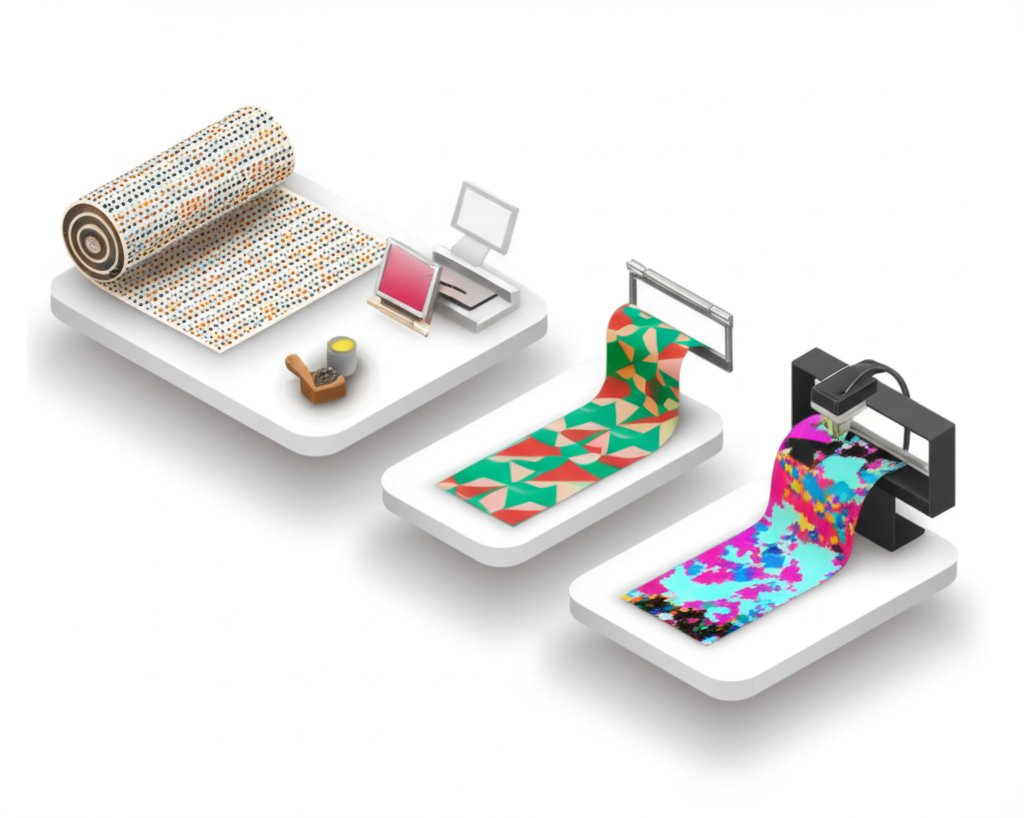
From the earliest pigments daubed onto woven reeds to the intricate designs rendered by high-tech inkjet printers, the history of fabric printing is a vibrant tapestry, rich with innovation, artistry, and cultural exchange. This ancient craft, which transformed plain textiles into canvases of expression, has continuously evolved, mirroring human ingenuity and technological progress. Join us on an in-depth journey through time as we explore the remarkable evolution of fabric printing, from its rudimentary beginnings in ancient civilizations to the cutting-edge digital techniques shaping today’s textile industry. Our exploration will unveil how each era, driven by necessity and creativity, contributed to the diverse and dynamic world of patterned fabrics we know today.
The Dawn of Design: Ancient Origins of Fabric Printing
Understanding the evolution of fabric printing provides valuable context to appreciate the broader story of garment creation and design, much like exploring the history of dressmaking reveals the ingenuity behind clothing construction.
The earliest inklings of fabric printing history are found not in sophisticated machinery, but in the ingenious, often primitive, methods employed by ancient civilizations. Long before complex looms, people began to adorn their textiles, recognizing the power of pattern and color.
Early Resist Dyeing: Mesopotamia and the Indus Valley
One of the most ancient forms of textile decoration was resist dyeing, with evidence tracing back to Mesopotamia and the Indus Valley Civilization as early as 2000 BCE. Artisans would prevent dye from reaching certain areas of a fabric by applying a resist substance like wax, clay, or starch. Once the fabric was dyed and the resist removed, patterns emerged in the undyed areas. This foundational technique laid the groundwork for more advanced methods, demonstrating a sophisticated understanding of materials and processes even in nascent societies.
Woodblock Printing: China’s Enduring Legacy
China stands as a monumental innovator in the history of textile printing. While resist dyeing was practiced, woodblock printing truly flourished during the Han Dynasty (206 BCE – 220 CE). Artisans meticulously carved intricate designs onto wooden blocks. These blocks were then inked with natural dyes and pressed onto fabrics, primarily silk, to create repetitive and complex patterns. This method not only allowed for greater detail than previous techniques but also enabled a degree of mass production, making patterned fabrics more accessible. The Chinese also pioneered early forms of silk screen printing, further diversifying their textile art.
Indian Mastery: Kalamkari, Batik, and Dabu Techniques
India’s contribution to fabric printing history is equally profound, with traditions dating back over 4,000 years, to the Indus Valley Civilization. Indian artisans perfected various forms of block printing and resist dyeing. Kalamkari, a hand-painted and block-printed cotton textile, is renowned for its vibrant narratives and intricate details, often depicting epic tales. Batik, widely associated with Indonesia but with roots in India, involves applying wax resist to cloth before dyeing, allowing for multi-layered colors and fine cracks that characterize its unique aesthetic. Dabu printing, another ancient Indian resist technique using mud, offers a distinct, earthy appeal. These methods were not just crafts; they were central to cultural identity, trade, and storytelling.
Ancient Egypt and Beyond: Pigments and Patterns
Beyond Asia, ancient Egyptians also developed methods for decorating textiles, primarily using pigments and rudimentary stenciling. They utilized natural dyes derived from plants, insects, and minerals to color fabrics for clothing, ceremonial purposes, and burials. While perhaps less about “printing” in the modern sense, their techniques demonstrated the universal human desire to beautify and personalize textiles. Elsewhere, indigenous cultures across Africa and the Americas developed their own unique methods, often incorporating natural elements and spiritual motifs into their fabric decorations, contributing to the rich global tapestry of early textile printing.
Medieval Innovations and Global Exchange: Expanding the Textile Printing History
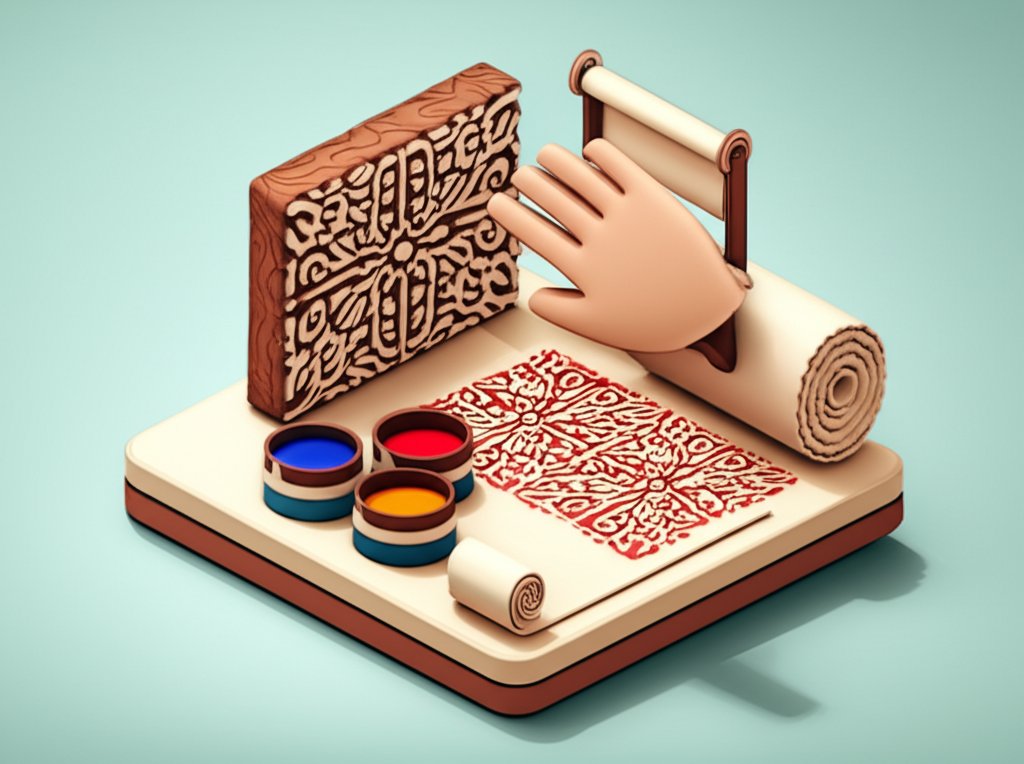
As civilizations grew and trade routes expanded, the knowledge of fabric printing techniques began to travel across continents, leading to new adaptations and innovations that enriched the overall textile printing history.
European Block Printing: From Religious Texts to Textiles
Europe’s introduction to textile printing came much later, significantly influenced by Islamic countries during the medieval period, around the 12th century. Initially, European block printing was less sophisticated than its Eastern counterparts, often using basic dyes that were not wash-fast, limiting prints to items like wall hangings and book covers. However, as the demand for patterned fabrics grew, particularly for religious vestments and aristocratic attire, European artisans began to refine their methods. The parallel development of woodblock printing for books helped advance carving techniques, which were then applied to textiles.
Silk Road Influence: Bridging East and West
The Silk Road, a network of trade routes connecting the East and West, played a pivotal role in the dissemination of printing knowledge. Indian and Chinese textiles, renowned for their intricate patterns and vibrant colors, were highly coveted in Europe. This demand not only stimulated local production but also encouraged European artisans to learn and adapt Eastern techniques. The exchange wasn’t one-sided; European innovations in dye chemistry and new types of mordants (substances that fix dyes to fibers) also gradually made their way eastward, creating a truly global fabric printing history.
The Rise of Mordants and Dyes
A significant advancement during this period, particularly in Europe, was the improved understanding and application of mordants. Early natural dyes often had poor colorfastness. The discovery and systematic use of metallic salts as mordants allowed dyes to permanently bond with fabric fibers, producing richer, more durable colors that could withstand washing. This chemical innovation was crucial for the wider acceptance and practicality of printed textiles in everyday wear, marking a quiet but impactful chapter in the evolution of fabric printing.
The Industrial Revolution: Mechanizing the Evolution of Fabric Printing
The 18th and 19th centuries witnessed a dramatic shift in manufacturing, forever changing the evolution of fabric printing. The Industrial Revolution transformed a meticulous handcraft into an industrialized process, making patterned textiles accessible to the masses.
Roller Printing: Thomas Bell’s Game-Changing Invention
A monumental leap forward occurred in 1785 with the invention of the roller printing machine by Scottish engineer Thomas Bell. This mechanical marvel replaced slow, labor-intensive block printing with a continuous process. Designs were engraved onto large copper rollers, which then rotated against the fabric, transferring patterns at an unprecedented speed. A single machine could do the work of dozens of block printers, producing thousands of yards of fabric daily. This increased efficiency drastically lowered production costs and democratized printed fabrics, moving them from the exclusive domain of the wealthy to the everyday wardrobe of the working class.
The Chemical Revolution: Synthetic Dyes and New Hues
Concurrent with mechanical advancements was a revolution in chemistry. Until the mid-19th century, all dyes were derived from natural sources, limiting the color palette and often leading to inconsistencies. In 1856, William Henry Perkin, a young chemistry student, accidentally discovered mauveine, the first synthetic dye. This breakthrough ignited the synthetic dye industry. Suddenly, a vast spectrum of vibrant, consistent, and affordable colors became available, far surpassing the limitations of natural dyes. The development of azo dyes later provided even greater colorfastness and intensity, dramatically expanding the creative possibilities for textile designers and marking a profound turning point in textile printing history.
The Democratization of Printed Textiles
The combined forces of mechanized printing and synthetic dyes fundamentally altered society. Printed fabrics, once a luxury, became affordable household items. This democratization of style meant that patterned clothes and home goods were no longer confined to the elite. Factories clattered with the sound of machines churning out yards of fabric, bringing color and design into the lives of ordinary people. This era solidified fabric printing as a major industry, deeply intertwined with fashion, interior design, and global trade.
20th Century Innovations: Screen Printing and Synthetic Fibers in Fabric Printing History
The 20th century further propelled fabric printing history forward, introducing techniques that offered greater versatility and new materials that revolutionized design.
Screen Printing: Versatility and Artistic Expression
While ancient forms of stenciling existed, modern screen printing was popularized in the early 20th century, evolving from Japanese Yuzen dyeing techniques. This method involves pushing ink through a mesh screen, parts of which are blocked off by a stencil to create the desired design. Each color requires a separate screen, allowing for multi-color, intricate patterns. Screen printing quickly became a favored technique due to its versatility, ability to print on various materials, and its capacity for bold, opaque colors. It gained traction in commercial textile production and became a powerful medium for artists, most famously utilized by Andy Warhol in the Pop Art movement. Flatbed screen printing and later, rotary screen printing (which uses cylindrical screens for continuous printing), became industry standards for mass production.
From Nylon to Polyester: Expanding Material Possibilities
The mid-20th century also saw the advent of synthetic fibers, which dramatically expanded the possibilities for printed textiles. Nylon, introduced in the 1930s, and polyester, gaining prominence in the 1940s, offered unprecedented strength, durability, and resistance to wrinkles and fading. Crucially for printing, these fibers could readily accept and hold vibrant colors from synthetic dyes, often with greater intensity and fastness than natural fibers. This opened up entirely new aesthetic avenues for designers, leading to bolder patterns and brighter hues that defined mid-century fashion and interiors. The unique properties of these materials also influenced printing processes, requiring new formulations of inks and curing methods.
Pop Art and Mid-Century Modern: Design Movements
The explosion of new printing techniques and materials fueled creative design movements. Mid-century modern designs, characterized by geometric shapes, organic forms, and bold color palettes, found a perfect medium in printed fabrics. Designers like Lucienne Day created iconic patterns that became synonymous with the era. Later, the Pop Art movement of the 1960s, led by artists like Andy Warhol, embraced screen printing to mass-produce images with vivid, often repetitive, motifs, blurring the lines between fine art and commercial design and further ingraining printed fabrics into popular culture. This period truly showcased the combined power of art and industry in textile printing history.
The Digital Age: Precision, Personalization, and the Future of History of Fabric Printing
The late 20th and early 21st centuries mark a revolutionary chapter in the history of fabric printing with the advent of digital technology, fundamentally altering how fabrics are designed, produced, and consumed.
Inkjet Technology: Direct-to-Fabric Printing
The most significant advancement in recent times is digital fabric printing, which leverages inkjet technology. Instead of screens or rollers, designs are sent directly from a computer to a printer, which sprays micro-droplets of ink onto the fabric. This direct-to-fabric (DTF) or direct-to-garment (DTG) method eliminates the need for expensive and time-consuming screen preparation, making it an agile and flexible solution. The technology allows for virtually limitless color variations, seamless gradients, and highly intricate photographic designs that were impossible or economically unfeasible with traditional methods.
Advantages of Digital Printing: Speed, Customization, Sustainability
Digital printing has numerous advantages that have propelled the evolution of fabric printing:
- Speed and On-Demand Production: Designs can be printed instantly, significantly reducing lead times. This allows for small-batch production, custom orders, and quick responses to fashion trends, a concept known as “fast fashion” and “on-demand manufacturing.”
- Design Freedom: The ability to print complex, high-resolution images with an unlimited color palette offers unparalleled creative freedom to designers. Gradual color transitions and realistic photographic prints are now routine.
- Cost-Effectiveness for Small Runs: While traditional methods require large setup costs for screens, digital printing has minimal setup, making it cost-effective for producing small quantities of unique designs. This has empowered independent designers and niche markets.
- Sustainability: Digital printing is often lauded for its environmental benefits. It significantly reduces water usage (up to 98% less than traditional methods, with some estimates citing 1 liter per linear meter compared to 50-100 liters), lowers energy consumption (up to 50%), and minimizes chemical waste and CO2 emissions (up to 90%). Its on-demand nature also reduces textile waste from overproduction.
Sustainable Practices and Eco-Conscious Printing
The environmental footprint of the textile industry has become a major concern. Digital printing, with its reduced resource consumption, is at the forefront of sustainable practices in fabric design. Coupled with the development of eco-friendly inks (such as water-based pigment inks), and the use of ethically sourced, organic, or recycled fabrics, digital printing is driving a more responsible approach to textile production. This shift reflects a growing awareness among consumers and manufacturers alike, ensuring that the future of fabric printing history is not only innovative but also environmentally conscious.
Conclusion
The history of fabric printing is a remarkable testament to human creativity and adaptability, spanning millennia from ancient resist dyeing to the pixel-perfect precision of digital technology. Each era, driven by cultural needs, artistic vision, and technological breakthroughs, has added its unique layer to the evolution of fabric printing. What began as a simple desire to adorn has grown into a sophisticated industry impacting fashion, art, and daily life on a global scale. Today, as we stand at the threshold of new material science and artificial intelligence, the journey of textile printing history continues, promising even more innovative, sustainable, and personalized ways to bring patterns and stories to life on fabric. The future will undoubtedly weave new threads of tradition and innovation, perpetually redefining what is possible in the vibrant world of printed textiles.
FAQ
Q1: How far back does fabric printing history go?
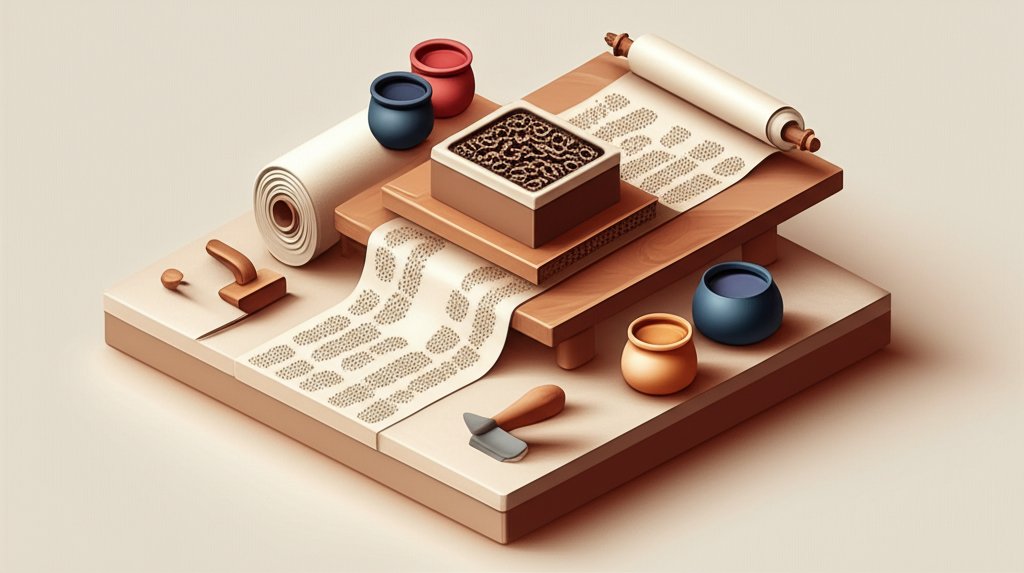
A1: The fabric printing history can be traced back over 4,000 years, with early evidence of resist dyeing methods found in Mesopotamia and the Indus Valley Civilization around 2000 BCE. Woodblock printing emerged in China during the Han Dynasty (206 BCE – 220 CE).
Q2: What was the first significant invention in the history of textile printing that allowed for mass production?
A2: The roller printing machine, invented by Scottish engineer Thomas Bell in 1785 during the Industrial Revolution, was the first significant invention that revolutionized textile printing history by enabling continuous, high-speed mass production of patterned fabrics, replacing slower manual methods.
Q3: How did the Industrial Revolution change textile printing history specifically?
A3: The Industrial Revolution mechanized textile printing history through inventions like Thomas Bell’s roller printing machine, drastically increasing production speed and efficiency. It also ushered in the chemical revolution with synthetic dyes (like mauveine in 1856), expanding color possibilities and affordability, thereby democratizing printed fabrics for the general public.
Q4: What is the role of synthetic dyes in the evolution of fabric printing?
A4: Synthetic dyes, beginning with mauveine in 1856, were a crucial turning point in the evolution of fabric printing. They offered a vast, consistent, and affordable color palette far beyond what natural dyes could provide. This chemical innovation allowed for brighter, more vibrant, and colorfast prints, significantly expanding creative possibilities for designers and contributing to the mass production of colorful textiles.
Q5: What makes digital printing a revolution in the history of fabric printing?
A5: Digital printing, utilizing inkjet technology, is a revolution in the history of fabric printing because it allows for direct-to-fabric printing from a computer, eliminating screens and rollers. This offers unparalleled design freedom, on-demand production, cost-effectiveness for small runs, and significant environmental benefits through reduced water, energy, and waste, making it highly adaptable and sustainable.
Q6: Are ancient fabric printing methods still used today?
A6: Yes, many ancient fabric printing methods, such as various forms of resist dyeing (like Batik and Dabu) and traditional hand block printing, are still widely practiced today in regions like India, Indonesia, and parts of Africa. These techniques are cherished for their cultural heritage, unique artistic qualities, and artisanal charm, coexisting alongside modern industrial and digital methods.










