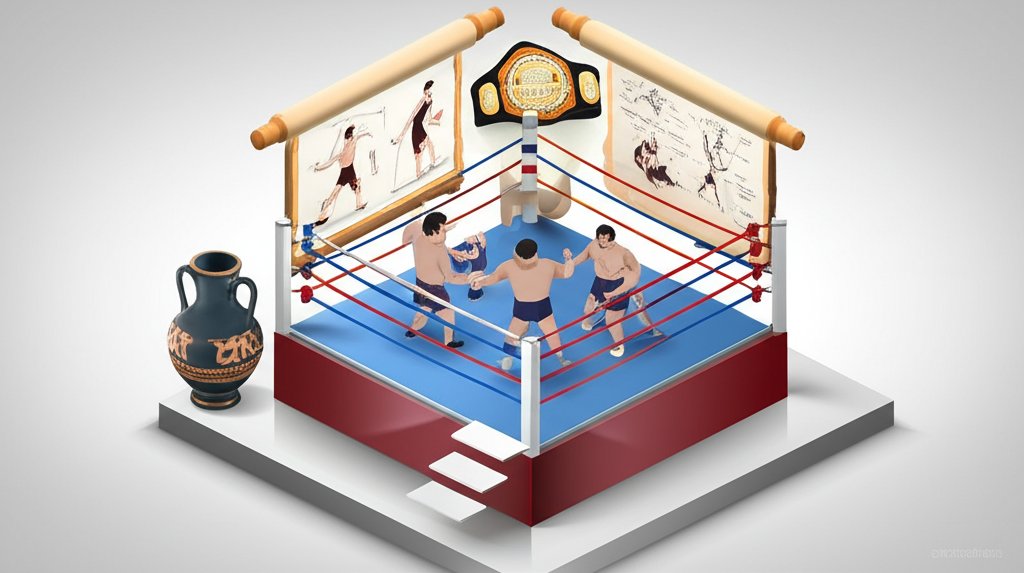
Step onto the mat and prepare to delve into the exhilarating world of wrestling – a combat sport interwoven with human history, pushing the boundaries of physical and mental fortitude. From ancient battlefields to modern Olympic arenas, wrestling has captivated and challenged humanity for millennia. This comprehensive guide will equip you with essential facts on wrestling, tracing its rich history of wrestling, breaking down fundamental wrestling techniques, and shedding light on the broader art of grappling. Whether you’re a seasoned enthusiast or curious newcomer, get ready to unlock a deeper appreciation for this dynamic and universally beloved sport.
The Ancient Roots & Enduring History of Wrestling
The story of wrestling is as old as civilization itself, a testament to humanity’s innate drive for competition and physical mastery. Its origins are not confined to a single culture or era but stretch across continents and millennia, making the history of wrestling a truly global narrative.
From Cave Paintings to Olympic Glory
Archaeological evidence suggests that wrestling is one of the oldest forms of combat, with cave paintings in France depicting wrestlers dating back an astonishing 15,000 years. Ancient Egyptian tombs illustrate intricate wrestling scenes, demonstrating highly developed techniques from as early as 2000 BCE. However, it was in ancient Greece where wrestling truly solidified its place as a revered sport. A cornerstone of the ancient Olympic Games, wrestling was considered a vital part of a citizen’s education, emphasizing strength, agility, and strategic thinking. Victors were celebrated as heroes, their achievements immortalized in poetry and sculpture. This early prominence set the stage for wrestling’s enduring legacy as an athletic discipline.
Global Evolution: Cultural Variations and Milestones
As civilizations blossomed, so did distinct forms of wrestling. From the sumo of Japan and the pehlwani of India to the glíma of Iceland and the schwingen of Switzerland, nearly every culture developed its own unique style, reflecting local traditions, philosophies, and physical attributes. This rich tapestry of cultural wrestling forms underscores its universal appeal and adaptability.
Understanding the nuances of these historical styles provides a great foundation before diving into the modern rules and regulations governing a wrestling match, particularly when considering the scoring and strategies that define the flow of an actual wrestling match.
The modern era saw the standardization of certain styles to facilitate international competition. The late 19th and early 20th centuries were pivotal, leading to the formation of governing bodies and the inclusion of wrestling in the modern Olympic Games from 1896 (with Greco-Roman) and 1904 (with Freestyle). These developments transformed wrestling from a collection of diverse traditions into a globally recognized competitive sport.
Mythology and the Legends of the Mat
Beyond its tangible history, wrestling holds a powerful place in mythology and folklore. Ancient epics frequently feature characters renowned for their wrestling prowess, symbolizing strength, cunning, and the triumph of good over evil. Hercules, the Greek demigod, famously defeated the Nemean Lion through sheer strength and grappling skill. Roman mythology speaks of Aeneas, whose wrestling abilities were legendary. Even figures like Zeus, the king of the Olympian gods, are said to have ascended to power after winning a wrestling match. These mythological tales not only highlight the sport’s significance but also weave a mystique around the art of wrestling itself, connecting it to heroism and the divine.
Decoding Wrestling: Styles, Rules, and the Art of Grappling
To truly appreciate wrestling, one must understand its various forms and the fundamental principles that govern them. While the term “wrestling” often conjures images of competitive Olympic bouts, it encompasses a wide spectrum of physical contests, with grappling forming its foundational element.
Core Competitive Styles: Greco-Roman, Freestyle, and Folkstyle
Modern competitive wrestling is primarily categorized into three major international styles, each with distinct rules that dictate permissible holds and movements:
- Greco-Roman Wrestling: This style emphasizes upper-body strength and technique. Wrestlers are prohibited from attacking below the waist, and holds on the legs are forbidden. This restriction creates a unique emphasis on powerful throws, lifts, and intricate movements from the standing position, often leading to spectacular arching throws.
- Freestyle Wrestling: In contrast to Greco-Roman, freestyle is a more expansive and dynamic style. Wrestlers can use their legs for offensive moves, attack the opponent’s legs, and execute a wider range of throws, takedowns, and pinning combinations. This freedom makes freestyle known for its rapid transitions, quick scoring, and high-flying maneuvers.
- Folkstyle Wrestling (Collegiate Wrestling): Predominantly practiced in high schools and colleges across the United States, folkstyle wrestling has a unique scoring system and an emphasis on control and riding time. Points are awarded not just for takedowns and reversals, but also for maintaining control over an opponent on the mat. The objective is to secure a pin, but matches are often won by accumulating points through dominant positioning.
These three styles, while different, share the common goal of controlling, taking down, and ultimately pinning an opponent through skill, strength, and strategic grappling.
Understanding Grappling: A Foundation Across Combat Sports
The term “grappling” refers to a general set of techniques used in hand-to-hand combat to gain a physical advantage over an opponent by using holds, locks, and leverage, rather than striking. Wrestling is essentially a form of grappling, but grappling is a broader concept that includes techniques found in many martial arts and combat sports beyond traditional wrestling, such as Brazilian Jiu-Jitsu, Judo, Sambo, and even the ground game in Mixed Martial Arts (MMA).
The key distinction is that while all wrestling involves grappling, not all grappling is wrestling in the competitive sense. Grappling focuses on:
Competitive wrestling, particularly folkstyle and freestyle, heavily features takedowns, escapes, reversals, and control, making it a highly effective and foundational grappling art.
Beyond Competition: The World of Professional Wrestling
It’s important to acknowledge the dual nature of “wrestling” in popular culture. While the Olympic and amateur styles focus purely on athletic competition, professional wrestling (like WWE or AEW) is a form of sports entertainment. It is a spectacle combining athleticism, theatrical storytelling, choreographed maneuvers, and larger-than-life characters. While the outcomes are predetermined, the physical feats performed by professional wrestlers are genuinely demanding and require immense athleticism, coordination, and training. It’s a different beast entirely from amateur wrestling, yet it draws millions of fans globally due to its unique blend of sport and drama.
Unearthing Key Facts on Wrestling
Beyond its rules and styles, the world of wrestling is full of fascinating facts on wrestling that highlight its global reach, profound impact, and continuous evolution.
Surprising Statistics and Global Reach
- Ancient Endurance: As mentioned, wrestling is one of the oldest sports, with evidence dating back 15,000 years, predating written language.
- Global Governance: United World Wrestling (UWW) serves as the international governing body for amateur wrestling, boasting a membership of 177 nations. This expansive network ensures standardized rules and opportunities for athletes worldwide.
- Olympic Constant: Despite temporary removal threats, wrestling has been a consistent fixture in the modern Olympic Games since 1896 (with exceptions in 1900).
- Varied Arenas: While the mat is standard for many styles, traditional forms of wrestling exist on sand (e.g., Turkish oil wrestling), grass (e.g., Swiss schwingen), and even in water.
The Rise of Women’s Wrestling
One of the most exciting facts on wrestling in recent decades is the explosive growth of women’s wrestling. Once largely relegated to professional entertainment, women’s competitive wrestling has gained significant momentum globally. It was officially added to the Olympic Games in 2004, a monumental step for gender equality in sports.
In the United States, girls’ wrestling has been recognized as an emerging sport by the NCAA, leading to increased collegiate opportunities and scholarships. The number of high school girls participating has skyrocketed, fostering a new generation of female athletes who benefit from the discipline, strength, and confidence that wrestling instills. This growth signals a bright, inclusive future for the sport.
Health, Discipline, and Mental Fortitude
Wrestling is more than just physical competition; it’s a crucible for character development. Participants learn unparalleled discipline, resilience, and problem-solving skills. The sport demands an incredible level of physical conditioning, from cardiovascular endurance to muscular strength and flexibility. Furthermore, the mental game in wrestling is paramount. Athletes must think strategically under pressure, adapt to opponents’ movements, and push through discomfort, developing a powerful mental fortitude that extends far beyond the mat. These benefits contribute to making wrestling a highly valued and impactful sport for youth development worldwide.
Mastering the Mat: Fundamental Wrestling Techniques

Understanding the core wrestling techniques is crucial for both practitioners and spectators. These techniques are the building blocks of strategy, allowing wrestlers to gain control, execute scores, and ultimately secure a victory. All effective grappling starts with a solid foundation.
Stance and Motion: The Foundation
Every great wrestler begins with an effective stance and fluid motion.
Takedowns: Getting the Opponent to the Mat
Takedowns are fundamental wrestling techniques aimed at bringing an opponent from a standing position to the mat, typically scoring points and gaining control.
Escapes and Reversals: Gaining Control
Once on the mat, the bottom wrestler’s goal is to escape or reverse their position.
Pins and Holds: Securing Victory
The ultimate goal in many wrestling styles is the pin, also known as a fall.
Essential Grappling Drills for Improvement
Consistent drilling is key to mastering wrestling techniques. Drills help build muscle memory, improve coordination, and hone reaction time. Basic grappling drills include:
The Impact and Enduring Legacy of Wrestling
The impact of wrestling extends far beyond the competition mat, shaping individuals, influencing other sports, and leaving an indelible mark on society.
Physical and Mental Benefits
Participating in wrestling offers a comprehensive array of benefits:
Wrestling’s Role in Modern Combat Sports (MMA)
The influence of wrestling is profoundly evident in modern Mixed Martial Arts (MMA). Many of the most dominant MMA fighters have strong wrestling backgrounds, as the ability to control where a fight takes place (standing or on the ground) is a massive advantage. Wrestling techniques like takedowns, ground control, and scramble ability are critical for success in MMA, making wrestling arguably the most important foundational discipline for the sport. The art of grappling in wrestling translates directly into the clinches and ground exchanges of MMA.
Inspiring Generations: Famous Figures
Throughout its history of wrestling, countless individuals have risen to prominence, inspiring generations with their athletic prowess and dedication. From legendary Olympic champions like Dan Gable, who finished his career with an astonishing 117-1 record, and Aleksandr Karelin, the undefeated “Russian Bear” of Greco-Roman wrestling, to transformative figures in professional wrestling who captured global audiences, these individuals embody the spirit of the sport. Their stories highlight the dedication, sacrifice, and ultimate triumph that are synonymous with wrestling.
Conclusion
From its ancient origins depicted in cave art to its modern incarnation as an Olympic sport and a global entertainment phenomenon, wrestling is a sport rich in history of wrestling, diverse in facts on wrestling, and demanding in its wrestling techniques. The fundamental principles of grappling underpin every move, teaching participants invaluable lessons in discipline, strategy, and resilience. Whether you’re captivated by the intricate history, fascinated by the competitive facts, or inspired by the sheer physicality of its techniques, wrestling offers a profound insight into human competition and the enduring pursuit of physical and mental mastery. Explore its depths, appreciate its nuances, and recognize the powerful impact this timeless sport continues to have on the world.
FAQ

Q1: How old is the sport of wrestling?
A1: Wrestling is one of the oldest known sports, with evidence of its practice, including cave drawings in France, dating back an incredible 15,000 years.
Q2: What is the difference between wrestling and grappling?
A2: Grappling is a broader term for any combat technique that involves holds, locks, and leverage to gain a physical advantage without striking. Wrestling is a specific type of combat sport that heavily utilizes grappling techniques, focusing on takedowns, control, and pinning an opponent. All wrestling involves grappling, but not all grappling (e.g., Brazilian Jiu-Jitsu which focuses on submissions) is competitive wrestling.
Q3: What are the main types of competitive wrestling?
A3: The three primary international competitive wrestling styles are Greco-Roman (upper body only), Freestyle (full body, including leg attacks), and Folkstyle (popular in US high schools/colleges, emphasizes control and riding time).
Q4: What are some basic wrestling techniques?
A4: Fundamental wrestling techniques include maintaining a proper stance and motion, executing takedowns (like single legs and double legs), performing escapes and reversals from the bottom position, and applying pinning combinations (such as the half nelson or cradle).
Q5: Is professional wrestling real?
A5: Professional wrestling is a form of sports entertainment. While the athleticism and physical feats performed by the wrestlers are very real and require immense training, the outcomes of the matches are predetermined, and the storylines are fictional. It is distinct from competitive amateur or Olympic wrestling.
Q6: What are the benefits of wrestling?
A6: Wrestling offers numerous benefits, including exceptional physical conditioning (strength, endurance, agility), development of mental toughness and discipline, improved problem-solving skills, and character building through resilience and sportsmanship.










